DISAPPOINTMENTS, BITTERNESS, BUT ALSO HOPES: THE DIFFICULT JOURNEY OF ITALIAN VOLLEYBALL IN EUROPE

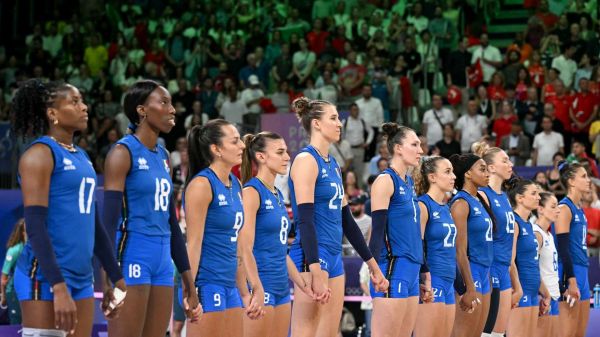
Italian volleyball has been put to the test in Europe during the quarter-finals of the 2023 Champions League Volleyball: a negative outcome for the Italian teams.

On the men’s side, three Italian teams were competing for a spot in the semi-finals: Perugia, Trento, and Civitanova. There was considerable regret for the Trentino and Marche teams: the two teams had lost 2-3 and 1-3 in the first leg against their opponents, but later showed great courage and spirit in the return leg, winning 3-2 and 3-1 against their opponents, respectively. However, this was not enough: both teams found themselves having to give up their tickets to the semi-finals to their opponents, losing in the golden set (to 15 points). Despite the disappointments and bitterness, hope remains for the Umbrian team of Perugia, which will face the defending champions, the Polish team Zaksa, in the next stage of the competition. The road will be tough, but Perugia has demonstrated that it has the necessary qualities to challenge the best.

As for women’s volleyball, the situation is still open, as the quarter-final phase is not yet over. Currently, three Italian teams are still in the game: Milan, Conegliano, and Novara. However, the first two teams suffered a 0-3 defeat in their respective first-leg matches against Vakifbank and Fenerbahce, both from Istanbul. On the other hand, the Piedmont team of Novara achieved a victory against the German opponents Allianz MTV Stuttgart. The situation is therefore uncertain, and anything can still happen for the Italian teams competing in the 2023 Women’s Champions League Volleyball.

Good and encouraging news, however, comes from the CEV Cup: the Modena men’s team is in the final and will face the Belgian team Knack Roeselaere, which defeated Piacenza in the semi-finals. On the women’s side, the Florence team, Savino del Bene Scandicci, the tournament favorite, won 3-0 in the first leg against the Turkish team THY Istanbul, and they will only need to win two sets in the return leg to reach the final.

by Hu Zhuohao

THE ITALIAN DREAM IS STILL ALIVE

The news of Saturday, March 18th, saw the triumph of Italian Marvin Vettori in the London octagon, defeating Roman Dolidze by unanimous decision and winning UFC 286.

After the tough defeat suffered against Whittaker in Paris, the Italian Dream has returned different, more rational, and more mature, able to manage his energy and tame his opponent’s attacks, striking at the right moment.

The two fighters already knew each other, as they used to train together before Marvin made the decision, a few months ago, to switch teams, moving to Xtreme Couture in Las Vegas and leaving behind his previous gym, the famous KingsMMA, where he had built his previous successes.

The match immediately saw Dolidze start landing some non-trivial punches with great focus. Marvin tries to be more aggressive and not suffer throughout the match while looking for his opponent’s exhaustion, but instead takes more risks by attacking head-on. The start of the match doesn’t seem to favor him, but over time, the great tenacity of the Italian emerges, and some of his moves conclude in the best possible way. In the first round, Dolidze seems to have the upper hand and is more eager (even going as far as throwing an illegal headbutt to his opponent’s chin), but in the second round, Marvin comes out stronger, managing the advantage in the third. The match is very technical and tight, but for his consistency, the judges award the victory to Vettori with a 30-27 score.

The Trentino fighter thus achieved his nineteenth career victory in the UFC, the premier MMA promotion worldwide, positioning himself among the top 5 middleweights in the world. And now the hope for the title becomes even stronger.

by Antonio Spampinato

THE MOROCCO FAIRYTALE: LUCK OR STRATEGY?

In a World Cup that has so far not delivered any major surprises, as almost all the big national teams expected have reached the quarter-finals, one of these teams seems to be the “black sheep.”

The Moroccan national team, in fact, despite unfavourable predictions from the group stage onwards, has managed to capture headlines with great astonishment from all.

In World Cup history, Morocco has participated six times.

In a group with Croatia, Belgium, and Canada, Morocco was expected to finish third, perhaps at best competing briefly with Croatia for the second position, but with Croatia ultimately prevailing. Reality overturned these predictions: Morocco first, Croatia second, Belgium out in the group stage.

Furthermore, in the round of 16, the African team faced Spain, ironically the founder of the Spanish Protectorate of Morocco—the portion of Morocco administered by Spain under a protectorate regime from 1912 to 1956, the year of the revolution that led to Morocco’s independence, with Tetuan as the capital. During those years, specifically in 1926, the Spanish Civil War began from Morocco: the Alzamiento of General Francisco Franco on July 17, 1936, took place right in Tetuan. The protectorate ended, also thanks to the intervention of the French protectorate, which was in favour of independence.

Many players on that national team have dual nationality: Bounou, Dari, Sabiri, Boufal, Harit, El-Nesyri, and Hakimi.

This match must have meant something extra to them. And in fact, three of them were crucial to the victory in the penalty shootout against Spain, against the colonial past, for themselves and for their nation. Bounou, a vigilant game over the 120 minutes, faced few risks, also thanks to Spanish mistakes in front of goal, and excelled in the penalty shootout, with two saves, a well-timed dive when Sarabia hit the post, and shutting down any attempt at entry.

Boufal, a player with impressive technique, who, if more consistent, would have had a top-player career, shone at the World Cup: 1-on-1, systematically beating Laporte, then delivering refined crosses from the wing, creating havoc in the opposing defence.

And finally, Hakimi, the top player: perfect defensively, and offensively beyond words. Then came the responsibility of the penalty, a defining moment for the game and Moroccan football history, which he confidently converted with a panenka. Man of the match.

But Morocco’s first-ever arrival in the World Cup quarter-finals is not luck. A team that, although never having exceeded 40% possession in their games so far, has proven dangerous with their two full-backs, counter-attacking with vertical passes, showing technique, and, above all, being solidly covered in all areas of the pitch. In last year’s Africa Cup of Nations, where they were eliminated in the round of 16 by Egypt, Morocco played a patient game, with high possession, numerous tight exchanges, but it seemed a sterile style of play—much like Spain’s at this World Cup.

The victory was the result of careful study by coach Hoalid Regragui of his best players’ strengths, opponents’ weaknesses, and the best strategy, even to the point of challenging himself by playing a style of football he had never favoured before.

But there’s more: a national team that had never been this strong is the result of an organised youth development effort, with many young players sent abroad to learn tactics later, but first being the same young players you see on the streets in any Moroccan city—something sorely lacking in the Italian system, which is too focused on tactics and perhaps, in the early years, should let young talents express themselves freely. Finally, this match also highlights a decline for Spain, a game no longer surprising, almost predictable, lacking finishers, with a desperate focus on possession without enough verticality, but the most critical aspect of the result may be the lack of personality: like in the European Championship, they exited on penalties, without scoring even one. The last of these, missed by Busquets—perhaps the least charismatic captain in Spain’s history—extinguished their hopes. And who knows if Sergio Ramos, the former captain deliberately left out, could have changed the fate of the Spanish national team.

By Antonio Spampinato

EXPLORING JAPANESE SOCCER: FROM SCHOOL CHAMPIONSHIPS TO QATAR 2022

A Saikeirei bow. With this gesture, the coach Hajime Moriyasu bids farewell to Japan’s World Cup journey in front of Japanese fans after their penalty shootout defeat to Croatia. A special, heartfelt bow, the most significant and profound one in Japanese tradition. A simple, yet meaningful gesture after he had hugged and consoled each of the 26 “samurai” who took part in the Qatar 2022 campaign at the end of the match.

Thus, the team from the Land of the Rising Sun leaves Doha, but this World Cup will hardly erase the indelible mark it has left. And no, we’re not only talking about the incredible comebacks against Spain and Germany, or even the remarkable first-place finish in the group. We’re speaking of a much greater lesson, a lesson of education, civility, and pure sportsmanship that best embodies the spirit on which Japanese football tradition is founded.

It was 1921 when the first historic Japanese championship was held by the Japan Football Association. Even back then, the true core of the entire system was the world of schools. In fact, football would remain a sport limited to academic circles for many years, a minor sport compared to the hugely popular baseball. Above all, the country’s organisational structure dictated that the relationship between sport and education was inseparable: the students had to follow strict discipline and achieve excellent grades in their studies. Talent alone wasn’t enough to be a player; every single boy had to be prepared to compete, particularly with the high standards of the working world, and be trained as well as possible to ensure the best professional contribution within companies. But the jolt—or rather the true turning point in Japanese football—came in response to the horrific events that marked an era: the atomic bombs on Hiroshima and Nagasaki in August 1945. Indeed, the 1964 Tokyo Olympics, after they were cancelled during the Second World War, marked a chance for redemption for an entire population, and Japan in particular didn’t want to be unprepared as the host nation. In 1960, with the surprising victory of a team founded by an electric company, the academic academies’ dominance was broken, finally making room for investments from large companies. In the meantime, Japan began to showcase its incredible achievements at the Olympics, beating formidable Argentina 1-0, and proving that this sport was on the rise.

Toyota, Mitsubishi, and Toyo (now known as “Mazda”) were among the most influential names that began shifting their capital towards the burgeoning football world. This created a true domino effect for Japan in the coming decades: the emergence of major sponsorship deals with corporate giants like Toshiba, the memorable bronze at the 1968 Olympics, the introduction of a second division in 1972, and the establishment of the definitive J-League in 1992, which is still Japan’s top league.

Excitement and enthusiasm grew exponentially, fuelled by the parallel growth of football in neighbouring South Korea. Sports marketing continued to expand, with the entry of sector leaders such as Mizuno and Sony. Japanese football was on a complete upswing, and on November 8, 1992, Japan won its first trophy: the national team of the Land of the Rising Sun lifted its first Asian Cup after the final victory over Saudi Arabia.

In total, Japan has lifted the Asian Cup four times (1992, 2000, 2004, and 2011). And it was with an Italian coach, Alberto Zaccheroni, that they brought home the last one to date in 2011.

An exciting football movement that grew in schools and rose to dominate the Asian scene, thanks also to investments from Japanese corporate giants. A perfect combination of sporting values and academic education, which makes Japan’s national team one of the most respected and loved, and still today includes as many as 13 national players out of 26 recruited from high school leagues. The locker rooms left perfectly tidy before leaving the stadium after the match and fans cleaning the stands after the final whistle are just the latest examples of the noble Japanese spirit: “wakon yosai.”

In short, yet another lesson in civility reaches us from the Far East, a ray of light and hope from the Land of the Rising Sun that brightens the darkness of scandals and controversies surrounding global football today.

Thank you, Japan.

By Luca D’Addario

MAX ALLEGRI: TRAPPED IN HIS OWN IDEAS

After becoming the youngest manager since Mancini to win a Serie A title in 2011 with AC Milan (later surpassed by Conte), and experiencing the golden five-year period with Juventus from 2014 to 2019—during which he won five league titles, two Italian Super Cups, and four Italian Cups—Max Allegri is now undergoing an unprecedented decline. Welcomed back to Juventus a year and a half ago as a saviour, expected to begin a new winning cycle, he is today regarded as the main (and by some, the sole) culprit of Juventus’s failure.

This article aims to explore one of the reasons for this decline, focusing less on his lack of tactical innovation and more on the communicative aspect. Indeed, these two years of inactivity have revealed a completely different man. The confident, convincing, almost cocky attitude he once displayed in press conferences has been replaced by a man who is evidently confused, weakened, and lacking certainty. Perhaps this is because the team bears little resemblance to what he envisioned at the end of the transfer market, or perhaps because he has become imprisoned by the structure he himself built over the years. He has long championed an extremely simplified, almost banal approach to football, often in opposition to the “theorists” of the game, yet always bolstered by solid foundations of consistent victories. Now, as soon as those victories are absent, the entire edifice crumbles miserably, leaving him to fight a battle that has become more philosophical than tactical, one which has gradually eroded his personality.

He now appears as a lost man, one who has lost the joy of his profession and has transmitted this sense of disheartenment to his players, who have regressed and become resigned. It is hard to remember a time when Allegri complained about his players, found constant excuses—chief among them injuries—and failed to acknowledge failure. Even his greatest strength, his ability to adapt to any situation and to bring out the best in his players, seems to have been lost.

Further exacerbating this situation is an intense environment in which winning, especially in recent years, has become the norm. Additionally, it is well known that in football, fans often prioritise emotions and immediate feelings over rationality and objectivity, placing high-profile figures on a constant rollercoaster where one day they are heroes, and the next, failures. Carlo Ancelotti went through a similar process, considered finished after his time at Napoli and Everton, only to lead Real Madrid to European glory within a year and reclaim his legendary status.

Ultimately, however, the field, as always, will give the final answer. Time will tell if Allegri has the strength and skills needed to overturn a situation that seems already defined.

By Andrea Dapavo

THE EXTRAORDINARY 2022 OF ITALY’S VOLLEYBALL TEAM!

2022 is a year that all Italians, and especially volleyball fans, will remember for a lifetime: filled with emotions, achievements, and, above all, hard work and sacrifice!

In the senior category alone, Italy captured a gold medal in the Men’s World Championship, took first place in the Women’s VNL, and won bronze in the Women’s World Championship. To this, we can add six incredible European Championship victories in all youth categories, along with gold for the women’s team and bronze for the men’s team at the Mediterranean Games. In global rankings, both the men’s and women’s national teams are among the world’s best: both are in second place, with the women’s team just two points behind the world champions, Serbia.

Beyond indoor volleyball, the achievements in beach volleyball and sitting volleyball are equally commendable. In beach volleyball, the pairing of Nicolai-Cottafava triumphed in the Beach Pro Tour – Elite 16 and is currently ranked seventh in the World Rankings. On the sitting volleyball front, Italy’s women’s national team clinched gold in the Golden Nations League. As European runners-up, they are now competing in the World Championship in Sarajevo!

These results didn’t happen by chance; they are the outcome of tireless training, dedication from both players and staff, and the federation’s foresight in investing in youth.

There is immense pride and satisfaction in the achievements of all the teams this season—a success that will forever stand as a milestone in the storied history of Italian volleyball. These results elevate Italian volleyball even further, enhancing its stature on the national, European, and especially the global stage.

This has been a remarkable sports season, one that may be challenging to replicate in the coming years. However, one should never limit their potential. We believe that the invaluable experiences of summer 2022 will be treasured by these athletes and will serve them well in the future.

By Hu ZhuoHao

Sito web creato con WordPress.com.

Su ↑