
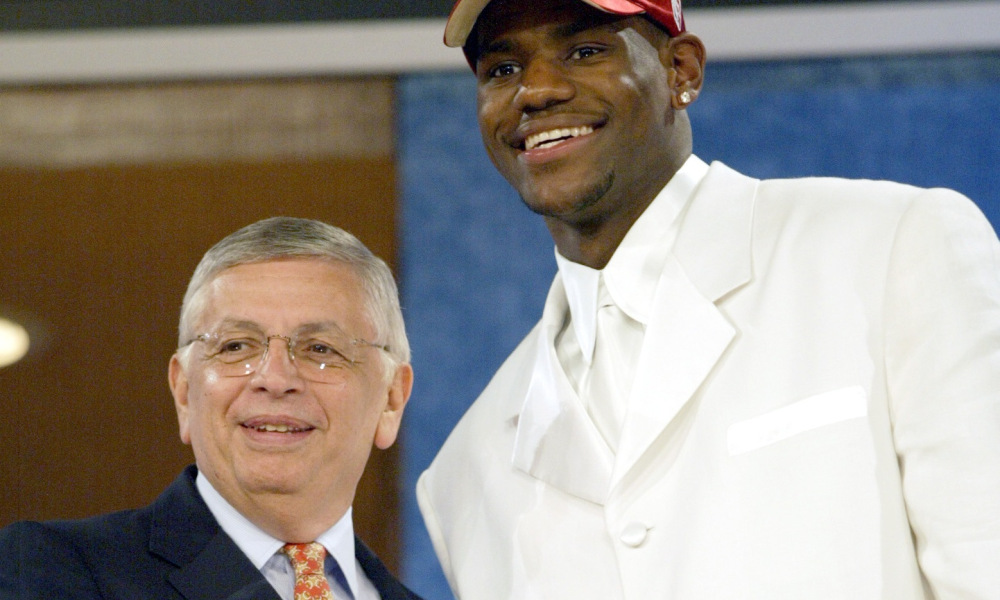
The National Basketball Association is the most important basketball league in the world, bringing together the strongest players on the planet. At the helm of it all is a detailed infrastructure, led by a Commissioner, who ensures the coexistence of these champions.
The regulation surrounding the salaries of some of the highest-paid athletes in the world was not established alongside the league. It was only introduced in 1984. Initially, teams could pay their players as they saw fit, leading to a situation where winning teams, gaining notoriety, could afford higher salaries than the average. This partially explains the success of the Boston Celtics under Bill Russell, the first true Superteam.
To address this imbalance between teams, the league sought to introduce corrective mechanisms. From the beginning, the recruitment of new young players from university teams was structured to favor the less successful franchises of the previous seasons. The draft system, therefore, ensures that teams with the worst ranking from the previous year have the greatest chance of selecting the best young prospects—assets that could form the foundation for future success. The rationale behind the Salary Cap system is the same: to build a structure that maintains balance between the franchises and ensures an equitable distribution of the so-called “superstars.” The vision of then-Commissioner David Stern was to ensure cyclical victories, meaning to level the playing field and equalize the current and future chances of a team’s success through specific corrections.
The concept of the Salary Cap itself is revolutionary. The idea of imposing a salary ceiling for players is antithetical to capitalist thought. However, the system seemed to work at first, promoting the establishment of a hierarchy within teams where salaries were proportionally distributed, starting from the highest-paid player to those with more marginal roles.
However, this fragile mechanism was susceptible to numerous interpretations and a flexibility that allowed teams to easily circumvent the rules. Franchises were not keen on the idea of losing their star players for economic reasons beyond their control. Among the various exceptions to the Salary Cap, the most famous is the Bird Rule, a clause that allowed the Boston Celtics to re-sign their star player for an amount twice as high as any other player in the league. Naturally, this situation generated discontent among other stars, who demanded the same treatment as Larry Bird.
These tensions between players and the league led to the 1998 Lockout, when team members refused to take the court until contract conditions were changed. Only then did the NBA realize its mistake and sign an agreement that provided certain protections for franchise owners while capping players’ salaries.
With some modifications and not without friction between the parties, the current system was established, where there is a salary cap for all teams, with the option to exceed it by paying a penalty to the league.
Currently, the Salary Cap is set at $99 million per team, while the Luxury Tax threshold is set at $120 million.
However, this method has its dark sides: the idea of creating a balanced league and equalizing the financial power of teams leads to other aspects that become crucial when a player decides where to play. Factors such as the appeal of the city, the presence of certain players on the team, or a particularly skilled coach become key in the decision-making process. Stronger teams, therefore, have a greater ability to attract “superstars,” and large metropolitan areas will always have a certain appeal compared to smaller cities.
 BOCCONI STUDENTS FOR SPORT MANAGEMENT