
Reading time: 5 minutes
In the world of sports, there is a growing trend toward the convergence of competitive sports and the entertainment value of the event itself. One of the most obvious examples of this is Formula One, a sport whose main goal has become entertainment.
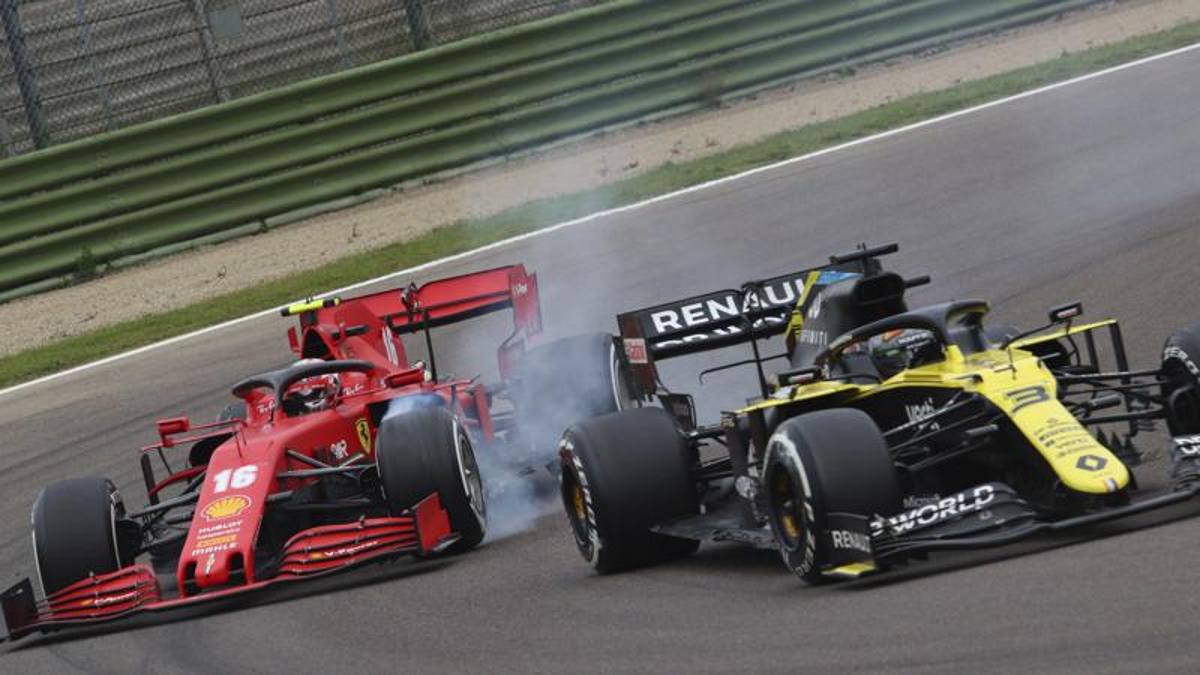
While in a soccer match, the result that often generates less excitement for viewers is a goalless draw where no team prevails over the other, the situation is completely different in Formula One. On the contrary, the least exciting Grands Prix result from uncontested dominance by a driver who imposes themselves in the free practice sessions on Friday, secures pole position on Saturday, and manages the advantage effortlessly on Sunday. This situation occurred numerous times in recent years, with Mercedes dominating the sport and winning both the drivers’ and constructors’ championships for 7 consecutive years, cementing a dynasty that will go down in history. Witnessing such an uncontested record is undoubtedly special, but the real spectacle of Formula One happens not when there are several seconds of separation between teams, but when there are overtakes, on-track duels, and battles until the final lap. It is clear by now that regulatory changes were necessary to ensure fair competition and promote entertainment. Therefore, it is up to the FIA and Formula One to adopt all necessary measures to increase the number of overtakes in races and keep the fans entertained.
Analyzing all the tools at the federation’s disposal, the most important one is certainly the change in race regulations. In this regard, already in 2011, with the introduction of DRS, commonly known as the “drag reduction system,” Formula One made it clear that the intention was to encourage “body-to-body” racing on the track. To facilitate overtaking, drivers can reduce the aerodynamic resistance of their car in order to overtake the vehicle ahead. According to the regulations, the use of the movable wing can only take place in designated zones of the circuit and if the distance between the leading and following car is less than one second. Since its introduction, many members of the Formula One circus have questioned the actual effectiveness of DRS. While the movable wing is an easy-to-use and low-cost solution for teams, many fans have been skeptical, claiming that their favorite sport is becoming too “artificial.”
A common but unfounded belief that circulates online is that Formula One becomes boring after the first few laps. Even though true fans of the sport can find points of interest in less exciting races, such as strategies or how some drivers manage tire wear, it is undeniable that GPs where the leader gains tens of seconds of advantage over the followers can provide less excitement. In this regard, the FIA reintroduced an additional point for the driver who records the fastest lap in a race in 2019. Although a single point may seem insignificant compared to the overall drivers’ standings, this easy-to-implement solution last year resulted in different strategies and surprises in the final laps. Drivers with little chance of overtaking the car ahead may decide to make an extra pit stop in the closing laps of the race to mount fresh soft tires and push their car to the limit in hopes of gaining the precious extra point. Compared to DRS, this change received mostly positive feedback and few opposing opinions: the additional point for the fastest lap was a valid, easily implemented, and effective rule change.
The relationship between sports and entertainment represents a delicate balance, essential for the sustainability of the entire market surrounding a competitive event. While increasing the appeal of a sports event is considered a priority by many, it is necessary to consider and protect the competitive spirit and ensure the championship is as meritocratic as possible to preserve the authenticity of the famous saying “may the best win.” Every year, two words continue to circulate in the paddock, always subjects of debate: reverse grid. The concept of the reverse grid is easy to understand: the current qualifying system would be replaced by a sprint race, a mini-race, with the starting grid determined by the reverse order of the championship standings. The results of Saturday’s race would then dictate the grid positions for Sunday’s race. While the reverse-grid sprint race would undoubtedly be full of overtakes and surprises, some obstacles could make this solution less meritocratic than the current qualifying system. For example, consider Monaco, a circuit with undeniable charm but also known for its extreme difficulty in overtaking. A Saturday sprint race could result in a train of cars struggling to gain positions. Opposing opinions have been raised by several drivers, including Vettel and Hamilton, winners of 10 world championships in the last eleven years. Furthermore, looking at the qualifying times from the first races of this year, it is clear that the gap between the cars has significantly reduced, ensuring pure excitement on Saturdays for the fans.
Although the idea of the reverse grid has quickly faded, Formula One recently announced the introduction of the sprint race for two GPs this year, particularly at Silverstone and Monza. On Friday, in addition to the first free practice session, there will be a qualifying session to determine the starting grid for the mini-race. On Saturday, the actual sprint race will take place, a 100-kilometer race to decide the starting grid for Sunday. Additionally, the top three finishers in the sprint race will receive 3, 2, and 1 points for the championship, which will be crucial given the tight competition between Mercedes and Red Bull for the title. What will be considered an experiment this year may become the standard and regular program for future championships. Entertainment is guaranteed: with the current format, Friday’s free practices are less followed by viewers as they are seen as just a preparation session for the weekend. With the introduction of the sprint race, Friday’s qualifying will also be crucial to arrive on Saturday with a considerable advantage to capitalize on.
The continuous search for new sources of entertainment is undeniably a tortuous and difficult process, but one to which the FIA and Formula One dedicate a great deal of resources every day. Races with few overtakes benefit no stakeholder in the Formula One world, but perhaps fans today take for granted the constant engineering evolution of the cars, which aims to ensure greater safety for drivers and, above all, to increase the excitement for those following the sport from their homes. In the coming years, drastic regulation changes related to the cars will mark a new era for this sport, with the hope of ensuring thrilling GPs that still allow the best driver on the grid to climb to the top step of the podium.
Written by Gianandrea Novellone
 BOCCONI STUDENTS FOR SPORT MANAGEMENT
Lascia un commento