
Reading time: 3 minutes
The countdown has begun for the 44th edition of the Ryder Cup, which will be held for the first time in Italy, in Rome, at the Marco Simone Golf Club in 2023. The ultimate golfing competition, held every two years alternating between U.S. and European golf clubs, is one of the most eagerly anticipated sports challenges between the Old Continent and the U.S. Unlike traditional tournaments, the Ryder Cup is a team competition: over three days, the 12 best European and U.S. players compete to secure the coveted cup for their team and continent.
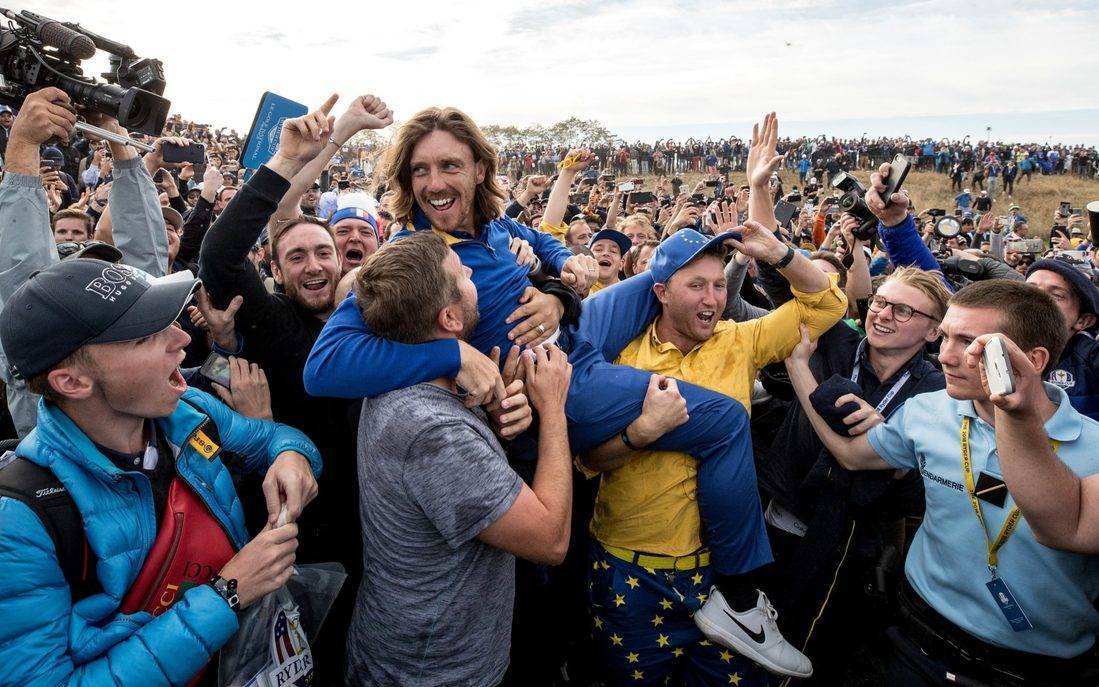
One of the main features that makes the Ryder Cup the third most-watched event in the world, after the Olympics and the FIFA World Cup, is the spectacle of the event. In the collective imagination, golf is seen as a sport where silence, concentration, and individuality are key elements. Spectators at a tournament must respect the total silence on the golf course in order to preserve the concentration of the players. Additionally, the public is encouraged to dress appropriately for the occasion. The use of mobile phones and cameras, which could disturb the golfers, is generally prohibited. These rules are valid in all tournaments throughout the year to preserve the integrity of the competition, but there are many exceptions during the Ryder Cup. Often, the players themselves ask the audience to “make noise” to cheer and support their team. Likewise, the individuality of traditional competitions gives way to advice and tactics shared among teammates. It is rare in a traditional competition to see two players talking and offering advice on how to approach the course. However, during the Ryder Cup, the team dynamics are clear: no one plays alone; they fight and compete to prevail over the other continent. An eternal rivalry that is mirrored in the spectators, most of whom wear blue or red depending on their team’s flag.
It is also due to these characteristics that television viewers, who might casually watch a segment of the competition, often question the validity of the many stereotypes still present around this sport, which unfortunately limit its growth in our country. From this perspective, the Ryder Cup is certainly the most valuable and interesting event to attract sports fans to golf.
In addition to the tradition and fame associated with it, the Ryder Cup presents a very attractive opportunity for the host nations to showcase their tourism and generate revenue. Looking at the data from the last edition held in Europe, in 2018 in Paris, it is easy to grasp the immense opportunity provided by hosting the event. In Paris, more than 250,000 spectators from over 90 countries attended, and tickets for the event sold out in seconds. Overall, the Ryder Cup generated a business turnover of over half a billion euros, benefiting tourism in the Parisian area and beyond. Hotels, restaurants, and even museums took advantage of the event’s presence: for example, many American fans seized the opportunity to visit the French capital in the days following the competition. From a global audience perspective, over 600 million viewers tuned in from home, numbers that highlight how the Ryder Cup is considered the ultimate event not only to promote golf as a sport but also to showcase the host location and golf courses.
After surpassing Austrian sponsors, overcoming an unstable Spain due to independence demands, and beating Germany’s competition without government support, it was in 2015 that the Ryder Cup Europe Committee awarded the 2022 edition of the prestigious golfing event (postponed to 2023 due to the now-famous pandemic dynamics) to the Marco Simone Golf & Country Club, a Roman club owned by the Biagiotti family.
The announcement was followed by jubilant expressions of excitement. From the President of CONI, Malagò, who praised Italy’s unbeatable synergy between the government and the sports system, to the President of the Italian Golf Federation (FIG), Chimenti, who emphasized the appeal of a location like the Eternal City, no one hid their satisfaction for achieving such a long-desired goal.
Rome thus becomes the third continental European city to host the event, an occurrence not very common in our country. However, it was clear that Italy was the obvious choice: a solid infrastructure and commercial plan, a “spectacular” golf course design, and the great development of the golf world in Italy guaranteed the event’s success.
It is undeniable that the trust placed in our country must not be betrayed, and at present, there are no concerns. On the contrary, the projections for the Ryder Cup’s impact in Italy seem overwhelmingly positive.
Moving in order, it is important to note that this edition will be the most expensive ever. With 97 million euros initially allocated in the budget and later removed, 59 million from various government decrees, and an additional 59 million from private funding, Chimenti has declared an “official” budget of 220 million euros.
What are the main investments? Gian Paolo Montali, the general director of the Ryder Cup project, made careful decisions, focusing on transportation for easy access to the course, infrastructure for welcoming tourists, and marketing and promotion of the Marco Simone golf club.
The 18 holes and the entire Golf Club have received particular attention: sustainability systems, water recycling, electric shuttles to bring fans to the course, waste prevention and minimization, recycling on-site, and a redesigned course that’s more appealing—these are just some of the efforts that, according to the organizers, will make Marco Simone one of the most iconic golf courses in Europe and a pilgrimage destination for golfers.
Some believe there is too much enthusiasm around the project; however, the fact remains that the course was recently inaugurated in grand style, with drones and a noteworthy ceremony. The work is also on schedule, which, given the pandemic and the organizational challenges such an event entails, is almost a national first.
70,000 spectators are expected daily during the three days of the Ryder Cup, another 70,000 in the week before and after, and 25,000 golfing pilgrims in the following months. The conservative estimate for the event’s impact is a turnover of 600 million euros: let’s not waste this opportunity!
Written by Gianandrea Novellone and Kevin Aldeghi
 BOCCONI STUDENTS FOR SPORT MANAGEMENT
Lascia un commento