
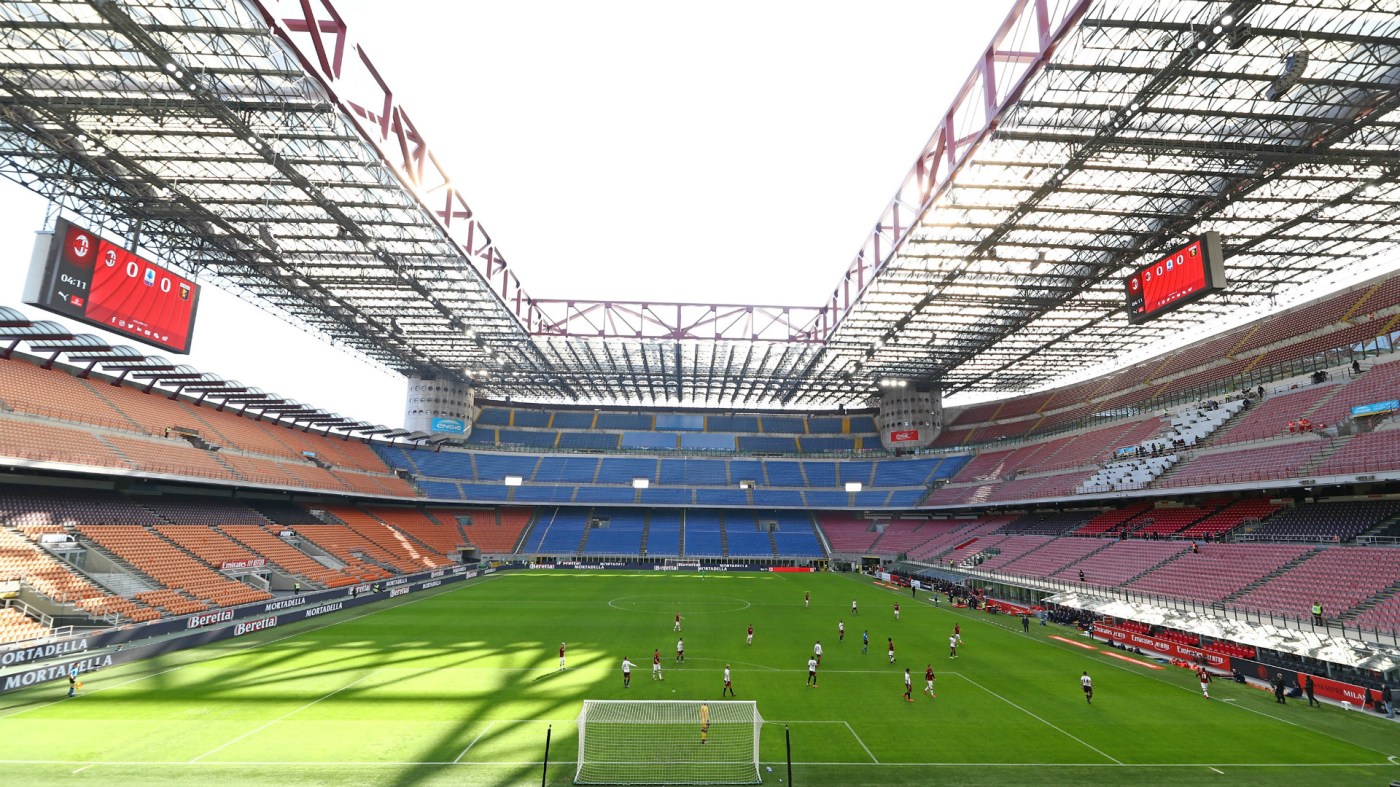
Following the decree issued by the government on March 10, all sports events, regardless of their level, were temporarily suspended until April 3. This measure also applies to professionals, including Serie A football. The top Italian football league comes to a halt after the controversial behind-closed-doors matches over the past weekend. The measure primarily aims to protect the health of athletes, which initially seemed to be a secondary concern.
Setting aside the health aspect, which remains a priority, the decree could lead, if extended beyond April 3, to the cancellation of the season or a sudden conclusion without reaching the 38th matchday. If this scenario were to happen, there would be significant losses from both a sporting and an economic perspective. Let’s focus now on the economic impact.
From an economic standpoint, all clubs would suffer significant damage. The most obvious and substantial loss would be the missed stadium revenue. If the remaining 12 matchdays (13 for the 8 teams still needing to recover the 25th matchday) were not played, clubs would forgo revenue from ticket sales and would also need to refund season ticket holders in proportion to the unplayed or behind-closed-doors home games. An example of this occurred last week. Some teams, such as Milan, Udinese, and Parma, decided to refund all spectators, as this was specified in the ticket sales contracts. Others, including Juventus and Brescia, did not offer refunds, as there were no clauses in their ticket sales contracts for this. However, Codacons, the consumer protection association, intervened on the matter. The association’s president stated: “It is regrettable that Juventus Club decided not to refund fans who are left with unusable tickets due to force majeure. We will send a formal notice to the club, demanding a full refund of the individual ticket and a portion of the season ticket. If they do not comply, legal action will be taken to protect the fans.” There is, therefore, a strong likelihood that all clubs will be forced to refund season ticket holders, even if they did not initially wish to do so. This would result in not only the loss of single-ticket sales but also an additional financial outlay for the clubs, which could have serious repercussions on their economic stability. A similar situation can be observed for clubs in Serie B and Serie C.
For a quantitative example, last year, Juventus earned 66 million euros from its fans at the stadium. Averaging the 51 total matches played by the club, this amounted to approximately 1.3 million euros per game, with a higher figure for home games. If we estimate the same average income for the 2019-2020 season, the club would miss out on 13 matches, including the remaining league games and the return semifinal of the Coppa Italia. This would lead to a loss of about 17 million euros. This figure represents a significant portion of Juventus’ revenue (459.7 million euros in 2018-2019), but a similar analysis for other clubs shows even larger proportions. Thus, the impact for clubs is considerable, especially when considering the potential for Juventus to advance to the Champions League quarterfinals, which would likely generate substantial revenue from a home match. The same can be said for a possible Coppa Italia final or future rounds of the old European Cup.
The arrival of the virus in Italy, along with the resulting restrictions, has had a notable impact on the stock prices of Italian companies, as well as across most of the European Union, albeit with varying degrees of damage. This issue also affects Serie A, as three of the top-flight clubs have publicly traded shares: Juventus, Lazio, and Roma. Juventus’ shares, which were valued at 1.14 euros on February 21, closed trading on March 10 at 0.68 euros (the lowest since June 2018), representing a 0.46 euro drop per share compared to the date the virus was confirmed in Italy. This corresponds to a 40% loss in value. However, it should be noted that the club had not achieved significant sporting results during this period, which typically drive up stock prices. On the contrary, the team suffered a defeat in the Champions League against Lyon.
For Lazio, despite strong recent sporting results, the drop in stock value was similar. The club’s shares were valued at 1.95 euros on February 21 and dropped to 1.17 euros on March 10, reflecting a 40% decline over just over two weeks.
The loss for Roma was smaller, at 27%, with shares dropping from 0.61 euros on February 21 to 0.45 euros on March 10. In this case, the team’s decent sporting results helped soften the impact, though the pandemic delayed the sale of the club to new ownership, which also affected the stock value.
The reduction in stock value and the loss of stadium revenue are just two of the factors impacting clubs economically. Meanwhile, teams are working hard to resolve the situation as soon as possible, primarily for health reasons. It is worth noting the charitable initiatives of some clubs, such as a 100,000-euro donation by Inter president Steven Zhang to the Sacco Hospital in Milan and a 250,000-euro donation by Milan to the Regional Emergency and Urgency Agency. Milan also allowed its fans to convert their ticket refunds for the Genoa match into donations. Juventus also made a notable contribution, donating 3 tons of ready-to-eat meals to those in need, in connection with the postponed Coppa Italia match.
 BOCCONI STUDENTS FOR SPORT MANAGEMENT
Lascia un commento