
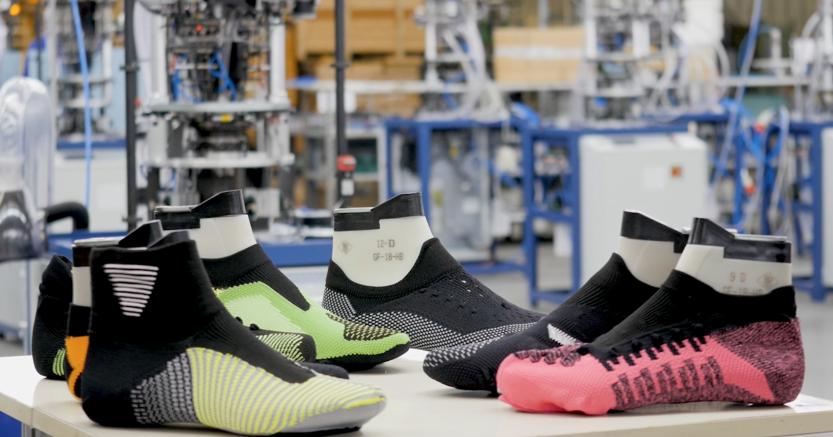
When one thinks of sports, the first images that come to mind are typically of athletes striving for a medal, football players celebrating a goal, or more commonly, people jogging in urban parks. And it’s true—sport is also this, but it is not just that. How often do we stop to observe the net separating the two sides during a volleyball game or the stringbed of a tennis player’s racket, wondering where that object was made? What materials is it composed of? Often, these things are overlooked, or rather, taken for granted, as if the equipment, clothing, and tools that allow us to practice certain sports activities were an irrelevant backdrop to this world. However, as Giuseppe Maranzella, president of ICE (Italian Trade Agency), affirms, “Sport is not only competition, but also equipment, technologies, materials, design, fashion, and nutrition. Behind these aspects, there is a system made up of people, knowledge, investments, and, above all, companies that have helped make Italy a top player internationally.”
In its broadest sense, sport is a real industry, which can be seen as a driver of growth for the economy in general, creating added value and employment across a range of sectors, both manufacturing and services, while simultaneously stimulating development and innovation.
There are about 40,000 sports companies in Italy, generating wealth of 17 billion in production and employing 120,000 people. To understand the leading role this sector plays in the Italian economy, the data provided by the Prometeia-Leonardo Committee study is crucial. “In the last 5 years, the sports sector has shown continuous growth at a fairly strong pace, in sharp contrast to the stagnating dynamics of the Italian economy. Trade, with an average annual growth of 3.9%, has proven to be the most dynamic sector, although the largest gap compared to the benchmark is in manufacturing (+3.7% compared to the 1.1% growth of the total Italian industry).”
Companies producing sports goods, professional sports teams, and event organizers are just some of the players in this sector, which has achieved significant results, especially in exports. In recent years, the growth of sports goods manufacturing companies has been primarily driven by strengthened internationalization strategies, which have enabled small and medium-sized Italian businesses to succeed in international competition. The Italian sports industry has managed to face the exponential growth of competitive pressures from Asian manufacturers (primarily China and Vietnam) with excellent results. As for the geographical composition of Italian exports, the European area remains the main market for the sector, accounting for 70% of total foreign sales.
In this highly positive scenario for the Italian sports economy, it is important to note a limitation that may hinder its growth in the coming years. The small size of these companies is the main barrier to expanding the geographical scope of exports and a serious constraint to development. We will see if this obstacle can be overcome in the future.
 BOCCONI STUDENTS FOR SPORT MANAGEMENT
Lascia un commento