NEWS

THE BLACK BOOK OF FP: MORE TROUBLES FOR JUVE

At the start of this season, Juventus’s problems seem far from over. Despite their recent victory in the Derby d’Italia and an improvement in performances both as a team and individually, these efforts have not erased the disappointment from a lacklustre start to the league and an early exit from the main European competition. This exit came after a disastrous group stage, ending with only three points. According to many, these results are due to a packed infirmary that never seems to empty, instead continually filling up, causing constant headaches for the club’s managers, coaches, and fans.

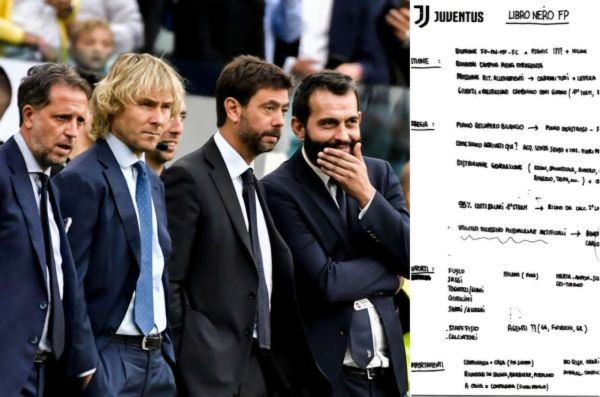
Adding to on-field issues are investigations involving the club’s president and executives regarding the Plusvalenze (capital gains) case, which have only increased the tension in Juventus’s headquarters. While news of investigations into the club’s accounts is not new, it was just a few weeks ago that prosecutors requested house arrest for Juventus president Andrea Agnelli, a request later denied by the preliminary investigating judge. In addition, the famous “Ronaldo Letter” has resurfaced, a document that prosecutors allege Juventus executives attempted to erase.

Though the club insists it has always acted within the law, its troubles appear never-ending. On the morning of 8 November, La Repubblica and other specialist sites reported a fresh twist that further fuels the fire: during a search, investigators reportedly discovered a notebook belonging to Federico Cherubini, Juventus’s current sporting director, titled the “FP Black Book.” FP is thought to refer to Fabio Paratici, Cherubini’s predecessor and now at Tottenham. In this notebook, Cherubini allegedly criticises Paratici’s management. The most striking critiques, cited in various articles, include: “He doesn’t keep time, constantly cancels meetings, holds meetings in saunas, at the barber, or at the podiatrist.” There are also references to “senseless purchases, unsustainable investments,” and “the destruction of a generation: Kean, Spinazzola, Audero…” But perhaps most notably (quoting from La Repubblica), he mentions “excessive use of artificial capital gains,” which provide “immediate benefits” but result in an “amortisation burden” in the years that follow.

This unsettling picture undoubtedly does nothing to ease tensions at Juventus, instead adding further complications for the president, the management, and the fans. Time will tell how the club will respond to these allegations: will they address them directly or remain silent? The situation appears increasingly complex, and after an underwhelming start to the season, Juventus’s problems seem far from over.

By Rodolfo Bianchini

SERIE A LEAGUE READY TO BECOME A JOINT-STOCK COMPANY: A TURNING POINT FOR OUR LEAGUE?

Serie A appears poised to become a joint-stock company, or at least partially so, with the creation of a “media company” that would support a dedicated channel for broadcasting Italy’s premier football league matches. The legal structure chosen is expected to be a joint-stock company, rather than a limited liability one, considering the significant stakes involved. The company’s purpose will extend beyond the production and distribution of audiovisual content to include consulting on TV rights, sales of images and advertising space, gaming and betting, archival rights, and even direct production and distribution of audiovisual products. In short, it will encompass all the primary economic aspects tied to the league. These areas of activity are anticipated to open the door for foreign investment funds in Italian football.

One of the main incentives for proponents of this shift is the potential power shift it could bring. By redrafting the company’s statute, economic decision-making power—often the most contentious—would be removed from the general assembly, effectively taking it out of the hands of the frequently quarrelsome club presidents and directors. This shift could counteract the internal conflicts that have often hindered important innovations needed to keep pace with the top European leagues. Notably, the current CEO of Serie A, Luigi De Siervo, is not mentioned in the reform proposal.

Regarding investment funds, the document states that the joint-stock company would be “entirely owned by the League,” with the possibility of later selling a minority share: the media company is not necessarily tied to private equity, but it clearly paves the way for such funds to enter, as they would likely acquire a stake in this entity.

This move could enhance the “Serie A” brand, appealing to an increasing global audience, particularly overseas, given the substantial presence of American club owners in Italian football. This raises a provocative question: could this be the key to restoring Serie A’s place among the European “Big Five”? Or at the very least, helping it close the gap with the now-dominant Premier League? As football fans know, this is a game about power and billions, and thus a highly sensitive issue. Currently, the coalition of clubs supporting this bold move appears to be in the minority: in the past, private equity was backed by the big clubs but opposed by Lotito’s faction, and now De Laurentiis has withdrawn support, with Scaroni’s AC Milan also less enthusiastic. The aim was to have governance for this new structure in place by the end of the year, but it remains to be seen whether this will happen or if further twists lie ahead.

By Marco Munari

MAX ALLEGRI: TRAPPED IN HIS OWN IDEAS

After becoming the youngest manager since Mancini to win a Serie A title in 2011 with AC Milan (later surpassed by Conte), and experiencing the golden five-year period with Juventus from 2014 to 2019—during which he won five league titles, two Italian Super Cups, and four Italian Cups—Max Allegri is now undergoing an unprecedented decline. Welcomed back to Juventus a year and a half ago as a saviour, expected to begin a new winning cycle, he is today regarded as the main (and by some, the sole) culprit of Juventus’s failure.

This article aims to explore one of the reasons for this decline, focusing less on his lack of tactical innovation and more on the communicative aspect. Indeed, these two years of inactivity have revealed a completely different man. The confident, convincing, almost cocky attitude he once displayed in press conferences has been replaced by a man who is evidently confused, weakened, and lacking certainty. Perhaps this is because the team bears little resemblance to what he envisioned at the end of the transfer market, or perhaps because he has become imprisoned by the structure he himself built over the years. He has long championed an extremely simplified, almost banal approach to football, often in opposition to the “theorists” of the game, yet always bolstered by solid foundations of consistent victories. Now, as soon as those victories are absent, the entire edifice crumbles miserably, leaving him to fight a battle that has become more philosophical than tactical, one which has gradually eroded his personality.

He now appears as a lost man, one who has lost the joy of his profession and has transmitted this sense of disheartenment to his players, who have regressed and become resigned. It is hard to remember a time when Allegri complained about his players, found constant excuses—chief among them injuries—and failed to acknowledge failure. Even his greatest strength, his ability to adapt to any situation and to bring out the best in his players, seems to have been lost.

Further exacerbating this situation is an intense environment in which winning, especially in recent years, has become the norm. Additionally, it is well known that in football, fans often prioritise emotions and immediate feelings over rationality and objectivity, placing high-profile figures on a constant rollercoaster where one day they are heroes, and the next, failures. Carlo Ancelotti went through a similar process, considered finished after his time at Napoli and Everton, only to lead Real Madrid to European glory within a year and reclaim his legendary status.

Ultimately, however, the field, as always, will give the final answer. Time will tell if Allegri has the strength and skills needed to overturn a situation that seems already defined.

By Andrea Dapavo

THE WIMBLEDON-ATP CASE: THE TOURNAMENT READY TO APPEAL

About a month ago, as many are now aware, the All England Club, organiser of Wimbledon, made the drastic decision to ban all Russian and Belarusian players from the tournament as a strong statement against the war in Ukraine (a stance strongly encouraged by the London government for political reasons). Recently, the ATP circuit responded by announcing that points earned by players during the tournament will not count towards the rankings, while points from the previous edition will effectively be removed.

The ATP justified this decision on its official channels: “The ability for players of any nationality to compete in tournaments solely based on merit and without discrimination is fundamental to our circuit. The decision to exclude Russians and Belarusians undermines this principle and the integrity of the ATP rankings, and contravenes our agreement on the ranking mechanism.”

Subsequently, the WTA, which governs the women’s circuit, made a similar announcement.

Therefore, the 2022 Wimbledon tournament, scheduled from 27 June to 10 July, will be effectively a sports exhibition, having no impact on rankings.

However, the All England Club, which has described the ATP’s decision as “disproportionate,” is likely to appeal, with support from the other three Grand Slams (Australian Open, French Open, and US Open).

The latter have not enacted the same measures against Russian and Belarusian players, yet, together with Wimbledon, form the four most prestigious tournaments in the world, potentially risking significant reputational damage should one of them lose competitive significance during a season.

In the worst-case scenario, the appeal could lead to a serious rift between the Slams and the circuits, with the former potentially establishing a parallel ranking system to the ATP and WTA.

This situation feels familiar, evoking the Super League controversy that recently shook the football world.

However, the appeal has yet to be formally submitted, and one of the ATP’s additional arguments – that players could simply have been admitted as neutrals – adds further complexity to how this matter might unfold.

At present, barring unexpected developments, the 2022 edition of Wimbledon, the oldest tennis event in the world, could end up carrying less value than a Challenger.

By Gianluca Zaghis

GOAT-PSG: THE E-COMMERCE PLATFORM BREAKS INTO FOOTBALL

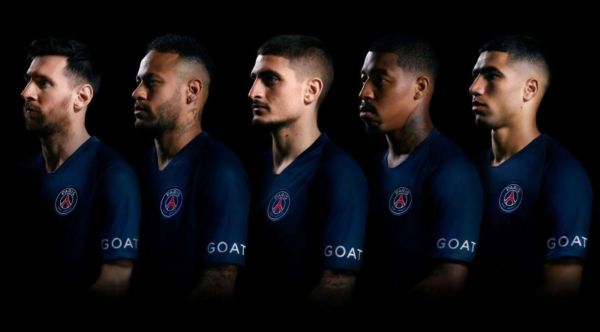
Paris Saint-Germain has signed a three-year agreement with GOAT Group, the online platform that offers sneakers, luxury clothing, and accessories. The club will be the first to have a dedicated section in the GOAT e-commerce store, featuring limited edition items, collaborations, and vintage products. The brand will appear on the PSG kit sleeve and will be promoted on television, online via the team’s social media channels, and at the Paris stadium.

PSG has collaborated with various fashion brands in recent years, alongside its long-standing partnership with Nike. Adding GOAT to PSG’s kit marks a rare occurrence where a sneaker retailer will be promoted on the same uniform as Nike.

The e-commerce company has expanded outside the US, especially in Europe and the Middle East, and works directly with brands like Versace and Balenciaga. The company was last valued at $3.7 billion in a funding round and has now entered the football world to boost brand visibility and enhance its image.

By Antonio Devilla

WHY DOES MANCHESTER UNITED NOT MONETISE SOCIAL MEDIA?

Sports are constantly evolving, and with them, so are marketing strategies. Social media currently enables clubs to expand their target audience and increase visibility, as well as provide an additional source of revenue.

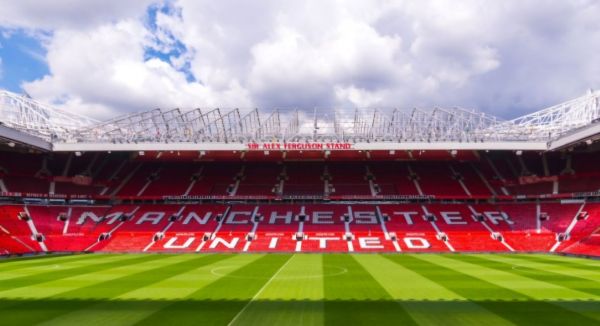
In fact, nearly every club uses social media to monetise and gain additional income – except Manchester United. The English club prefers to use its players as influencers rather than publishing sponsored posts, creating bespoke communication for each player to direct the audience to external websites and acquire data to enhance its e-commerce side, with a particular focus on the team’s star players.

Currently, United boasts the largest fan base in Europe and dominates social media with numbers surpassing those of its rivals, thanks in part to recent signings, most notably Cristiano Ronaldo. His presence alone brings substantial visibility to the team. By using its players to share personal stories, match moments, or anecdotes, United establishes an emotional connection with fans through their favourite players, even if only virtually.

This unusual strategy, unmatched among other top global clubs, is nonetheless shrewd and appears to be yielding results, given the club’s strong following and recent income, despite consistently moderate yet rarely outstanding sporting results.

By Antonio Devilla

FAREWELL TO FINANCIAL FAIR PLAY: HERE IS THE NEW UEFA REGULATION

How many times have we heard about FFP? But more importantly, how often have we tried to discuss it without really understanding what it entailed? Well, now we might still be left with some questions, but we’ll need to shift our reference point. With the official announcement on Thursday, April 7, UEFA decided to overhaul the system that monitors European clubs’ finances, reforming it in a significant and substantive way and even changing its name. It will now be referred to as the “UEFA Club Licensing and Financial Sustainability Regulations.”

As explained by UEFA itself, this reform is focused primarily on the financial sustainability of clubs, without (for now) affecting competitive balance among them.

The new regulations will come into effect on the 1st of June and will be gradually implemented over a three-year period.

Curious about what will actually change? Let’s delve into the details of this reform.

To stabilise a system that was dangerously wavering in the post-pandemic context, UEFA has introduced three fundamental principles in its new financial plan: 1. solvency, 2. stability and 3. cost control.

1 – Solvency refers, as everyone now knows, to the timely payment of debts. The pandemic resulted in an estimated €7 billion loss for the European football sector, and many clubs were forced to increase their debts further. Now, to ensure creditors are repaid (and to facilitate sustainable and less risky investments than in the recent past), UEFA will conduct quarterly checks on the financial position of clubs every March, June, September, and December, allowing a maximum of 90 days to settle any new debt.

2 – Stability pertains to the classic concept of “balance of accounts.” Under FFP, clubs were allowed a deficit of up to €30 million over three years. Now, this limit has been doubled to €60 million. However, unlike previously, these deficits now include expenses that were once considered “virtuous,” such as investments in stadiums, youth development, women’s teams, and donations, which were often used to balance the accounts. New rules also apply to net worth: if it appears negative on a club’s balance sheet, it must improve by at least 10% in the following year. Additionally, this calculation will now be based on the calendar year rather than the season.

3 – Cost Control involves analysing each club’s expenses (player salaries, coaches, staff, agent fees, transfer spending…) in relation to revenue. Over the calendar year, clubs may spend up to a maximum of 70% of their revenue. The implementation will be gradual, with the percentage set at 90% for 2023/2024, 80% for 2024/2025, and 70% for 2025/2026. Cost control is often confused with the concept of a Salary Cap, a typically American system that limits player and coach salaries and mandates a maximum spending limit, which is not part of UEFA’s reform.

Penalties for failing to meet these standards can range from progressive fines to sporting sanctions (banning players from playing, exclusion from tournaments, or relegation to a lower competition).

But for Italian clubs? What can we expect?

Given the current debt situation and considering that Serie A was one of the leagues most affected by the pandemic in terms of revenue decline, maintaining expenses within 70% of revenue will be very challenging for our top clubs, especially since revenue in Italy is generally significantly lower than in other countries, like the Premier League, or top-tier clubs like Bayern Munich or PSG.

These challenges should prompt our clubs to control wage budgets, develop home-grown talent, and invest in facilities that ensure steady, clean, and lasting revenue streams—all areas where Serie A has struggled to gain traction.

Top European clubs, on the other hand, may find these regulations less restrictive: with high revenues, often boosted by substantial sponsorships, teams like Manchester City or PSG can continue to spend heavily on player acquisitions while managing high operating costs.

By Gianluca Zaghis

Sito web creato con WordPress.com.

Su ↑