NEWS

NATIONAL TEAM 360°: THE POST-WORLD CUP, MANCINI AND YOUTH MANAGEMENT, THE ITALO-ARGENTINI, THE CRITICISMS

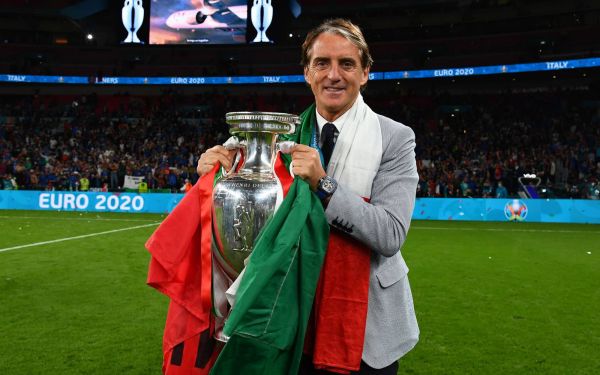
One of the few international breaks scheduled for this season has just ended, the first after the bitter World Cup in Qatar where the Italian national football team did not participate, especially considering that in July 2021, at Wembley, we became European champions by defeating England—a victory still resonating in our memories but swept away by the disappointment of the fatal defeat against North Macedonia in the World Cup qualifiers. Coach Roberto Mancini, however, has remained at the helm of the Azzurri, promising to reach the 2026 World Cup in the United States.

During this break, many discussions have arisen, particularly regarding some statements made by the coach in a press conference, related to the call-ups and results, which, in a normal context, would be acceptable, since a defeat against the more prepared English team and a victory over Malta as the outcome of the two games does not scream scandal. However, the chain of events that led to this situation has sparked many debates. One of these involved the call-up of Mateo Retegui, a 1999-born Argentine-Italian forward from Tigre on loan from Boca Juniors, who responded to his first call-up with 2 goals in 2 matches. The fact that he is an Argentine player, called up for the first time by Mancini, triggered controversies among professionals and fans, as he was thrust into the Azzurri environment as if he had been bought rather than being truly Italian. Retegui is neither the first nor the last “oriundo” (Italian-born player of foreign descent): in the Under-21 squad, Bruno Zapelli, also Argentine, was called up among the Azzurrini. There have been and will continue to be other oriundi, including in future call-ups, as Mancini himself stated in the press conference.

The absence of fully available strikers for the coach led to this choice, which Mancini compared to the way other national teams obtain players from other countries and naturalize them to play. With this strategic choice, there is an opportunity to broaden the talent pool at his disposal. However, let’s not forget the talented young Italians who are already showing the qualities necessary to play for the senior national team, such as Colombo, Udogie, Fagioli, and Miretti (although he is injured), who were called up during this break to the Under-21 team by coach Nicolato, just to name a few.

The debate expands with the recurring theme echoed in all opinions about the Azzurri: we have few talented young players, and these are not being utilized. This is evident to everyone when considering that the percentage of Italians playing in Serie A teams, apart from a few exceptions, is very low; this phenomenon is dangerously spreading even to the youth sectors, where Serie A Primavera teams are full of many foreign youngsters, leaving less space for potential talents born in Italy. Here, the problem can be explained in two ways: either there is no longer potential among Italian youngsters to become champions, or Italian clubs are mainly concerned with results and lack the courage to give more promising youth players from their academies a chance. Returning to Mancini, it is surprising to hear his praise for Pafundi, the 17-year-old forward at Udinese, in response to his call-up for this break, followed by his inconsistent lack of use, possibly due to a lack of boldness or because he was not considered ready.

Mancini’s words and current management have sparked debates because they come after a triumphant European Championship, even from a gameplay perspective, which raised expectations to the sky, only to see them plummet after a dramatic debacle against Macedonia. Following the failure to qualify for the Qatar World Cup, it was thought that all players should be sent home. But the prospect of calling up new players and combining them with the talented homegrown players, who are not few and are already showing their worth, could build a solid and successful national team for the future, making all Italians rejoice in future competitions, like that recent (but also past) July 11, 2021, at Wembley.

Mancini indeed has the great responsibility of delivering results, but also the big challenge of relaunching Italy, silencing the criticisms, which in some cases are exaggerated and shortsighted, typical of fans and professionals.

by Marco Munari

THE ITALIAN DREAM IS STILL ALIVE

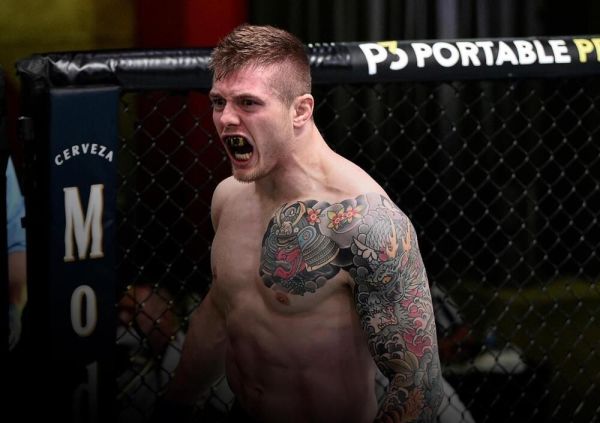
The news of Saturday, March 18th, saw the triumph of Italian Marvin Vettori in the London octagon, defeating Roman Dolidze by unanimous decision and winning UFC 286.

After the tough defeat suffered against Whittaker in Paris, the Italian Dream has returned different, more rational, and more mature, able to manage his energy and tame his opponent’s attacks, striking at the right moment.

The two fighters already knew each other, as they used to train together before Marvin made the decision, a few months ago, to switch teams, moving to Xtreme Couture in Las Vegas and leaving behind his previous gym, the famous KingsMMA, where he had built his previous successes.

The match immediately saw Dolidze start landing some non-trivial punches with great focus. Marvin tries to be more aggressive and not suffer throughout the match while looking for his opponent’s exhaustion, but instead takes more risks by attacking head-on. The start of the match doesn’t seem to favor him, but over time, the great tenacity of the Italian emerges, and some of his moves conclude in the best possible way. In the first round, Dolidze seems to have the upper hand and is more eager (even going as far as throwing an illegal headbutt to his opponent’s chin), but in the second round, Marvin comes out stronger, managing the advantage in the third. The match is very technical and tight, but for his consistency, the judges award the victory to Vettori with a 30-27 score.

The Trentino fighter thus achieved his nineteenth career victory in the UFC, the premier MMA promotion worldwide, positioning himself among the top 5 middleweights in the world. And now the hope for the title becomes even stronger.

by Antonio Spampinato

DISAPPOINTMENTS, BITTERNESS, BUT ALSO HOPES: THE DIFFICULT JOURNEY OF ITALIAN VOLLEYBALL IN EUROPE

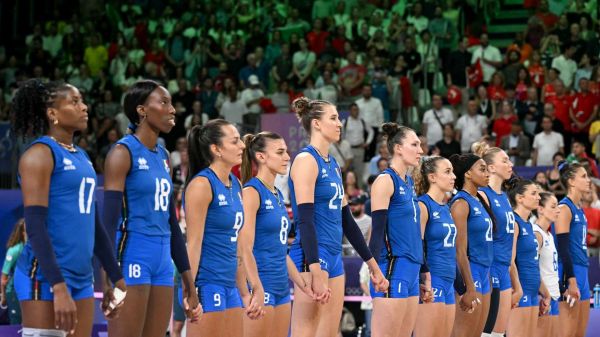
Italian volleyball has been put to the test in Europe during the quarter-finals of the 2023 Champions League Volleyball: a negative outcome for the Italian teams.

On the men’s side, three Italian teams were competing for a spot in the semi-finals: Perugia, Trento, and Civitanova. There was considerable regret for the Trentino and Marche teams: the two teams had lost 2-3 and 1-3 in the first leg against their opponents, but later showed great courage and spirit in the return leg, winning 3-2 and 3-1 against their opponents, respectively. However, this was not enough: both teams found themselves having to give up their tickets to the semi-finals to their opponents, losing in the golden set (to 15 points). Despite the disappointments and bitterness, hope remains for the Umbrian team of Perugia, which will face the defending champions, the Polish team Zaksa, in the next stage of the competition. The road will be tough, but Perugia has demonstrated that it has the necessary qualities to challenge the best.

As for women’s volleyball, the situation is still open, as the quarter-final phase is not yet over. Currently, three Italian teams are still in the game: Milan, Conegliano, and Novara. However, the first two teams suffered a 0-3 defeat in their respective first-leg matches against Vakifbank and Fenerbahce, both from Istanbul. On the other hand, the Piedmont team of Novara achieved a victory against the German opponents Allianz MTV Stuttgart. The situation is therefore uncertain, and anything can still happen for the Italian teams competing in the 2023 Women’s Champions League Volleyball.

Good and encouraging news, however, comes from the CEV Cup: the Modena men’s team is in the final and will face the Belgian team Knack Roeselaere, which defeated Piacenza in the semi-finals. On the women’s side, the Florence team, Savino del Bene Scandicci, the tournament favorite, won 3-0 in the first leg against the Turkish team THY Istanbul, and they will only need to win two sets in the return leg to reach the final.

by Hu Zhuohao

DE LAURENTIIS’ NAPOLI: A MODEL OF HOPE IN SOCCER DOMINATED BY MONEY

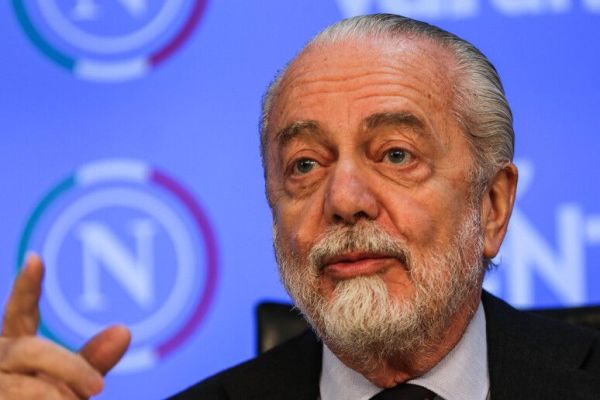
Napoli seems like a perfect machine. With just one loss in the league and a solid 15-point lead over Inter in second place, Spalletti’s team is on its way to a historic Scudetto, their first since the Maradona era. This situation seemed unthinkable after the turbulent summer experienced by President De Laurentiis: Napoli not only parted ways with their historic captain Insigne and symbolic player Mertens (not renewed despite his willingness to stay) but also sold Koulibaly and Fabian Ruiz, both nearing contract expiration and sacrificed for modest fees to avoid losing them for free. In essence, the team’s core was dismantled.

Yet, this past summer, De Laurentiis once again demonstrated his management philosophy: with a solid project based on the ideas of coach Luciano Spalletti, Giuntoli (Napoli’s sporting director) brought in young, unknown players, contrary to fans’ calls for high-profile signings. Leading this list are Kvaratskhelia and Kim.

What unites most of Napoli’s players is their exponential growth in recent years. They are all players developed and improved under Spalletti, proving once again that ideas and hard work on the field can triumph over money and assembling a team of big-name players. Osimhen, Kvara, Di Lorenzo, Lobotka, Kim, and others exemplify this.

The Napoli model is an example of sustainable soccer. In today’s game, achieving great sporting performances while maintaining financial stability seems nearly impossible. All major teams face challenges in this regard, yet Napoli has shown that with a competent sporting director in the transfer market, a skilled coach on the bench, and the right mix of young talent, experienced players, investments, and sales, sustainable soccer is still possible.

By Andrea Dapavo

FOREST GREEN ROVERS: WHEN SOCCER AND SUSTAINABILITY UNITE

In England, there is a soccer team in Nailsworth, Gloucestershire, with a fascinating story: the Forest Green Rovers. This English soccer team is making a difference in the sports world by adopting a fully sustainable approach. Founded in 1889, the team is known for its environmental sustainability policy, which has led to a series of innovative initiatives drawing attention worldwide.

This transformation began in 2011, when the club, struggling with financial issues, was acquired by entrepreneur Dale Vince. Vince is a green energy entrepreneur, founder, and president of Ecotricity, where all profits are reinvested into new projects to create increasingly cutting-edge forms of sustainable energy.

Vince immediately implemented key measures to make the team environmentally friendly: solar panels were installed on the stands, and the playing surface was replaced with 100% organic grass maintained by a solar-powered robot lawn mower and irrigated using an eco-friendly rainwater collection system. Fossil fuels were banned, and electric cars and vans were purchased, with free charging stations made available at the stadium parking lot for fans and the community. The players wear kits made entirely from fabric derived from recycled coffee grounds and plastic.

These innovations earned Forest Green the Institute of Groundsmanship’s “Sustainability and Environment” award.

The players’ diet was also radically changed to a vegan one, educating team members to follow a dietary regime that minimizes environmental impact. For this choice, Forest Green Rovers received the support of the Vegan Society, the world’s oldest vegan organization, which provides nutritional and environmental education programs. Fans were involved in the project as well: vegan food stalls appeared outside the stadium, where staff educate supporters about making more sustainable dietary choices.

In 2018, the team was named the world’s most sustainable soccer club by the United Nations Framework Convention on Climate Change (UNFCCC). That same year, it became the first soccer club globally to achieve “Carbon Neutrality” certification, balancing emissions produced and absorbed as per UN protocols.

This model seems to point toward success on the field as well. In just a few years, the green-and-black team became one of the strongest in England’s lower leagues, debuting this season in League One, the third tier of English soccer, for the first time in its history.

The next step is constructing a 5,000-seat stadium made entirely of wood. It will be the centerpiece of a sports complex called Eco Park, comprising many other sports facilities, offices, and scientific research labs. The choice of wood as the primary construction material perfectly embodies the ecological philosophy of the Rovers’ board. Additionally, the timber used will come from sources that respect tree regeneration cycles.

In short, seeing how a soccer club, even in the lower leagues, follows such a virtuous path suggests that other clubs could—and perhaps should—draw inspiration to make the soccer world increasingly sustainable.

By Marco Munari

FOOTBALL OR SOCCER: WHICH IS BIGGER?

On February 12, the National Football League (NFL) championship final was held in the United States between the Philadelphia Eagles, NFC champions, and the Kansas City Chiefs, AFC champions, who claimed victory, securing their third Super Bowl title ever.

As every year, the anticipation was enormous, not least because the Super Bowl is not merely a sporting event but rather a mix of various kinds of entertainment. This explains the immense media attention it garners annually and its popularity outside the United States, even in countries like ours, where the number of American football fans is certainly smaller. This often leads many, both insiders and others, to claim that American football is a bigger business than European (and global) soccer.

The question is undoubtedly complex; thus, the aim of this article is not to provide a definitive answer but rather to offer a reflection on the topic based on solid data.

To do this, let us start with an initial comparison between the 2023 Super Bowl and the World Cup final held in Qatar last December 18. Before presenting the data, it is worth emphasizing one key difference between the two events: while the Super Bowl occurs annually, a World Cup final takes place every four years. Nevertheless, there is no comparison in terms of viewership. According to FIFA data, 1.5 billion viewers watched the Qatar World Cup final on TV—a number that shattered all previous records—while this year’s Super Bowl recorded a still respectable figure of about 113 million viewers.

Shifting to a broader perspective, considering the entire NFL season instead of a single event, we see the other side of the coin: revenue generation and TV rights, where the American competition reigns supreme. It is estimated that FIFA generated $7.5 billion in revenue from the 2022 World Cup, whereas the NFL produces approximately $17 billion every single season. TV rights contribute significantly to this figure. As reported by Il Sole 24 Ore, the NFL signed new TV rights agreements with CBS, NBC, Fox, ESPN, and Amazon worth a total of $110 billion, nearly doubling previous contracts. These agreements will come into effect in 2023.

The comparison with the numbers from global, European, and Italian soccer is stark. Regarding the last World Cup, RAI in Italy reportedly secured the TV rights for an amount between €150 million and €160 million (according to Calcio e Finanza). Staying within the Italian market, Serie A is worth €840 million per season, totaling €2.5 billion for exclusive coverage of seven matches per week on all DAZN platforms. Meanwhile, the Champions League, spanning five markets (France, the United Kingdom, Germany, Spain, and Italy), brought UEFA €1.5 billion in revenue during the 2018-2021 triennium.

European figures also pale in comparison to another global sports business giant, the NBA, which, according to Il Sole 24 Ore, earns $8 billion annually from TV rights.

In addition to TV rights revenue, NFL franchises benefit from significant income streams from ticket sales (with an average of over 60,000 spectators per game), merchandising, and sponsorships. The latter are steadily growing, focusing more on partnerships with the league and championship as a whole rather than individual clubs.

Comparing total revenues generated, the top five European leagues—Premier League, La Liga, Bundesliga, Serie A, and Ligue 1—collectively generate less income annually than the NFL alone, despite their significantly larger fan base and audience. This striking contrast between fan numbers and total revenue may help explain why one of the driving forces behind the Super League project was rooted in this disparity.

By Rodolfo Bianchini

SERIE A TV RIGHTS CONUNDRUM: WHAT’S HAPPENING?

With 158 votes in favor, 3 against, and 3 abstentions, on Wednesday, February 15, the Senate approved a government amendment abolishing the possibility of extending sports broadcasting licenses to five years. Let’s take stock of the situation surrounding Serie A, DAZN, Sky, and the potential entry of Prime Video into Italy’s top sports scene.

On February 14, Serie A issued a statement after the club assembly, supporting an amendment proposed by Senator Claudio Lotito, Lazio’s president. The statement highlighted that “the possibility of a maximum two-year extension of existing contracts with DAZN and Sky for the 2021-2024 audiovisual rights represents a very useful option, which, while neither automatic nor binding, strategically aids the League and its Associates in ensuring the best and most efficient valorization of Serie A in the coming years.”

However, the proposal for an extension, stemming from the majority coalition that Senator Lotito is part of, was struck down by the amendment, sparking surprise from Serie A president Lorenzo Casini. He clarified that the extension aimed not to favor any particular party but to ensure “better procedures and negotiations.” The official note emphasized that the extension would impose no burden on public finances, as the League hoped to “pursue all possible actions to best enhance the football industry, whose revenue and tax contributions sustain all Italian sports.”

DAZN and Sky, currently paying €840 million and €87.5 million respectively (Sky for three co-exclusive matches) for a total of €927.5 million per season until 2023/24, have yet to comment. However, their support for extensions seems inevitable. Serie A aims to buy more time, as, unlike the lucrative Premier League, the Italian product struggles to fetch around €1 billion due to declining appeal, outdated facilities, and recent judicial issues involving Italy’s top team internationally.

Meanwhile, Antitrust calls for lower prices and broader distribution of football content. Could Sky reclaim exclusive rights to Italian football? And would they outbid London-based DAZN?

As reported by Milano Finanza, speculation about Amazon’s Prime Video entering the mix is gaining momentum. After securing rights to 16 exclusive UEFA Champions League matches and given its vast financial resources, could Prime Video be a plausible contender for Serie A rights?

The future of Italian football’s TV rights is shrouded in uncertainty and unpredictable scenarios. Yet one thing is certain: the Premier League remains far ahead of all other European leagues. Much work lies ahead for Italian sports structures to regain international appeal and attempt to compete with their English counterparts, who currently seem uncatchable.

By Luca D’Addario

FERRARI: THE NEW SF-23 UNVEILED

On February 14, Ferrari unveiled the new SF-23, the single-seater from the Maranello stable set to hit the track for the 2023 F1 championship, now just around the corner. The news of its presentation, followed by the subsequent show, created a stir among fans of the Prancing Horse, but also brought pressure.

And rightly so, as last season was more positive for Ferrari compared to previous years: the team returned to victory. However, what began with high hopes ended in disappointment, leaving the realization that perhaps the pit wall lacked the experience and prestige of rivals such as Red Bull and Mercedes.

The two drivers expressed high praise for the new car, whose design takes inspiration from last year’s model but incorporates numerous innovations. Why be optimistic? Because it stems from a strong foundation (the F1-75) and is not merely an evolution. It marks the culmination of a process, with targeted interventions primarily in two areas.

One of last year’s car’s weak points—reliability—should now be resolved. The engine, which in 2022 never operated at full power and was later downgraded to conservative mappings following failures in Barcelona and Baku with Leclerc, and in Austria with Sainz, is expected to deliver an increase of at least 20 horsepower without breaking.

The other major flaw was the performance drop-off during race pace compared to qualifying, particularly evident in the latter half of the season: the rear tires tended to wear quickly in slow corners due to lateral sliding caused by a lack of aerodynamic load. To address this issue, extensive research on the underbody was required to better utilize airflow and improve grip at low speeds, without compromising performance at high speeds. This process involved gradual steps, utilizing simulators and wind tunnel tests, with a series of aerodynamic tweaks invisible to the naked eye.

For the unveiling, Ferrari made no secret of its ambitions, conducting laps at Fiorano with both drivers. While these were not proper tests and no conclusions can be drawn, Leclerc’s radio message to Sainz, saying, “I’m not letting you take it,” referring to a driver switch during the laps, offers hope for a strong season.

A reflection is necessary, though: it’s true that the atmosphere at Ferrari is different. Binotto is gone, replaced by a daring Vasseur, who appears very optimistic and enthusiastic about this season. However, Vasseur’s contribution to the development of the SF-23 has been minimal, as most of the work was done during the previous season under the direction of former TP Mattia Binotto. This doesn’t imply inefficiency—in fact, quite the opposite—but it does mean that Vasseur cannot be blamed for potential shortcomings in the car’s development.

Another consideration is that Mercedes appears to be in form this year, judging by the end of last season. Lewis Hamilton, coming off the first winless season of his career, will be highly motivated, and early rumors suggest the German team could be the true surprise of the season. It is unlikely they will falter for two consecutive years, presenting Ferrari with another serious competitor for the title. Under a Ferrari presentation post, Mercedes even teased the team. Yet the stakes remain open, and only time will tell.

Finally, presenting the car on Valentine’s Day may not be a coincidence—perhaps it’s a sign that fans will fall madly in love with the SF-23.

By Antonio Spampinato

Sito web creato con WordPress.com.

Su ↑