
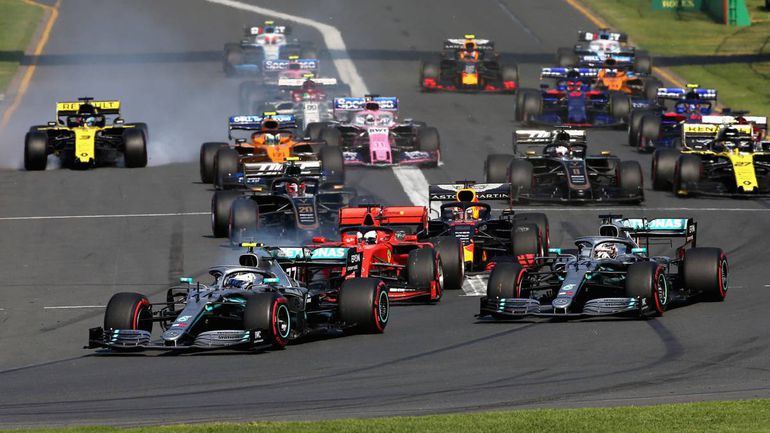
Every year, millions of Formula 1 fans around the world eagerly await March and the return of the racing season in Melbourne with the Australian Grand Prix. The first race of the year is always followed with great interest: teams have the opportunity to showcase their new car in an official race and prove that excellent work has been done in the factory during the winter break.
This year, expectations for the first Grand Prix were high, but unfortunately, due to the health emergency related to the Coronavirus, the event was canceled just two hours before the usual Friday free practice sessions. The situation that unfolded in the preceding days was quite paradoxical, as the FIA waited until the final hours to make a decision that probably should have been made several days earlier. After the MotoGP’s decision to cancel upcoming races, Ross Brawn, the managing director of the Formula 1 project, had reassured fans that the Australian Grand Prix would go ahead as planned.
The teams traveled to Melbourne, and everything seemed to proceed as usual, despite the tragic situation developing across Europe. Formula 1 appeared to be living in a world disconnected and immune to the coronavirus until the night before the event, when McLaren announced that one of its workers had tested positive, leading to the entire team’s quarantine and their inevitable withdrawal from the Grand Prix. Despite McLaren’s official withdrawal, the FIA decided not to make a statement that evening, leaving everyone waiting for a decision. As usual, race officials and some teams arrived at the circuit on the morning of the event, and tens of thousands of spectators did the same, only to find the gates closed. Initially, without an official communication, several rumors suggested the race would go ahead but behind closed doors. Unfortunately, the lack of an official statement from the FIA led to a dangerous situation, with spectators crowding at the gates, creating a high risk for the spread of the virus. At 10:15 AM local time, the FIA officially announced the cancellation of the Australian Grand Prix.
It was certainly not an easy decision to make, especially just a couple of hours before the event, as the cancellation caused significant financial damage to sponsors and to the state of Victoria, given the large expected turnout, especially on Sunday. With most sports competitions and leagues worldwide suspended, it would have been paradoxical to race in Australia, making the FIA’s decision reasonable. However, one might question whether the cancellation should have occurred earlier, before the teams gathered in Melbourne. Although the rapid rise in cases globally was difficult to predict at the time, perhaps the FIA should have followed the MotoGP’s lead, which announced the cancellation of the first two races in early March.
Another even more enigmatic question concerns the future of Formula 1 and the upcoming races. The Bahrain and Vietnam Grand Prix, originally scheduled for the next weeks, have been postponed indefinitely, pushing the start of the season to May in the Netherlands. Many believe that even the races planned for May could be canceled, and that this unusual season may start in June in Baku, Azerbaijan. However, given the rapid and ongoing developments of the situation, it is difficult to predict exactly how long fans will have to wait before seeing the cars back on track. If the season resumes in Baku, high-profile European races like Monaco could be missed for the first time since 1955.
The decisions the FIA must make are crucial, not only for the event schedule but also for the development of the cars. At Maranello, home of Ferrari, the headquarters will remain closed until early April to protect the health of its employees. This decision, made by Ferrari itself, is entirely rational given the situation in Italy, but it may certainly work against the improvement of the car. Other teams are still working at their facilities to enhance their cars and make them even faster for the start of the season. In such a competitive championship, every extra day of work can be decisive for the final standings, so the shutdown of Maranello could negatively impact Ferrari’s season. If the closure of Maranello’s headquarters is extended, it is expected that the FIA will issue a statement to close the headquarters of other teams as well.
In such a delicate global emergency, competition and sport must take a backseat. It is reassuring to hear that the health condition of the McLaren employee who tested positive is improving and that the FIA is monitoring the situation day by day, potentially canceling future races if necessary. Fans will have to wait a few more months before seeing their favorite cars on track again, but in the meantime, many drivers, such as Lando Norris, are organizing live streams on social media while competing in virtual races, following in the footsteps of e-sports champions. Furthermore, the fact that the Bahrain and Vietnam Grand Prix have been postponed rather than canceled means they are likely to be rescheduled for the fall, making the final months of the Formula 1 season even more intense and decisive than ever.
 BOCCONI STUDENTS FOR SPORT MANAGEMENT
Lascia un commento