
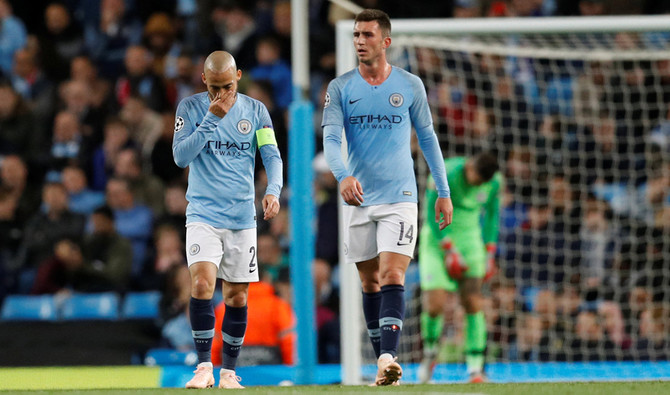
Last Friday, UEFA, the governing body of European football, announced its decision to exclude Manchester City, the reigning English champions, from all continental competitions for the next two seasons. The club, which has emerged as one of the world’s footballing powerhouses since its acquisition by Sheikh Mansour of the United Arab Emirates, has benefited greatly from significant investments by its new ownership. However, this growth has come to a halt following UEFA’s decision on February 14, which was based on breaches of the Financial Fair Play (FFP) regulations. UEFA’s goal is to reduce financial disparities between football clubs across Europe. In addition to the two-year ban, the club is also required to pay a €30 million fine.
What are the reasons for this sanction, and what might the consequences be, not only for Manchester City but also for European football as a whole?
The dispute between Manchester City and UEFA began in 2014. On May 16 of that year, the club was forced to sign a settlement agreement with UEFA, which included a €60 million fine and a restriction on increasing spending on player wages for the following two seasons. The initial sanction stemmed from the club’s questionable relationship with its sponsors, particularly Etihad Airways. The airline, which signed a ten-year sponsorship deal worth around €400 million in 2011, is controlled by relatives of Sheikh Mansour. This sponsorship, included in City’s financial reports, was not classified as a related-party transaction, a view contrary to that of UEFA investigators, who considered it more akin to a capital increase than a commercial deal.
Manchester City officially exited the settlement agreement in April 2017. However, UEFA reopened its investigation on March 7, 2019, to assess further potential violations of the FFP regulations. This investigation concluded on May 16, 2019, with the club being referred to UEFA’s Financial Control Body (CFBC).
The ruling by the CFBC, issued about two weeks ago, was severe: exclusion from the Champions League represents a significant blow, depriving the club of a broad range of potential revenues, both commercial and sporting. It could also trigger an exodus of key players, as well as an early departure for Pep Guardiola, the highest-paid coach in the world.
As outlined, the legal battle between Manchester City and UEFA has been ongoing for years, and it seems far from over. Just minutes after the ruling was announced, the club issued a strongly worded statement declaring its intention to appeal to the Court of Arbitration for Sport (CAS). The club accused UEFA of launching and pursuing the case in a biased and non-impartial manner.
Sources close to the club report that City’s legal team is preparing a dossier to shed light on the sponsorship deals of other major European clubs and why they have not been investigated by UEFA. It appears that Manchester City is not willing to accept defeat without a fight and intends to take others down with it if it must.
The outcome of this legal battle remains uncertain, but it could have significant implications for European football, potentially rivaling the 1995 Bosman ruling. If the CAS overturns UEFA’s decision, it would severely damage the credibility of Financial Fair Play and, more broadly, UEFA itself. At the same time, if the investigation were to be extended to other clubs, it could trigger a major judicial upheaval in European football, with far-reaching consequences. In such a scenario, the Manchester City case would be only the first of many.
 BOCCONI STUDENTS FOR SPORT MANAGEMENT
Lascia un commento