
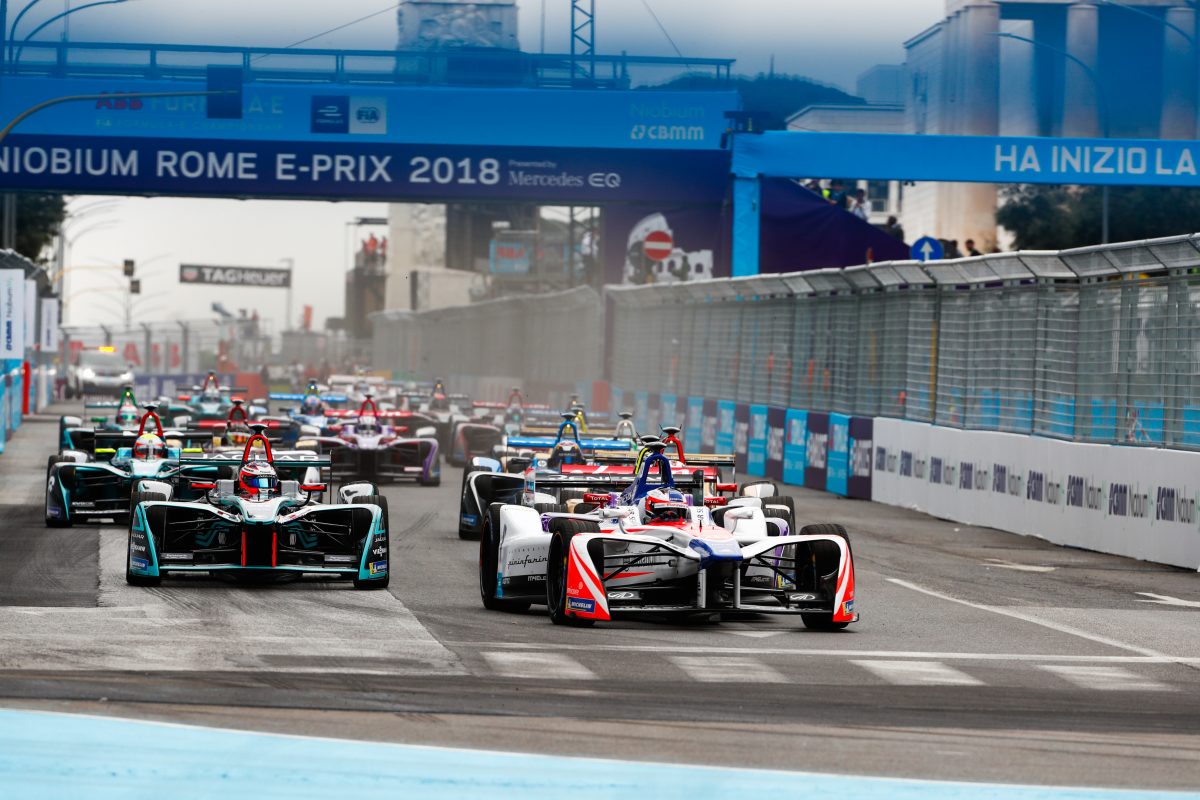
The future of motorsport will be hybrid, if not fully electric. The push towards technical innovation that is increasingly sustainable and less harmful to the environment inevitably follows this consideration. And undoubtedly, one of the most profitable sports businesses in the world could not sit idly by.
This was the vision behind the project informally launched by FIA President Jean Todt. During a dinner in Paris with Alejandro Agag and Antonio Tajani in 2011, Todt presented the idea of a series reserved for electric vehicles. The goal, visionary at the time, was to create a championship that could demonstrate the potential of sustainable mobility in contributing to the creation of a cleaner, better world.
The current President of the European Commission was pleasantly impressed by the proposal, convinced it could give a major boost to the electrification of the automotive industry, with a decisive impact on reducing carbon dioxide emissions. After obtaining institutional approval, Todt turned to Agag, who would take the lead of this new series, leveraging his prior experience in the industry and in negotiating TV contracts, sponsorships, and marketing.
The rise of Formula E was rapid, aided by the immediate involvement of experienced drivers, including those from Formula 1. After just under two years of testing, the 2014 calendar was set for the first motorsport championship entirely made up of electric-powered vehicles.
As the competition gained popularity, there was a parallel technical evolution in the performance of the racing cars. Between the first and second generation of race cars, crucial changes were made: accelerations and top speeds were revised thanks to new construction materials. The new models now reach 280 km/h, with acceleration from 0 to 100 km/h in 2.8 seconds. Significant innovations were also implemented in the field of pure motor engineering, including a new electrical system and a revision of the allowed energy consumption.
Now in its 5th edition, the championship has continuously updated its regulations. In the 2018/2019 season, new rules will be introduced, promising even more exciting races and greater fan engagement. In addition to the new race cars, the updated regulations are designed to maximize the performance of these vehicles, with races now timed rather than based on the number of laps. Drivers will race for 45 minutes, followed by an additional lap before crossing the finish line.
Formula E is becoming an increasingly attractive business, as evidenced by the recent lucrative commercial agreements for technical and broadcasting support with exclusive deals from Michelin and ABB, as well as major sponsorship partnerships with Bosch, Moet Chandon, and Heineken.
A distinctive feature of Formula E is its organizational structure, designed for entertainment. The underlying idea was to create a championship accessible to fans, with a “green carpet” experience tailored to the spectator. The stunning locations hosting the Grand Prix are all set in urban circuits, adding to the event’s unique charm.
Thus, while it is true that the future of motorsport will be dominated by electric power, what initially seemed like a small idea has evolved into a far-sighted and successful reality.
 BOCCONI STUDENTS FOR SPORT MANAGEMENT