NEWS

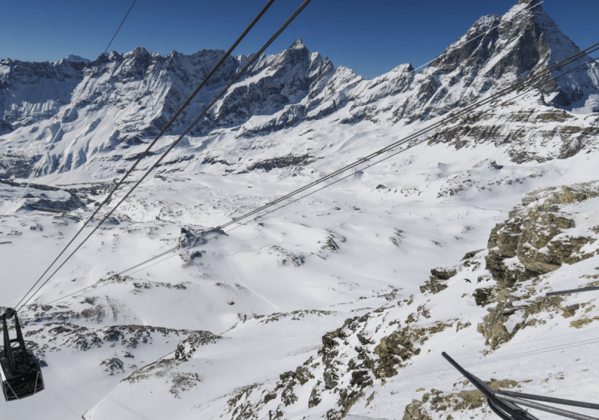
ALPINE SKIING WORLD CUP: GREEN LIGHT FOR THE ZERMATT-CERVINIA CROSS-BORDER RACES 

After environmental challenges, confirmation comes for the November races. 

Expectations are sky-high: after last year’s interruption due to a lack of snow, this year there is great enthusiasm thanks to better snow conditions and more careful planning. However, some complications related to the environment have cast a shadow over the races scheduled for November 11 and 12. 

Environmental Challenges and Administrative Issues 

In the last ten days, the organizers not only had to prepare the course but also faced administrative and legal challenges. 

It all began when some environmental groups raised concerns about work on the Theodul Glacier, located in Swiss territory. In response to these reports, the Building Commission of the Canton of Valais decided to immediately ban the use of parts of the course outside the ski area, pending approval of the necessary building permits. 

Investigation in Italy as well 

The environmental issues triggered an investigation in Italy regarding the work on the Italian side. 

During a regional council session, the Economic Development Commissioner, Luigi Bertschy, clarified the situation, stating that the work is proceeding in compliance with regulations. The two sections on the Italian side in question include one designated for the World Cup course, while the other concerns a tourist slope of the Ventina – 7 Bis. 

It should be noted that at present there are no suspects or allegations of wrongdoing, and the investigation will not affect the regular progression of the race. In fact, the company responsible for the work had already obtained all the necessary authorizations and permits to operate lawfully, even during last year’s edition. 

The Sporting Verdict: Despite environmental uncertainties, the organizing committee has ensured that the necessary adjustments will be made without compromising the sporting aspect of the course. 

Optimal Snow Conditions 

There is reassuring news: the snow control conducted by FIS (International Ski Federation) yielded positive results, guaranteeing the feasibility of the men’s downhill races. In addition to recent snowfall, the organizers have benefited from a considerable amount of snow accumulated in previous months. 

By Maddalena Loro 

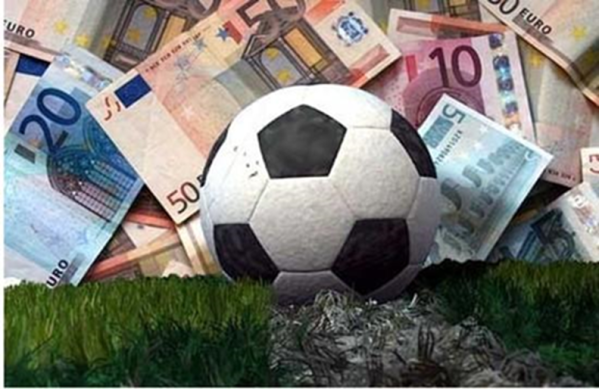
BETTING SCANDAL: WHO ARE (FOR NOW) AND WHAT RISKS THE PLAYERS INVOLVED IN THE SCANDAL FACE

In recent days, a new football scandal has emerged: the names of young players accused of betting on illegal platforms have been revealed. 

It all stems from an investigation by the Turin Prosecutor’s Office, which began this summer, into gambling on some websites that did not have a license from the State Monopolies. The Turin prosecutors discovered that among the bettors is Fagioli, a Juventus midfielder, and the news was anticipated by the well-known television personality Fabrizio Corona. 

A few days ago, two other names were revealed: Tonali and Zaniolo. In Coverciano, the two national team players were notified of investigative acts by the Turin Prosecutor’s Office and were forced to leave the national team camp at the request of FIGC. 

This is not the old “match-fixing” scandal, where games were sold and bought, but rather bets and wagers of large sums of money on football match outcomes on illegal sites, suggesting that the protagonists might be true gambling addicts. 

The statements by Fabrizio Corona continue to shake the world of Italian football. In a phone call with a journalist from the Corriere della Sera a few days ago, he declared that he is in possession of a long list, 50 names of players involved in betting episodes. 

The investigation, therefore, seems to be only at the beginning, other declarations are awaited, but in the meantime, the involvement of many players represents a serious threat to the image of Italian football at the international level. 

From a criminal standpoint, if the protagonists are only players and not organizers of the bets, they can settle or pay a fine. From a sports perspective, however, the Prosecutor’s Office is investigating the violation of the ban on betting by registered players, as an athlete, under Article 24 of the Code of Sports Justice, cannot bet on their own discipline and risks up to 3 years of disqualification. 

In the case of Nicolò Fagioli, FIGC has already formalized the measures: 7 months of disqualification (the reduction of the sentence was foreseen for the immediate plea bargain) starting from October 20, in addition to another five months converted into the alternative penalty of a therapeutic rehabilitation path, and the payment of a €12,500 fine for having participated in betting on football matches. 

At the moment, there are no risks for the clubs of the players under investigation. Only if it were proven that the result of a match was manipulated with the collaboration of the managers would sanctions be triggered; the possible failure to report, if the managers were aware, would lead to personal accountability.  By Chiara Arsieni

THE PALLADINO EFFECT ON THE MONZA PROJECT

Monza is one of the most media-famous teams in recent years. In 2018, Fininvest fully acquired the team, then playing in Serie C, for around 3 million euros and, most importantly, appointed Adriano Galliani as CEO. Thus, the Berlusconi-Galliani duo, which for years made AC Milan fans dream, was reunited, now giving hope to Monza supporters. Indeed, after a relatively smooth four-year journey and transfer campaigns in the lower leagues enviable even to Serie A teams, Monza reached the top tier for the first time in its history. 

Galliani confirmed Giovanni Stroppa as head coach and began assembling a squad aimed at securing a comfortable survival or even something more. Approximately 20 million euros were spent to build a team with a precise vision dictated by Berlusconi: a young, Italian, and competitive squad. With signings like Pessina, Sensi, Caprari, Petagna, and many others, an eleven began to emerge, composed of experienced and skilled players accustomed to the tactical demands of the Italian league. In short, the newly promoted side had excellent prospects, and in addition to its fans, a large group of sympathizers formed around the team due to the excitement generated. 

After a hard-fought victory in the Coppa Italia against Frosinone, Torino, a hopeful and challenging opponent led by coach Juric, visited the Brianteo. Monza lost 2-1, possibly leaving too much depth and space between the lines to a team whose offensive strategy thrives on such gaps. 

In the following matches, five defeats and a draw exposed difficulties Stroppa had already shown in Serie A with Crotone. Giovanni Stroppa, an Italian coach born in 1968, was in his third Serie A stint, having achieved promotion twice before with Crotone. He is considered a promotion specialist. His typical setup, a 3-5-2, emphasizes ball possession, wing play, and consistent presence in the opponent’s half. In possession, the central defender in the back three dictates the tempo and orchestrates ball circulation, the wide center-backs spread out, the wing-backs push forward, and midfielders exploit spaces between the opponent’s midfield and defense. However, this formation, as seen with Crotone, proved perhaps too offensive for Serie A. With the league’s higher pace, the delay in midfielders and wing-backs retreating after losing possession left vast spaces in Monza’s formation, which teams in the top division exploited ruthlessly. 

Consequently, after five defeats, a draw, and 14 goals conceded, the relationship between Monza and Stroppa came to an end, leading to a casting call for his replacement. Many names were considered, including De Zerbi and Ranieri, but Berlusconi and Galliani ultimately opted for a less predictable solution: promoting Primavera coach Raffaele Palladino. 

This decision surprised many Monza and neutral fans. Entrusting a young coach with no Serie A experience to manage a team embroiled in a relegation battle—was it the right move? Adriano Galliani vouched for Palladino, stating that “he has the makings of a great coach,” not a recommendation to be taken lightly. Thus, Raffaele Palladino, born in 1984, took charge of Monza’s volatile bench, facing a daunting challenge: a match against Juventus the following Sunday. 

Regarding his coaching style, Palladino mentioned in his first press conference that he draws inspiration from Gasperini and Juric, his former coach and teammate, respectively. Their high-pressing, high-intensity approach has proven successful in Serie A. 

What has Palladino brought to the table?

First, enthusiasm, bolstered by his first Serie A experience. Then, mental and defensive stability. Being very young (38 years old), nearly the same age as the players, and recently retired from playing, he has fostered a close, almost collegial environment, earning the players’ full trust. Moreover, by continuing with a formation similar to the one Stroppa had used for two years, Palladino found already established principles, particularly for the three-man defense. 

What changed?

He transitioned from a 3-5-2 to a 3-4-3, sidelining Stroppa’s loyal players (Marrone and Molina) and opting for an experienced three-man defense and a striker who acts more as a penalty-area target man than one who roams across the front line. The main changes, however, were on the flanks. On the left, promising talent Carlos Augusto, who Stroppa often used as a central defender, moved forward, while on the right, Birindelli was replaced by Ciurria, a left-footed attacking winger deployed in an unfamiliar position to enable inverted crosses. 

It was precisely this combination of initial enthusiasm and tactical adjustments that led Monza to its first historic Serie A victory against Juventus. How? With a 1-0 win, courtesy of a goal from a penalty-area striker (Gytkjaer) assisted by an inverted-foot cross from Ciurria. 

Visionary or not, Palladino managed to uplift Monza players during a dark period, injecting the vital energy essential for any team, especially one battling relegation. Will it continue? Adriano Galliani assures us it will. 

By Tavella Pietro

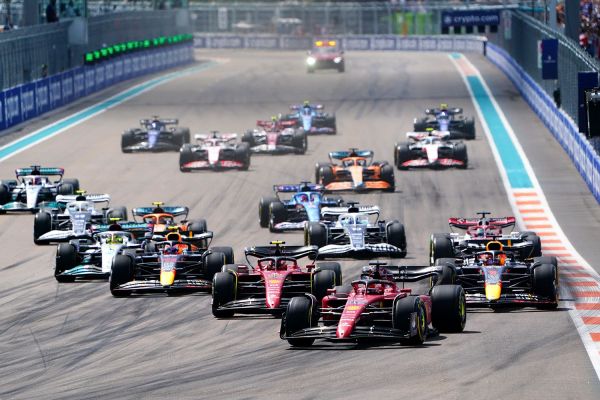
THE BUDGET CAP ISSUE

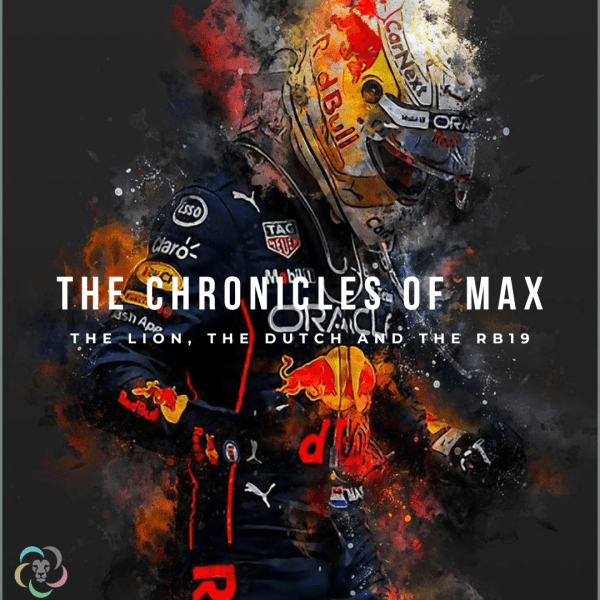
On October 11, 2022, an FIA statement significantly stirred emotions regarding the Budget Cap issue in Formula 1. The matter, which had already been known in previous weeks, took a sudden turn following Max Verstappen’s championship win, achieved with his first-place finish at the Japanese Grand Prix in Suzuka. Verstappen’s team, Oracle Red Bull Racing, alongside Aston Martin, was found guilty by the Fédération Internationale de l’Automobile (FIA) of violating financial regulations. However, there is a distinction between the two cases: while Aston Martin’s infraction was merely procedural (failing to include a budgetary item that should have been accounted for), resulting in a simple fine, Red Bull breached the cost cap, albeit to a lesser extent. 

The term “minor breach,” as stated in the FIA’s official communication, caused some confusion among Italian media, but the FIA’s interpretation refers to a violation below 5% of the $145 million Budget Cap, equating to $7.25 million. In the days leading up to the verdict, Red Bull worked with the FIA to argue that certain items should not be included in the Budget Cap, though the FIA disagreed. This effort allowed them to avoid falling into the category of a “material breach,” which would have resulted in more severe consequences. However, the situation remains significant. 

The aspect raising the most doubts is the fact that this regulatory infraction pertains to the 2020-2021 season. This season was notably won by Red Bull driver Max Verstappen in the final race against Lewis Hamilton. Initially, economic reports suggested that Red Bull made illegal modifications to the rear wing to generate greater downforce. However, more recent reports indicate the team exceeded the Budget Cap due to personnel vacation costs and post-race catering expenses. Nonetheless, these claims, which Red Bull has not denied, should not be automatically accepted as true, given that penalties also depend on which budget items were involved. Consequently, it could be in Red Bull’s interest to promote such narratives. 

A post on Red Bull’s social media channels does not indicate any intention from the team to admit guilt or back down, suggesting that this matter could persist for some time. Meanwhile, the FIA has reserved the right to decide in the coming days. Potential penalties, which can be combined, include: 

– Public reprimand; 

– Fine; 

– Exclusion from sessions, except the race; 

– Limitations on wind tunnel usage for future developments; 

– Budget Cap reductions for future seasons. 

These are the most probable sanctions, though there is concern that this dangerous historical precedent might lead other teams to exceed the Budget Cap deliberately to win a championship, accepting minor penalties in the following season—or, as in this case, two years later. For this reason, two additional sanctions could be more appropriate: 

– Deduction of points in the 2020-2021 Constructors’ Championship (won by Mercedes); 

– Deduction of points in the Drivers’ Championship, leading to the 2020-2021 title being awarded to Lewis Hamilton. 

Further developments are sure to follow, as the 2020-2021 World Championship is once again under scrutiny. For the FIA, this will be a historic decision, which could take more time to finalize. Regardless of the outcome, one thing is certain: from this moment on, Formula 1 will never be the same. 

By Spampinato Antonio

2030 WORLD CUP IN MOROCCO, PORTUGAL, AND SPAIN… A SETUP FOR RIYADH?

One year away from the official announcement, the names of the countries that will host the 2030 World Cup are already circulating, but Saudi Arabia can be considered the real winner.

Although it will still be a year before the official vote by the FIFA Congress, it is essentially decided: Morocco, Portugal, and Spain will organize the 2030 World Cup.

This will be the first time Morocco and Portugal host the tournament, and the second time for Spain, after the 1982 edition, a World Cup fondly remembered in Italy. The three-country formula will be repeated, following its debut in 2026 with Canada, Mexico, and the United States. Moreover, it will be the first World Cup held across three continents. To “best celebrate the Centennial World Cup,” FIFA has announced that three opening matches will be played in Argentina, Paraguay, and Uruguay. This unprecedented decision has sparked considerable debate.

The anger and astonishment of many, including “Football Supporters Europe,” the only fan group officially recognized by UEFA, which has called the 2030 and 2034 editions “the end of the World Cup as we know it,” stem not only from the environmental and logistical challenges for players and fans but also from the implications for the allocation of the 2034 edition. According to FIFA regulations, countries from confederations that have already hosted a previous World Cup are banned from submitting bids for the next edition. Effectively, only Asia and Oceania will be able to host the 2034 World Cup.

The response from the Saudis was quick. An hour after FIFA’s announcement, the Saudi press agency issued a statement in which Prince Mohammed bin Salman expressed his country’s interest in hosting the World Cup. With the backing of the president of the Asian Football Confederation, which includes Australia, Saudi Arabia is nearly certain to win the bid, following a joint bid attempt (which was later withdrawn) with Greece and Egypt for the 2030 World Cup.

The only obstacle to Saudi Arabia’s triumphant bid could be the uncertain Australian candidacy. However, it faces an almost impossible deadline of October 31, 2023, to confirm its interest in an unusually short process that will conclude with the final decision in 2024. Beyond the deadline, the Socceroos will need to partner with countries from New Zealand and Southeast Asia. They are also likely to be penalized due to hosting the recent Women’s World Cup.

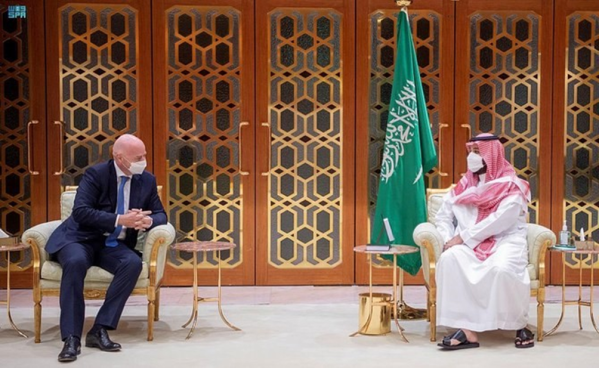
If that’s not enough, the last World Cup in Qatar offers another clue: at the 2022 Qatar World Cup opening ceremony, Prince Mohammed bin Salman was seated next to Gianni Infantino… A goal with an open net?

By Federico Petrella

STORM OVER BARCELONA: THE CLUB ACCUSED OF CORRUPTION FACES CHAMPIONS LEAGUE RISK

The Blaugrana club is in crisis over the Negreira case: serious penalties are being considered, including exclusion from European competitions and the dissolution of the club.

September 28, 2023 – Barcelona is facing a serious situation due to the “Negreira case.” The police conducted searches at the Spanish Football Federation and the headquarters of the referees’ body. The Catalan club has been accused of making substantial payments, totaling around 7.5 million euros, between 2001 and 2018, to former referee and vice-president of the Spanish refereeing body, José María Enriquez Negreira.

Currently, Joaquín Aguirre, the investigating judge at Court Number 1 in Barcelona, is leading the investigation. He has issued an order against the club and former presidents Sandro Rosell and Josep María Bartomeu, stating that the payments made “served the interests of the club,” producing “the desired refereeing effects for Barcelona, with a disparity of treatment compared to other teams.”

According to Aguirre, the offense is not only a sports-related matter but also a criminal one. The judge has recently modified the charge from “corruption of individuals” to “corruption of authorities or public officials” since, at the time of the events, the Spanish Football Federation, from which the Technical Refereeing Committee was dependent and of which Negreira was vice-president, “carried out public functions,” thereby aggravating the potential penalties.

According to the Spanish newspaper El Mundo, the Catalan club could face bankruptcy if convicted, as “as a legal entity, it should be punished with a fine ranging between three to five times the profit obtained, which should be calculated based on the profits made from titles won in the 18 years of allegedly manipulated competitions.” The judge, according to El Mundo, could also order “the closure of premises, the stadium, suspension of activities, ban from competitions, and even dissolution” of the club.

As for sports competitions, UEFA, in its official statement, has decided to admit Barcelona provisionally to the upcoming Champions League edition, while for La Liga, the case has expired since the last Discalia report dates back to 2018, and according to Article 112, “more serious infractions are prescribed after three years.”

By Chiara Arsieni

JANNIK SINNER’S STUNNING VICTORY AT THE 2023 CHINA OPEN

An extraordinary result for the 2001-born, that shakes up the world rankings and fills Italian tennis with pride

Milan, October 4th, 2023. The prestigious tennis tournament China Open, which took place in Beijing, concludes today with the astonishing victory of the Italian Jannik Sinner.

For Jannik Sinner, this tournament served as a reaffirmation of his talent, leading him to the top of the international podium. He achieved this by defeating the formidable Russian player, Daniil Medvedev, who is currently ranked as the world No. 3 in singles by the ATP (Association of Tennis Professionals). Sinner secured victory in straight sets, 7-6(2) 7-6(2), marking his first-ever career win over the Russian. This victory marked Sinner’s 9th career title, the second ATP 500 title since his triumph in Washington in 2021, and the third within the calendar year.

The match, lasting 2 hours and 1 minute, was intensely competitive, offering no room for rest. Both players had their chances, with Medvedev taking the initiative initially. However, the Italian, born in 2001, defended himself admirably. Sinner took control with a dominant tie-break, leading 5-0 and eventually winning 7-2, securing the first set. In the second set, the situation remained tense. Medvedev had to work hard to fend off three break opportunities from the Italian. The match concluded with another tie-break, and Sinner found himself in a situation similar to the set before, winning 7-2.

Jannik Sinner emerged as the winner of the 2023 ATP 500 Chinese tournament in Beijing.

In this perfect week, the Italian celebrates yet another significant achievement: after defeating the Spanish phenomenon Carlos Alcaraz (world No. 2) in the semifinals, Jannik Sinner will rise to the rank of world No. 4 in the ATP rankings from Monday onwards. This position was last held by the illustrious Adriano Panatta back in 1976. In response to this milestone, Panatta was interviewed and stated, “Now, when he will surpass me, because he surely will, I say already now that I will be even more happy, so best wishes to Sinner and best wishes to Italian tennis“.

By Maddalena Loro

Sito web creato con WordPress.com.

Su ↑