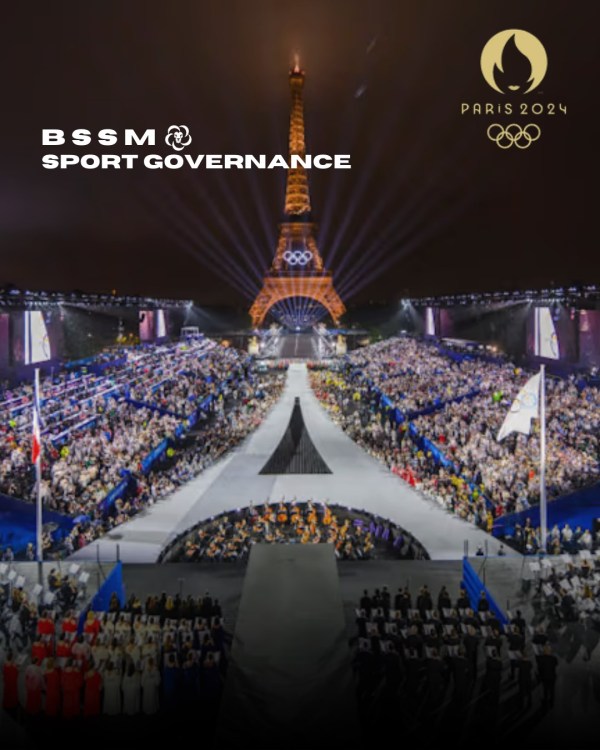
The Paris 2024 Olympic Games were one of the most anticipated international sporting events of the decade. More than a century after hosting the Games in 1900 and 1924, the French capital welcomed athletes from 204 nations, from July 26th to August 11th, 2024. They competed in 48 sporting disciplines over 329 events. These Games were an opportunity to celebrate not only athletic performance but also the values of inclusion, sustainability, and innovation that Paris aimed to highlight in this edition.
The stakes of these Games were going far beyond the sporting competitions. Interests on the economic, social and environmental as well as technical levels were definitely part of the occasion. Organizing an event of this magnitude required robust governance and coordination among several key bodies. The management of the 2024 Paris Olympic Games relied on a complex structure, involving a wide range of stakeholders, from international to local organisations and from public to private entities. This article delves into the governance of the Paris 2024 Olympic Games, exploring the roles and missions of the various governing bodies.
International Olympic Committee (IOC):
The International Olympic Committee was the international non-governmental organisation responsible for overseeing the Olympic Movement. It held significant power over the governance and execution of the Games, playing a supervisory role as well as providing guidance for the other governing bodies. It monitored that the provisions of the Host City Contract and international guidelines were respected, and that specific milestones were reached.
One of its main missions was to ensure that the Paris 2024 Olympic Games complied with Olympic Charter. This included promoting peace through sport, fair play, integrity and sustainability. The International Testing Agency, a subsidiary of the IOC, ran rigorous anti-doping controls before and during the Games.
The IOC was also in charge of ensuring that the Games met sustainability goals, reducing their carbon footprint and leaving a legacy that would benefit the local community. They promoted diversity and inclusion values as well, putting Human Rights and open mindedness at the centre of the Games.
In addition, the IOC controlled the sales of the media and broadcasting rights for the Games and managed the overall marketing of the Olympic brand. As a part of the TOP (The Olympic Partner) program, the IOC was also responsible for securing sponsorship from global companies.
Paris 2024 Organising Committee for the Olympic Games (OCOG):
The Paris 2024 Organising Committee was the main body responsible for planning, organising, financing, and delivering the Olympic Games, with a broad range of missions.
It managed all operational aspects of the Games, including sports event planning, ticketing, and volunteer coordination. It also supervised venue preparations, ensuring they were meeting the required standards for receiving the competitions and spectators.
Furthermore, the OCOG played a central role in handling the collaborations with the French government, local municipalities, and security forces. The goal was to make sure that public services such as transport, security, and healthcare were well integrated during the Games.
Besides, the Paris 2024 OCOG was in charge of promoting the Games domestically and internationally. It created and implemented marketing campaigns around the official Paris 2024 brand, including the logo and the iconic Phryges (mascots). The committee also oversaw ticket sales and fan engagement. Regarding sponsorship, the OCOG secured national partnerships with French companies.
A key objective for the OCOG was also to host the first “climate-positive” Olympic Games. In this way, they focused on renewable energy, sustainable venue design, and minimizing waste. The OCOG collaborated with the IOC and Solideo to meet these targets.
Solideo (Olympic Delivery Authority):
Solideo was the public sector organisation tasked with financing, supervising and delivering the Olympic facilities. This included the development and redevelopment work required to host the Paris 2024 Olympic. Beyond the immediate delivery of venues and facilities, its main goal was to settle long-term urban development impacts.
Solideo managed the construction and renovation of sports venues, the athletes’ village, and transportation links. This covered ensuring all venues were ready for the Games and met the standards set by the IOC.
On the one hand, Solideo worked in close collaboration with the Paris City Council, the Greater Paris Region, and the French government to align its projects with broader urban planning initiatives. This includes environmental commitments, with a focus on green spaces and sustainable construction practices. On the other hand, Solideo partnered with private companies to deliver key infrastructure. These collaborations were essential because it allowed the projects to be financially viable and completed within budget and timelines.
Paris City Council:
The Paris City Council’s role was to ensure that the capital was ready to host a sporting event of this magnitude. It oversaw key urban projects, such as the redevelopment of public spaces and improvements of the city’s transportation network. For example, metro lines were extended, and public facilities were adapted to accommodate the influx of visitors.
The City Council also coordinated public services during the Games, including waste management, public safety, and health services. It worked on improving accessibility for disabled people with disabilities, making the Games more inclusive.
In addition to the operational aspects, the Paris City Council focused on promoting Paris as a global tourist destination. Through cultural events and city branding, it aimed to maximize the Games’ economic impact on tourism.
Greater Paris Region:
The Greater Paris Region (called Île-de-France) surrounded a wider geographical area. Its role was to guarantee that the benefits of the Games go further than the city of Paris.
The region was heavily involved in the expansion and improvement of transportation networks. The objective was to make sure that athletes, officials, and spectators can move easily between venues, hotels, and public spaces across the region. This includes large-scale projects such as new tramways and metro line extensions outside Paris.
Moreover, the Greater Paris Region aimed to leverage the economic benefits of the Games by using the event as a catalyst for long-term development. In collaboration with the French government, Solideo, and Paris City Council, the region ensured a coordinated approach to infrastructure development and policy, putting together regional planning with the Games’ demands.
French Government:
The French government was involved in both funding and providing regulatory and logistical support for the Games. It took part in allocating national resources to meet the demands of hosting the Games.
To ensure the safety of athletes, officials, and spectators, the French government put security as a top priority, working closely with local police forces, the military, and intelligence agencies. It also oversaw cyber-security measures to protect critical infrastructure.
Moreover, the government provided financial backing for infrastructure projects through public-private partnerships. It collaborated with Solideo to ensure that projects were completed without too much overspending.
French National and Olympic Sports Committee (CNOSF):
The French National and Olympic Sports Committee acted as the representative of the French sporting world. Its role consisted in supporting athletes and sports federations. It also provided guidance on the sports program for the Games, ensuring it was reflecting both the ambitions of the host nation and the requirements set by the IOC.
Furthermore, the CNOSF was also responsible for promoting Olympic values such as respect, friendship, and excellence. It worked in collaboration with the OCOG on educational programs and initiatives to engage the public, particularly youth.
Partners (Sponsors and Private Sector):
Corporate partners played a crucial role in supporting the Games, both financially and operationally. Their involvement ranged from direct sponsorship to the provision of services and products. Sponsors provided essential funding, which helped cover the operational costs of the Games. We can quote major sponsors like EDF (Électricité de France) from the energy sector, Orange from telecommunications, Carrefour and Decathlon from retail, Samsung, LVMH, and Coca-Cola.
The contributions of sponsors and their collaborations with the OCOG and Solideo not only supported the financial structure but also improved the overall experience for spectators, athletes, and staff by bringing their products and services into the event. For example, EDF supplied renewable energy to power the venues, and Orange contributed to telecommunications infrastructure, ensuring robust digital connectivity for spectators, participants, and media.
Companies such as Veolia and Renault were also heavily involved in sustainability initiatives for Paris 2024. Veolia provided waste management and recycling solutions to help minimize the environmental footprint of the Games. Renault supported eco-friendly transportation by offering electric vehicles for event logistics and mobility services. Overall, these partnerships resulted in enhancing the Games’ sustainability and technological innovation.
The importance of collaborations among stakeholders:
The success of the Paris 2024 Olympic Games relied on a highly collaborative governance structure. Each stakeholder played a distinct but also very interconnected role. The OCOG, acting as the central coordinating entity and supervised by the IOC, worked closely with all stakeholders, including local governments and corporate partners. Solideo ensured that infrastructure was delivered on time, while the City of Paris and the Greater Paris Region collaborated to maximize the Games’ positive impact on the local population and economy. The French government provided support in terms of security, funding, and international relations, ensuring that the event runs smoothly.
This governance structure helped balance the operational demands of the Games with long-term legacy goals, making Paris 2024 Olympic Games a decisive event for both the city and the Olympic Movement.
By Benjamine Daniau-Fricotteau
Sources : https://olympics.com





 BOCCONI STUDENTS FOR SPORT MANAGEMENT