
Introduction
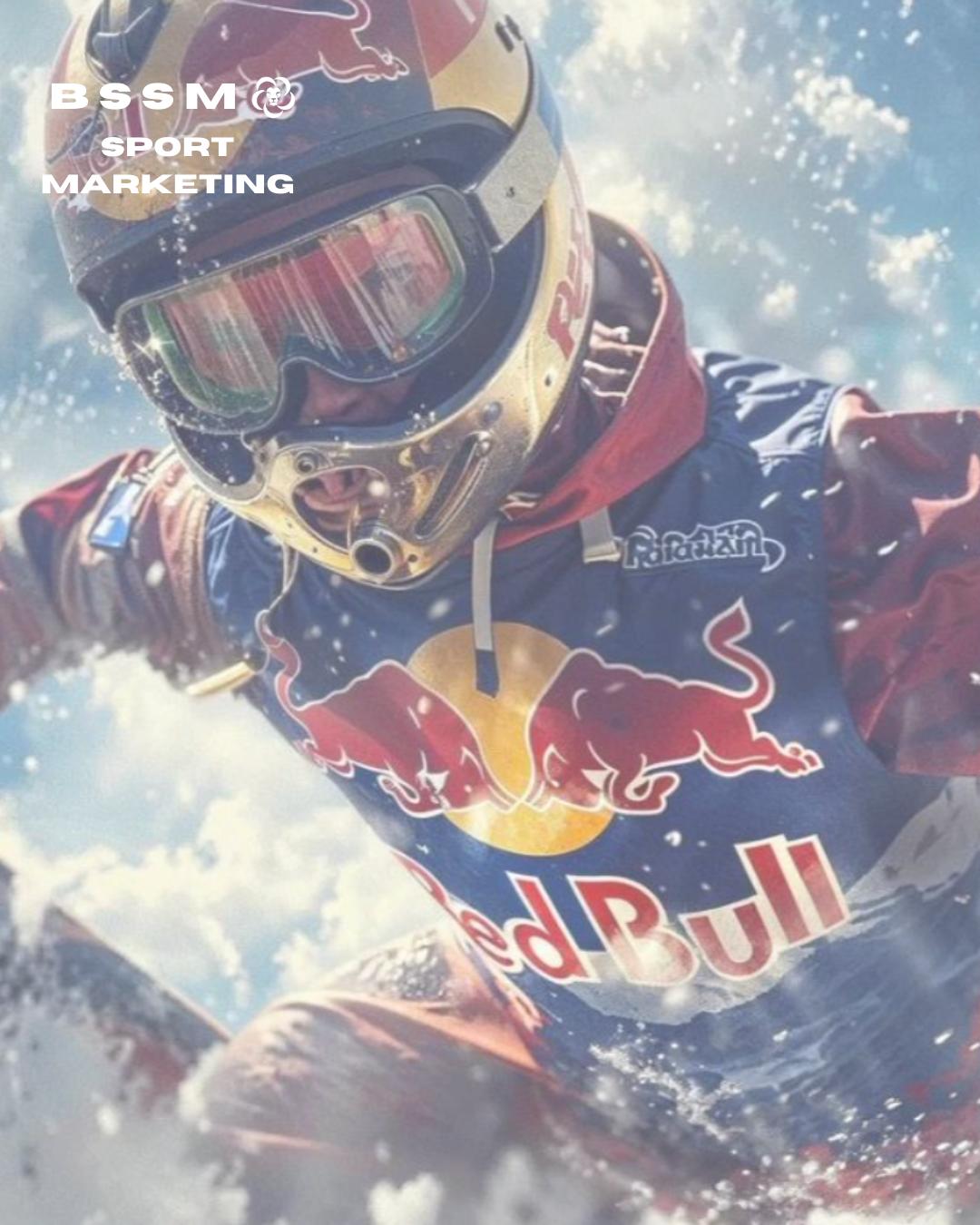
What do a man jumping from space, a Formula 1 car, and an athlete soaring on a snowboard have in common? The answer is simple: Red Bull.
Sports sponsorships are no longer just about visibility; they have become powerful marketing tools that turn a brand into a cultural icon. Red Bull has revolutionized the very concept of sponsorship, transforming it into an engaging narrative and creating an indelible link between its brand and the adrenaline of extreme sports.
Sponsorship marketing: theory and strategy
According to Philip Kotler’s brand positioning theory, a brand is not only distinguished by the product it offers but by the image it builds in consumers’ minds. Red Bull has leveraged the concept of brand association, linking its name to values such as adventure, risk, and pushing boundaries.
Traditional sports sponsorships, like Nike in basketball or Rolex in tennis, focus on logo visibility and association with winning athletes.
Red Bull, on the other hand, has turned sponsorship into storytelling. It doesn’t just put its name on events, it creates, manages, and integrates them as a fundamental part of its brand identity.
The Red Bull case: an empire built on extreme sports
Red Bull started as a simple energy drink, but its market positioning was never confined to the food & beverage sector.
Its marketing strategy has redefined the concept of sports sponsorship. Instead of focusing on mainstream sports like football, Red Bull has built its ecosystem around high-spectacle disciplines such as motocross, surfing, aerobatic flying, and freeriding. It has also created unique events, like Red Bull Stratos, featuring Felix Baumgartner’s jump from the stratosphere, or Red Bull Rampage, an extreme mountain biking competition that leaves audiences breathless.
Athletes are not just sponsored—they are transformed into modern-day heroes. Figures like Travis Pastrana or Kelly Slater embody the brand’s values, making it an integral part of their achievements.
Why does Red Bull’s strategy work?
Red Bull’s strategy succeeds for several reasons.
First, its brand positioning is extremely clear. Red Bull doesn’t just sell a drink; it sells an entire lifestyle experience.
The brand is synonymous with adrenaline, risk, and innovation. Emotions and storytelling play a crucial role: every event or sports partnership is designed to evoke strong and memorable emotions, generating a high level of engagement among spectators.
Additionally, Red Bull has created a community of enthusiasts who are not just consumers but true brand ambassadors.
Lessons for the future
Red Bull’s approach shows that effective sponsorships must be authentic and perfectly aligned with a brand’s identity.
Creating unique experiences that leave a lasting impact on the audience is essential for building a strong relationship with consumers. Sometimes, targeting strategic niches, as Red Bull has done with extreme sports, can be more effective than trying to appeal to everyone.
Red Bull has taught us that sponsorship is not just an advertising investment, it’s a story to be told.
Sources:
• Kotler, P. (2017). Marketing Management.
• Red Bull Official Website
• Forbes (2023). “Red Bull’s Marketing Strategy: How They Dominate Extreme Sports.”
By Alessandro Caldera
 BOCCONI STUDENTS FOR SPORT MANAGEMENT
Lascia un commento