
The sale of Manchester United is one of the most talked-about events of the moment regarding off-field issues. The huge global media attention the matter has generated can be traced back both to the names associated with the club as potential buyers, including Al Thani and Ratcliffe, and to the club’s history and importance, regardless of sports results (last Champions League won in 2008, last Premier League in 2013, and last Europa League in 2017). Just as the brand and revenue also remain important, according to La Repubblica, in 2022, Manchester United ranked fourth in the world with a revenue of 688.6 million euros.
But it is the first of these reasons—namely the names proposed as candidates for the club’s purchase—that has once again raised a question that has concerned and continues to concern world and European football, also affecting our country: multiple ownership. Ratcliffe is the largest shareholder of the petrochemical giant Ineos, which owns Nice in Ligue 1 and Lausanne in Switzerland. Al Thani, on the other hand, is the president of Qatar Investment Bank and the son of the country’s former prime minister. In his case, it must be emphasized that in Qatar it is practically impossible for two funds to operate independently, or rather, without the Emir and the president of Paris Saint-Germain, Nasser Al-Khelaifi, agreeing. In the event that the second bid wins, two of the largest European teams, PSG and Manchester United, would be linked to Qatar.
But why is this problem raised despite Article 5 of the UEFA regulations, which prohibits this possibility by stating that “no club participating in a UEFA competition may directly or indirectly hold or negotiate shares or titles of any other club participating in such competition, and no individual or legal entity may have decisive influence over more than one club participating in a UEFA competition”? Or rather, why is there a need for a new rule despite an existing one that clearly prohibits multiple ownership?
It is necessary, first of all, to distinguish the various cases of multiple ownership that have been observed in recent years. For example, when the Suning Group owned both Inter and Jiangsu in the Chinese Super League, the chances of any crossovers on the field were practically nonexistent. This type of multiple ownership did not seem to pose any particular issues. Similarly, the multiple ownerships of the American fund 777 Partners (Genoa, Hertha Berlin in Germany, Standard Liege in Belgium, Red Star in France, Vasco da Gama in Brazil, Melbourne Victory in Australia) and those of the City Group (Palermo, Manchester City in England, New York City in the USA, Torque in Uruguay, Melbourne City in Australia, Girona in Spain, Mumbai City in India, Lommel in Belgium, and Troyes in France) do not seem to pose particular problems today. However, in this case, the conditional is necessary: who can exclude that one of these teams, for example, Palermo, might one day aim for qualification in the Champions League, where it could face Manchester City? The possibility (and the problem that would arise), although it seems very unlikely today, deserves to be addressed. Especially to avoid a repeat of the embarrassment that occurred in 2018 when Leipzig and Salzburg, both clearly connected to the Red Bull Group, were drawn into the same Europa League group, facing each other twice.
It is also worth remembering the cases that have affected and continue to affect us closely. In Italy, there is currently a moratorium that delays the ban on owning two professional clubs until the 2028/29 season, allowing De Laurentiis to maintain his multiple ownership of Napoli and Bari, and Setti to keep Verona and Mantua. Lazio owner Lotito, on the other hand, was forced to sell Salernitana after the club’s promotion to Serie A, selling it to Iervolino.
According to CIES, the Swiss football research center, there are currently around 200 cases of multiple ownership in football. This situation is further amplified by the growing interest of global financial funds. In fact, many clubs in different countries share the same shareholders, who remain minorities, thus avoiding any control.
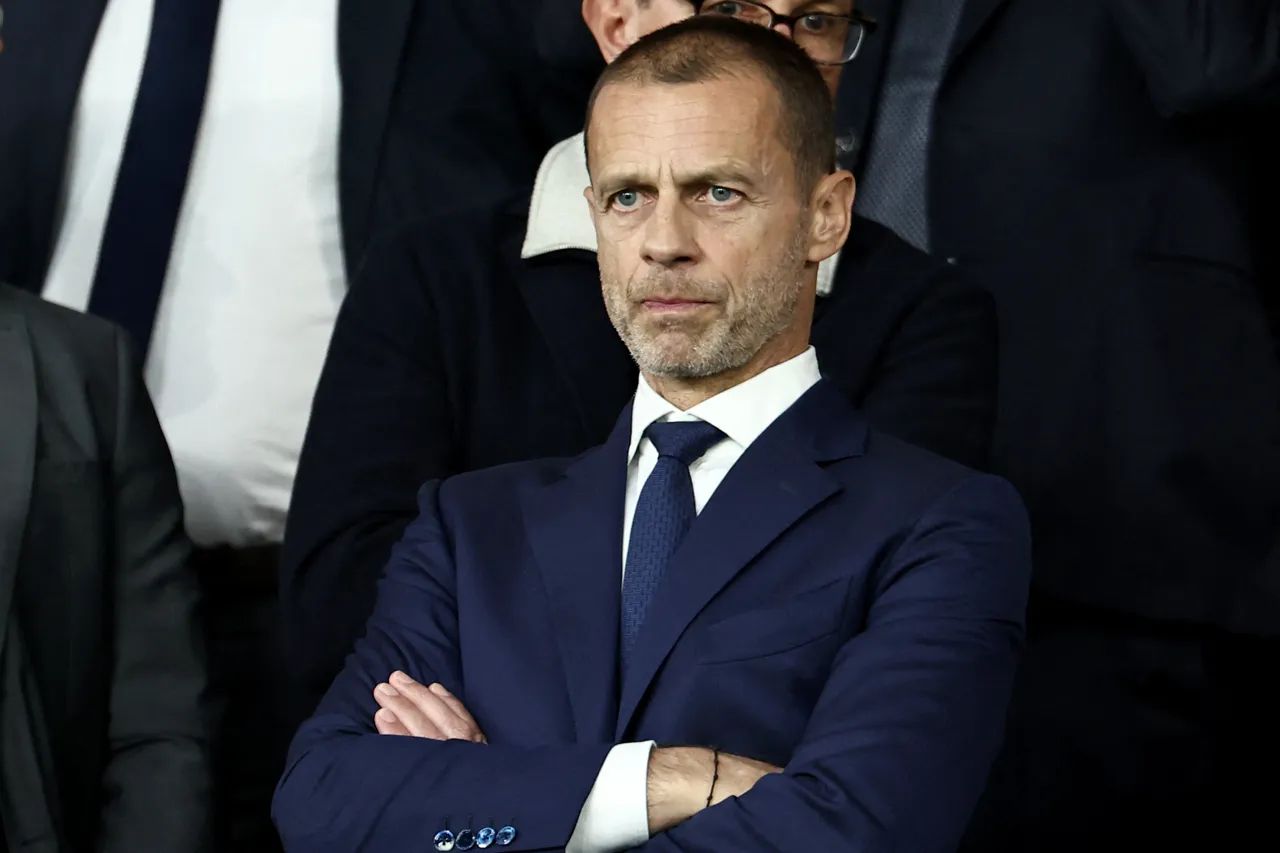
This phenomenon appears to be growing continuously, raising doubts among many professionals and others in the football world. Many perceive the risk that leagues and cups could be distorted by multiple ownership. Therefore, UEFA is faced with a decision, where at the two extremes are either strengthening the current Article 5 (thus denying the legitimacy of multiple ownership) or regulating the phenomenon, accepting it, considering the amount of money that financial funds and various figures like Ratcliffe and Al Thani could bring to the sport. UEFA president Ceferin seems to be seriously considering changing the rule. In an interview with Gary Neville, speaking about the subject, he asked Neville for confirmation that no coach or player would accept a presidential order to lose a match because multiple ownership would benefit from it (La Repubblica), perhaps oversimplifying the issue, which is actually delicate and crucial.
by Rodolfo Bianchini
 BOCCONI STUDENTS FOR SPORT MANAGEMENT
Lascia un commento