
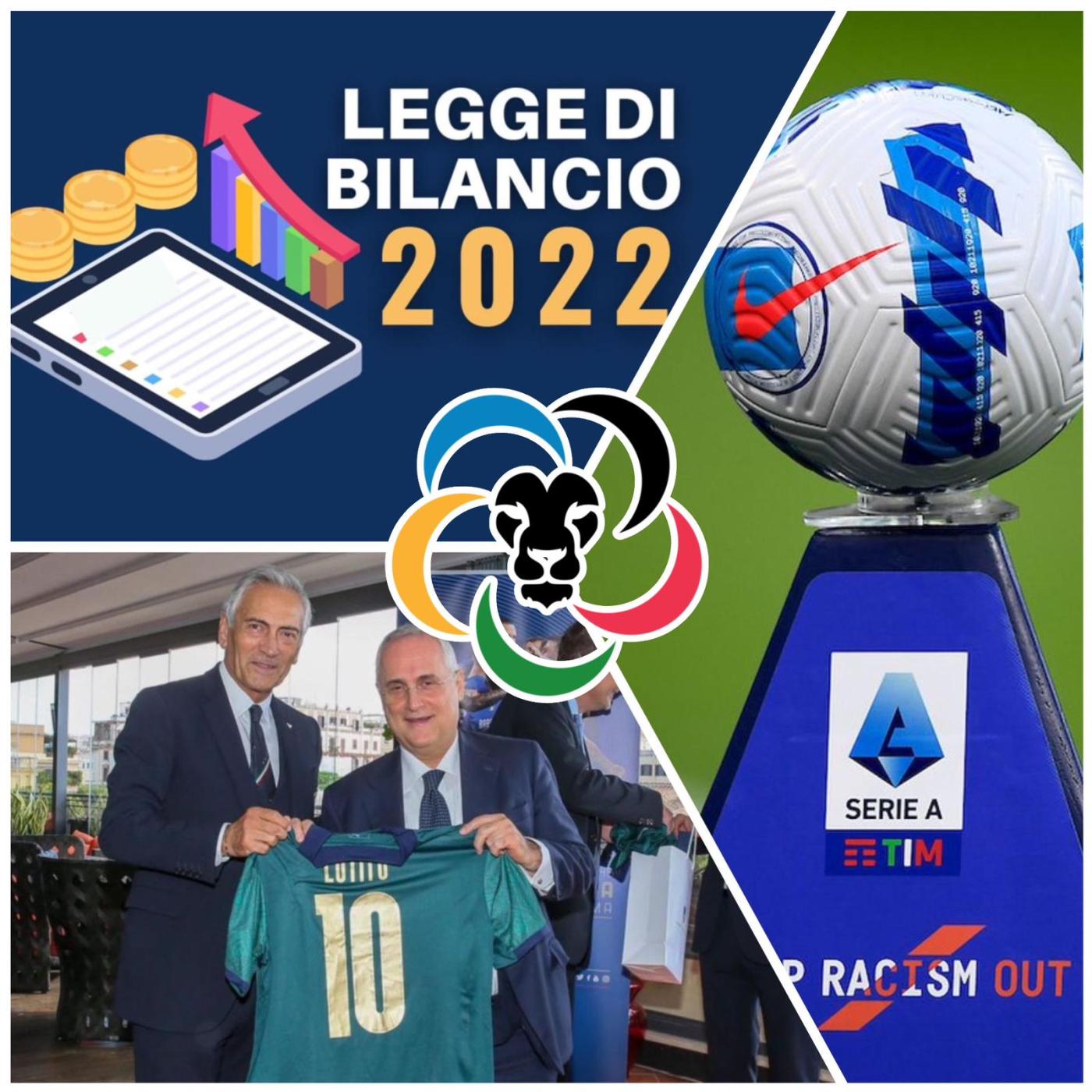
The traumatic experience of Covid, in addition to imposing a health crisis, also brought about a difficult economic crisis, especially for professional sports organizations, which were forced to tighten their finances. In football, Serie A finds itself in a troubling situation.
DATA ON BALANCE SHEETS AS OF JUNE 30, 2022
As of June 30, 2022, only two Serie A teams, Atalanta and Fiorentina, closed their accounts with a profit. This was primarily due to earnings from player sales, such as Gosens and Colpani for Atalanta, and Chiesa and Vlahovic for Fiorentina. The remaining 18 clubs reported “negative balance sheets”: Bologna (-€46.7 million), Cagliari (-€16.2 million), Empoli (-€3.5 million), Genoa (-€42.3 million), Inter (-€140.1 million), Juventus (-€239.3 million), Lazio (-€17.4 million), Milan (-€66.5 million), Napoli (-€52 million), Roma (-€219.3 million), Salernitana (-€16.8 million), Sampdoria (-€24.4 million), Sassuolo (-€13.9 million), Spezia (-€17.7 million), Torino (-€37.8 million), Udinese (-€69.1 million), Venezia (-€23.8 million), Verona (-€5.1 million). Overall, Serie A’s football business incurred losses exceeding €1 billion, generated revenues of €2.5 billion, and had operating costs of €3.9 billion. Additionally, it had debts totaling €3.3 billion, of which €1.5 billion was owed to banks and €739 million to the tax authorities.
The pandemic worsened the structural crisis of the Italian football system, leading to increasingly significant losses: €412 million in 2018-2019, €878 million in 2019-2020, and over €1.3 billion in 2020-2021. The two seasons played during the pandemic, 2019-2020 and 2020-2021, resulted in cumulative losses of over €2.2 billion and an increase in financial debt from €4.8 billion in 2018-2019 to nearly €5.4 billion in 2020-2021.
MELONI GOVERNMENT’S BUDGET LAW: “SAVE FOOTBALL” AMENDMENT
The Meloni Government, with the approval of the year-end 2022 budget law, gave the green light to the “save-sport” provision, already nicknamed “save-football,” in the financial package. The amendment, pushed by Claudio Lotito, senator of the Republic and Lazio president, was approved by the Budget Committee of the Chamber of Deputies and included in the law.
The amendment will allow national sports federations, sports promotion organizations, and professional and amateur clubs to spread overdue payments for deferred Covid-related IRPEF tax contributions over multiple years. This amounts to a total of €889 million (including payments for withheld taxes, regional and municipal add-ons, and VAT), €500 million of which are attributable to Serie A football clubs. Undoubtedly, this offers financial relief for the clubs, though they must also overhaul their management practices.
LIQUIDITY INDEX: NEW MEASURES INTRODUCED
In this context, the FIGC proposed a modification, temporarily halted due to an appeal by Serie A, to increase the liquidity index. This parameter, imposed by the FIGC, is calculated as the ratio between two aggregates—current assets and current liabilities—to monitor the financial balance of clubs, presenting a potential solution to a problematic situation that could lead to transfer market freezes.
Failure to meet the liquidity index is a serious issue, signaling a financial crisis likely to result in insolvency. Consequently, the Covisoc sanction involves freezing the transfer market unless the majority shareholder intervenes financially (feasible only for clubs with robust ownership) or through player sales.
An alternative solution is tied to the so-called “Negotiated Composition of the Crisis,” a completely out-of-court process that entrepreneurs in distress can access by filing a request with the competent Chamber of Commerce, aimed at developing a recovery plan, including debt restructuring. This tool has already been utilized in recent weeks by Sampdoria (source: Calcio e Finanza).
FUTURE PROSPECTS FOR THE LEAGUE
The question now arises whether the near future will lean more toward sustainability and corporate solvency for clubs in Italy’s top league. There are exemplary cases, such as Sassuolo, Atalanta, and Fiorentina; ambitious projects oriented toward cost containment are being developed by Napoli and Milan, while clubs that have spent heavily in recent years, like Inter, Juventus, and Roma, should strive in this direction, even if supported by solid ownership.
Clearly, this should not be the sole objective pursued, but it is fundamental, as the system cannot continue consuming resources without generating them. Expanding revenues through the construction of new stadiums and better management of TV rights is the path to follow, along with better development of young talents nurtured internally. With these measures, the positive aspect is the potential for our league to regain prominence on the global stage, as evidenced by the significant presence of our teams in the final stages of this year’s European competitions. In the future, this should become the norm rather than an exception.
 BOCCONI STUDENTS FOR SPORT MANAGEMENT
Lascia un commento