
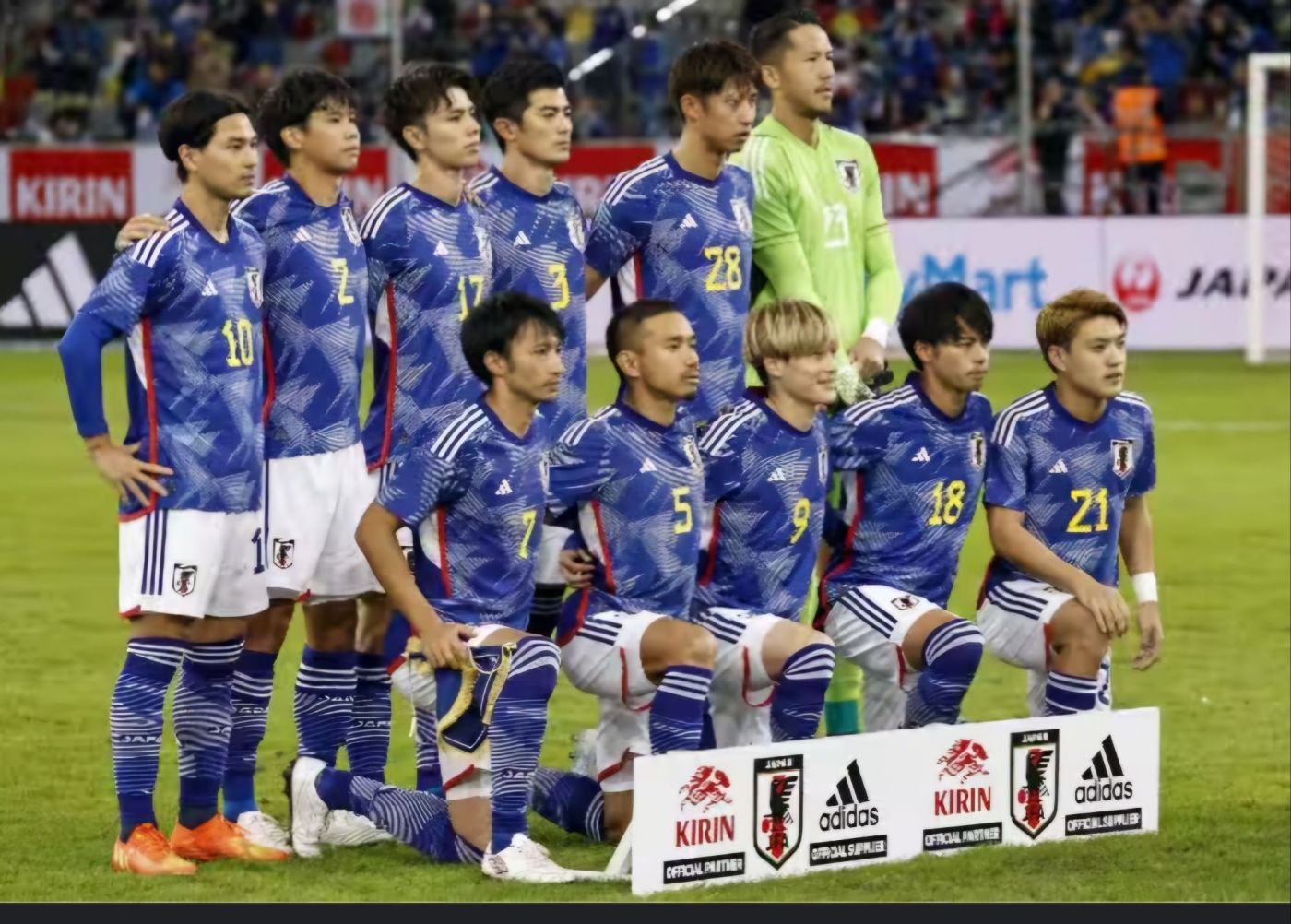
A Saikeirei bow. With this gesture, the coach Hajime Moriyasu bids farewell to Japan’s World Cup journey in front of Japanese fans after their penalty shootout defeat to Croatia. A special, heartfelt bow, the most significant and profound one in Japanese tradition. A simple, yet meaningful gesture after he had hugged and consoled each of the 26 “samurai” who took part in the Qatar 2022 campaign at the end of the match.
Thus, the team from the Land of the Rising Sun leaves Doha, but this World Cup will hardly erase the indelible mark it has left. And no, we’re not only talking about the incredible comebacks against Spain and Germany, or even the remarkable first-place finish in the group. We’re speaking of a much greater lesson, a lesson of education, civility, and pure sportsmanship that best embodies the spirit on which Japanese football tradition is founded.
It was 1921 when the first historic Japanese championship was held by the Japan Football Association. Even back then, the true core of the entire system was the world of schools. In fact, football would remain a sport limited to academic circles for many years, a minor sport compared to the hugely popular baseball. Above all, the country’s organisational structure dictated that the relationship between sport and education was inseparable: the students had to follow strict discipline and achieve excellent grades in their studies. Talent alone wasn’t enough to be a player; every single boy had to be prepared to compete, particularly with the high standards of the working world, and be trained as well as possible to ensure the best professional contribution within companies. But the jolt—or rather the true turning point in Japanese football—came in response to the horrific events that marked an era: the atomic bombs on Hiroshima and Nagasaki in August 1945. Indeed, the 1964 Tokyo Olympics, after they were cancelled during the Second World War, marked a chance for redemption for an entire population, and Japan in particular didn’t want to be unprepared as the host nation. In 1960, with the surprising victory of a team founded by an electric company, the academic academies’ dominance was broken, finally making room for investments from large companies. In the meantime, Japan began to showcase its incredible achievements at the Olympics, beating formidable Argentina 1-0, and proving that this sport was on the rise.
Toyota, Mitsubishi, and Toyo (now known as “Mazda”) were among the most influential names that began shifting their capital towards the burgeoning football world. This created a true domino effect for Japan in the coming decades: the emergence of major sponsorship deals with corporate giants like Toshiba, the memorable bronze at the 1968 Olympics, the introduction of a second division in 1972, and the establishment of the definitive J-League in 1992, which is still Japan’s top league.
Excitement and enthusiasm grew exponentially, fuelled by the parallel growth of football in neighbouring South Korea. Sports marketing continued to expand, with the entry of sector leaders such as Mizuno and Sony. Japanese football was on a complete upswing, and on November 8, 1992, Japan won its first trophy: the national team of the Land of the Rising Sun lifted its first Asian Cup after the final victory over Saudi Arabia.
In total, Japan has lifted the Asian Cup four times (1992, 2000, 2004, and 2011). And it was with an Italian coach, Alberto Zaccheroni, that they brought home the last one to date in 2011.
An exciting football movement that grew in schools and rose to dominate the Asian scene, thanks also to investments from Japanese corporate giants. A perfect combination of sporting values and academic education, which makes Japan’s national team one of the most respected and loved, and still today includes as many as 13 national players out of 26 recruited from high school leagues. The locker rooms left perfectly tidy before leaving the stadium after the match and fans cleaning the stands after the final whistle are just the latest examples of the noble Japanese spirit: “wakon yosai.”
In short, yet another lesson in civility reaches us from the Far East, a ray of light and hope from the Land of the Rising Sun that brightens the darkness of scandals and controversies surrounding global football today.
Thank you, Japan.
By Luca D’Addario
 BOCCONI STUDENTS FOR SPORT MANAGEMENT
Lascia un commento