
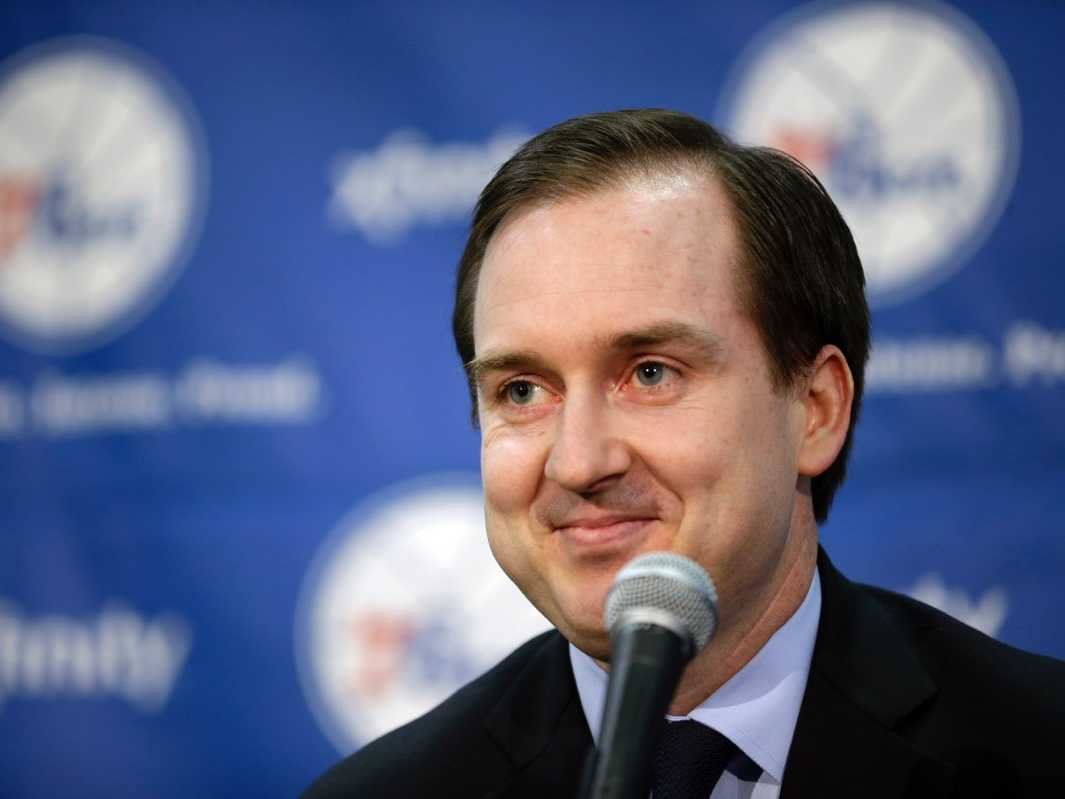
(Photo: Associated Press)
In all team sports, organizations function as real businesses where a management strategy is essential. What sets sports management apart, however, is that the general manager (GM) of a team must not only have the necessary business skills to run an organization but must also apply these skills to the specific context of the sport and the league in which the team competes.
These abilities generally come to the forefront in a particular scenario: when the GM must use available resources to build a team capable of achieving set objectives. To do this, it’s not enough to know the players; strong decision-making, analytical skills, knowledge of the rules, a solid reputation, and importantly, faith in the strategy being pursued are required. This last trait will be prominent in the specific case we are exploring and is encapsulated in a motto famously popularized by the protagonist of this case.
The NBA, like other major American sports leagues, differs from the rest of the world in that the main resource for player transactions is not solely the club’s budget. In America, there are multiple ways to build a team: teams can sign players with expiring contracts while respecting the salary cap, trade players, or participate in the Draft, where teams select players from universities or overseas in a format similar to a game of pick-up basketball, with the first picks being the best players.
Given these various avenues, the types of assets a GM can manage are equally varied: not only financial resources but also players who are marketable for trades and future Draft picks.
The NBA Draft order is determined by a lottery system that considers the teams’ performance in the previous season, ensuring that the worst-performing teams have higher chances of securing one of the top picks, aiming to maintain league balance.
It was just before the 2013-14 season when Sam Hinkie was appointed as the general manager of the Philadelphia 76ers, a team that was in a state of mediocrity—not good enough to contend for the title but not bad enough to secure a high draft pick. Upon taking over, Hinkie had few assets for trades, and the team’s mediocre level made Philadelphia an unattractive destination for potential superstars with expiring contracts. Thus, he devised a long-term strategy: to rebuild from scratch, intentionally reach the bottom of the standings, and secure high draft picks, which would increase the chances of discovering future stars. Hinkie quickly set his plan in motion, trading away valuable players in exchange for future draft picks, leaving the team with a very weak roster.
In the short term, the consequences of Hinkie’s controversial strategy were difficult for the 76ers’ environment to digest. As expected, the team underperformed for three consecutive seasons, winning fewer than 20 games out of 82. This “tanking” strategy, aimed at losing games to reach the bottom of the standings, had negative economic impacts, with ticket sales dropping sharply, while the media criticized Sam Hinkie, labeling him incompetent.
Despite the disappointment among fans, Hinkie remained focused on his long-term vision, and as the “Trust the Process” mantra began to spread, those who believed in his plan started to see light at the end of the tunnel.
Indeed, the 76ers emerged from the tunnel. The three years of struggles between 2014-2016 resulted in high draft picks that turned into stars. Additionally, the players acquired through trades early in Hinkie’s tenure proved to be the right pieces to complete the puzzle. The end result? The 76ers are now one of the top contenders for the championship. Sam Hinkie, however, did not live to see the realization of his plan from his desk, as the pressure forced him to resign in 2016. Yet, fans continue to praise him for the team’s current success.
Hinkie’s strategy stunned the NBA and created a significant problem for the league. More than the strategy itself, the issue lies in the positive long-term results of the 76ers’ “Process.” In recent years, several teams with no title aspirations have opted to tank rather than settle for mediocrity, taking inspiration from the 76ers during the Hinkie era. This has made tanking one of the main issues the NBA is working to address, as it’s unacceptable for teams to deliberately lose games to finish last, as it contradicts the values of the sport and has a negative economic impact, as seen during the bleak years of the Process in Philadelphia.
The solution to the tanking problem was straightforward: make it less attractive to compete for the bottom spot. Before the 2017-18 season, NBA commissioner Adam Silver and the league’s Board of Governors acted by approving a reform to the Draft lottery: the worst teams are still favored to get the top picks, but the odds are now more diluted, making tanking a riskier strategy.
The results of the reform were evident during the 2019-20 Draft lottery, the first under the new system. The first and second picks went to New Orleans and Memphis, respectively the seventh and eighth worst teams from the previous season, while the new tanking trio (New York, Cleveland, and Phoenix) had to settle for the third, fifth, and sixth picks. Not exactly the best “reward” after a season in which those three teams lost nearly 80% of their games.
Will the NBA succeed in eliminating tanking entirely? A definitive answer is hard to give immediately, as there are teams that will still look to rebuild through the Draft due to the lack of appeal in their markets to attract established stars (the so-called “small markets,” like Charlotte, Phoenix, and Cleveland). However, the results from the last lottery could lead teams to rethink tanking. One thing is certain: Sam Hinkie has left his mark on the NBA and will remain in the league’s history thanks to his controversial strategy.
 BOCCONI STUDENTS FOR SPORT MANAGEMENT
Lascia un commento