NEWS

AMID BANNED ARMBANDS AND FAKE FANS: WELCOME TO DOHA

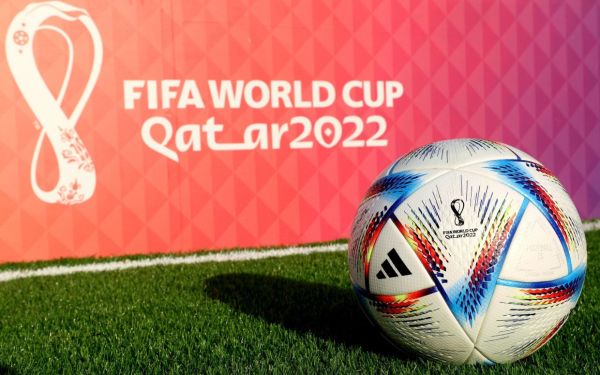
Between England and Spain’s goal fests, Morocco and Croatia’s goalless draw, Qatar’s lackluster debut, and the shocking defeats of Germany and Argentina, one element has remained constant throughout this World Cup: controversy. 

For months, if not years, major media outlets worldwide have been shedding light on the troubling issues behind awarding the World Cup to Qatar. From corruption within FIFA to the tragic, unquantifiable death toll of workers building the tournament’s infrastructure, the event has been shrouded in shadows. Leaving these broader themes aside for a moment, this article focuses on more recent and less widely debated developments. 

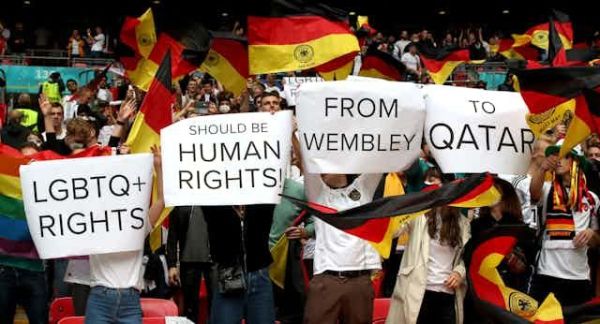
At the start of the tournament, FIFA threatened sanctions for any team captains wearing the rainbow armband in support of the LGBTQ+ community during matches. The penalty? A yellow card. Many European federations were forced to reconsider, worried about jeopardizing their players’ tournament prospects due to suspension risks after two yellow cards. However, these federations did not shy away from criticizing the decision. 

One of the most striking responses came on November 23, before Germany’s match against Japan. The German team posed for their official pre-match photo with all 11 players covering their mouths—a powerful and symbolic image. The German Football Association shared the photo on Twitter, stating: 

“With our captain’s armband, we wanted to embody the values of diversity and mutual respect. […] This isn’t about making a political statement; human rights are non-negotiable. […] Banning the armband is equivalent to silencing us.”

This act, coupled with German Interior Minister Nancy Faeser wearing the controversial armband in the VIP box, delivered a sharp rebuke to FIFA and its president Gianni Infantino. Notably, English ex-footballer Alex Scott also wore the armband on air as a BBC commentator days earlier. 

Another contentious aspect surrounding this World Cup concerns the fans—or lack thereof. Social media has been abuzz with videos of “fake fans,” allegedly hired (some reports claim for payment) to parade in support of various teams. On November 22, La Repubblica described encountering a group of young men on the metro, all wearing mismatched gear—scarves, capes made of flags, and counterfeit jerseys representing four different teams. They spoke the same language and likely hailed from India or Nepal, regions from which much of Doha’s labor force is drawn. 

Despite these attempts to create a lively atmosphere, the World Cup seems devoid of real fans. Streets and bars near stadiums often appear deserted, and stadiums themselves rarely seem full, despite official attendance figures claiming otherwise. The emptiness is visible even on TV broadcasts, with glaringly vacant seats contradicting FIFA’s statistics. 

So, the question arises: was all this really necessary? 

By Rodolfo Bianchini 

IS THE CR7 ENTERPRISE STILL DECISIVE ON THE PITCH?

Cristiano Ronaldo has recently surpassed 500 million followers on Instagram, becoming the first person on Earth to break the half-billion mark and further solidifying his position as the most influential individual in the world. For over a decade, Ronaldo has been a living enterprise, moving millions of euros with every decision he makes. His media impact is unparalleled: every word he utters is analyzed and debated, every mistake amplified, and every brilliant play either normalized or labeled as ordinary. 

On the other hand, his on-field performances have been declining for the past year, hinting at the possible end of an era that saw him compete in countless battles against one of football’s other greatest talents. 

Adding to the tension are recent controversies surrounding Ronaldo: contentious interviews, the termination of his contract with Manchester United, and social media videos suggesting friction with both teammates and fellow national team members. These issues could potentially affect his performances for Portugal at the World Cup. 

In his most recent stints with Juventus and especially Manchester United, it has become evident that signing Cristiano Ronaldo no longer guarantees the desired results. The football world is thus witnessing a relatively new scenario: a player acquired and paid for more due to his brand and off-pitch benefits than for the tangible impact he can still deliver on the field. While Ronaldo is not the first player whose signing can generate substantial off-field gains, he is undoubtedly the one who has mastered this dynamic the most. The boost he provides to the brand of any club he joins, simply by his presence, remains unmatched. 

However, the growing difficulty in finding a top-level club willing to sign him highlights that he is no longer seen as the decisive player he once was. In fact, despite maintaining a respectable average of at least one goal every two matches, he is often labeled as the cause of his teams’ struggles or as an obstacle to the development of younger players, who may feel overshadowed by his imposing figure. 

To conclude, this article does not aim to declare the end of the CR7 era or dismiss him as a spent force. However, doubts about his ability to make a significant impact at the highest level are legitimate—and justified given his age. These doubts might even be the first signs of humanity shown by an athlete who has otherwise consistently flirted with perfection. 

By Andrea Dapavo 

THE CRAZY INSURANCE POLICIES FOR THE WORLD CUP: A £22 BILLION TREASURE 

Amid the scorching Qatari desert and a relentless storm of criticism, the first winter World Cup in football history finally begins. This most unusual tournament kicks off with its two greatest stars, Messi and Cristiano Ronaldo, finding themselves in surreal situations just days prior: the former collapses with his Albiceleste against a Saudi powerhouse, while the latter remains clubless just two days before debuting with Portugal. 

Meanwhile, during the reigning champions France’s first outing, only nine minutes into the game and following Australia’s opening goal, an unnatural knee movement forces Lucas Hernández off the field in tears, sparking fears and leaving everyone on edge, even in Munich. 

“Rupture of the anterior cruciate ligament in the right knee,” reads the official statement from the French federation. A piece of news that, despite the victory, sours the mood—not so much for the French supporters as for Bayern Munich, who won’t see their player back before the 2023/24 season and will need to find an adequate replacement in the winter transfer market. 

The issue of national team injuries has always sparked debate and often led to clashes between clubs and federations. To address this, FIFA, especially for a mid-season World Cup, established coverage for injuries sustained during national team duty through the Club Protection Programme. 

Given the numerous risks associated with professional athletes’ activities, the insurance company Lloyd’s has, for years, specialized in the sports insurance business. The firm underwrites individual insurance contracts reaching staggering sums, around £150 million, covering injuries and health policies for players. Specifically, Lloyd’s evaluates policies based on parameters like the ever-growing salaries in football, record club revenues, and significant sponsorship deals of individual players. 

Following the Covid pandemic and a World Cup held at the peak of the season, the sports insurance business has continued its exponential growth. This market appears to align with the development of the professional sports industry, which, according to Dbrs Morningstar, is expected to reach $600 billion in revenues by 2025, with an annual growth rate of about 8%. 

Taking Lucas Hernández’s Tuesday evening injury as an example, the policy aims to mitigate the financial impact of his prolonged unavailability. Beyond the burden of his “modest” €18 million net salary on the club’s budget, the Bavarian sporting director Salihamidžić will inevitably need to make an expensive move in the January transfer window to replace him.

Lloyd’s analyses also reveal another interesting fact: the average insurable value for players aged 18–24 is £32 million, compared to £12 million for those over 31. This is hardly comforting news for Bayern Munich after the injury to the 26-year-old Frenchman. 

Focusing on Qatar 2022, the total insurable value of the entire tournament, at £22 billion, highlights the extraordinary growth of this sector. This figure dwarfs the £6.2 billion recorded during the 2014 World Cup and reflects the exponential increase in football-related salaries, sponsorships, and revenues, justifying the staggering insurance policy values. 

Finally, as reported by Milano Finanza, it is intriguing—and almost prophetic—that Lloyd’s, using the highest estimated insurable value for each national team, has developed a model to predict the tournament winner based on individual team performances. 

Having correctly forecasted the winners in 2014 and 2018—Germany and France, respectively—this time, with an insurable value of £3.17 billion, England emerges as the favorite. 

So, the inevitable question arises: is it coming home?

By Luca D’Addario 

MILAN, FROM FOOTBALL CLUB TO 360° ENTERTAINMENT COMPANY 

“Today, A.C. Milan is a modern entertainment company capable of creating media events that engage millions of people worldwide,” is how A.C. Milan describes itself on its official LinkedIn profile. Not just a sports club, but an entertainment company. 

As stated in November 2022 by Casper Stylsvig, Chief Revenue Officer of the Milanese club, a football club can no longer rely solely on ticket sales and merchandising. It must seek to increase interaction moments with its target audience, making them more profitable. This shift by the Rossoneri has its roots in the acquisition by Elliott Management, but it truly took off with the transition to RedBird. 

The key aspect of this transformation is the desire to partially detach sporting results from commercial ones. The goal today is to maximize fan interaction moments, both during the match itself and during breaks from the game. 

The first step in this direction was building its own Media House. This has revolutionized how Rossoneri fans worldwide consume media, producing exclusive content designed to let fans experience the Club in a 360° way. This direct-to-consumer (D2C) model has further strengthened the emotional bond with the fan base and engaged new users. The numbers prove it: Milan is currently the second most-followed football club in Italy (behind Juventus) with 70.5 million followers as of late October 2023 across major social platforms. 

In addition to digital content, Milan is also heavily involved in collaborations. No longer just simple billboards at San Siro or Milanello, but strategic agreements aimed at creating a “Rossoneri ecosystem,” capable of engaging fans through various initiatives. 

It was with this vision that, in mid-2022, Milan launched a co-branded prepaid card in collaboration with the British fintech REPX. The card was designed to further strengthen fan loyalty and team aggregation by offering discounts and opportunities to participate in numerous club-related experiences, such as prize draws for exclusive tickets and branded apparel. 

The recent launch of “AC Milan Connect” is moving in the same direction: a SIM card developed in collaboration with Afinna One and entirely dedicated to Rossoneri fans. The project, unique in Italy, aims to “offer fans an additional connection with their beloved team.” As with the previous case, SIM holders are entitled to exclusive content and discounts for purchasing official merchandise. 

While extra-football loyalty is increasingly important, the match itself remains the heart of any football club. However, even here, opportunities to connect with fans are multiplying, both on and off the pitch. This is precisely the concept behind two initiatives: Club 1899 and the partnership with Fanblock. 

Club 1899 aims to create “an experience within an experience,” allowing fans to enjoy matches uniquely: pitchside seats, lounge areas, meals, DJ sets, and VIP rooms where they can meet Milan legends. Hospitality services are certainly common among European clubs, yet Milan’s emphasis on these initiatives is notable. As repeatedly stated by various club representatives, these efforts can only be fully developed with a proprietary stadium. 

The partnership with Fanblock, established in October 2023, introduces the unprecedented opportunity to own a piece of Milan’s digital pitch. The platform allows fans to purchase “Fanblocks,” representing a small digital segment of the playing field. Owners of these blocks earn points during the season’s matches, granting them specific rewards based on what happens in their owned area, offering an entirely innovative way to follow a game’s development. 

The club’s new pioneering commercial approach can once again be summed up in the words of Casper Stylsvig: “The goal is to expand the magic of the pitch, allowing fans, who are at the center of everything, to experience unforgettable moments through the Rossoneri colors.” 

By Federico Petrella

ALPINE SKIING WORLD CUP: GREEN LIGHT FOR THE ZERMATT-CERVINIA CROSS-BORDER RACES 

After environmental challenges, confirmation comes for the November races. 

Expectations are sky-high: after last year’s interruption due to a lack of snow, this year there is great enthusiasm thanks to better snow conditions and more careful planning. However, some complications related to the environment have cast a shadow over the races scheduled for November 11 and 12. 

Environmental Challenges and Administrative Issues 

In the last ten days, the organizers not only had to prepare the course but also faced administrative and legal challenges. 

It all began when some environmental groups raised concerns about work on the Theodul Glacier, located in Swiss territory. In response to these reports, the Building Commission of the Canton of Valais decided to immediately ban the use of parts of the course outside the ski area, pending approval of the necessary building permits. 

Investigation in Italy as well 

The environmental issues triggered an investigation in Italy regarding the work on the Italian side. 

During a regional council session, the Economic Development Commissioner, Luigi Bertschy, clarified the situation, stating that the work is proceeding in compliance with regulations. The two sections on the Italian side in question include one designated for the World Cup course, while the other concerns a tourist slope of the Ventina – 7 Bis. 

It should be noted that at present there are no suspects or allegations of wrongdoing, and the investigation will not affect the regular progression of the race. In fact, the company responsible for the work had already obtained all the necessary authorizations and permits to operate lawfully, even during last year’s edition. 

The Sporting Verdict: Despite environmental uncertainties, the organizing committee has ensured that the necessary adjustments will be made without compromising the sporting aspect of the course. 

Optimal Snow Conditions 

There is reassuring news: the snow control conducted by FIS (International Ski Federation) yielded positive results, guaranteeing the feasibility of the men’s downhill races. In addition to recent snowfall, the organizers have benefited from a considerable amount of snow accumulated in previous months. 

By Maddalena Loro 

BETTING SCANDAL: WHO ARE (FOR NOW) AND WHAT RISKS THE PLAYERS INVOLVED IN THE SCANDAL FACE

In recent days, a new football scandal has emerged: the names of young players accused of betting on illegal platforms have been revealed. 

It all stems from an investigation by the Turin Prosecutor’s Office, which began this summer, into gambling on some websites that did not have a license from the State Monopolies. The Turin prosecutors discovered that among the bettors is Fagioli, a Juventus midfielder, and the news was anticipated by the well-known television personality Fabrizio Corona. 

A few days ago, two other names were revealed: Tonali and Zaniolo. In Coverciano, the two national team players were notified of investigative acts by the Turin Prosecutor’s Office and were forced to leave the national team camp at the request of FIGC. 

This is not the old “match-fixing” scandal, where games were sold and bought, but rather bets and wagers of large sums of money on football match outcomes on illegal sites, suggesting that the protagonists might be true gambling addicts. 

The statements by Fabrizio Corona continue to shake the world of Italian football. In a phone call with a journalist from the Corriere della Sera a few days ago, he declared that he is in possession of a long list, 50 names of players involved in betting episodes. 

The investigation, therefore, seems to be only at the beginning, other declarations are awaited, but in the meantime, the involvement of many players represents a serious threat to the image of Italian football at the international level. 

From a criminal standpoint, if the protagonists are only players and not organizers of the bets, they can settle or pay a fine. From a sports perspective, however, the Prosecutor’s Office is investigating the violation of the ban on betting by registered players, as an athlete, under Article 24 of the Code of Sports Justice, cannot bet on their own discipline and risks up to 3 years of disqualification. 

In the case of Nicolò Fagioli, FIGC has already formalized the measures: 7 months of disqualification (the reduction of the sentence was foreseen for the immediate plea bargain) starting from October 20, in addition to another five months converted into the alternative penalty of a therapeutic rehabilitation path, and the payment of a €12,500 fine for having participated in betting on football matches. 

At the moment, there are no risks for the clubs of the players under investigation. Only if it were proven that the result of a match was manipulated with the collaboration of the managers would sanctions be triggered; the possible failure to report, if the managers were aware, would lead to personal accountability.  By Chiara Arsieni

Sito web creato con WordPress.com.

Su ↑