NEWS

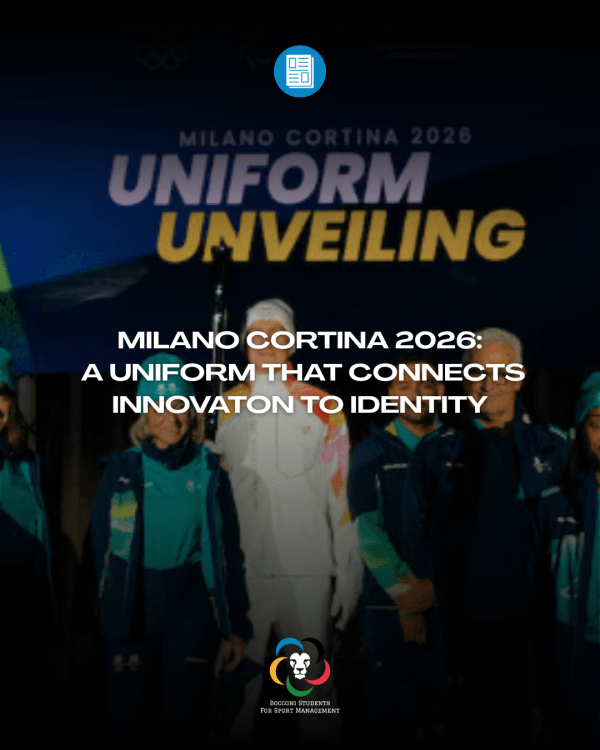
MILANO CORTINA 2026: A UNIFORM THAT CONNECTS INNOVATION TO IDENTITY

The Fondazione Milano Cortina 2026 has finally announced the official uniforms for the Olympic and Paralympic Winter Games. Created in collaboration with Salomon, the event’s Premium Partner, these uniforms will be worn by more than 25,000 people, including volunteers and organizing committee staff. They were realized to represent the human and operational face of the Games, to be a symbol of unity, hospitality, and team spirit.


A project born from collaboration

As a result of over two years of specific and dedicated work, this collection combines the vision of Fondazione with Salomon’s technical expertise. The French brand, with nearly 80 years of experience in mountain sports, is a true giant in the industry. The outcome was revealed with style: a collection of 17 coordinated elements – over 400,000 units in total – designed to perform optimally in every environment, from urban locations to the most extreme alpine settings.

“The uniforms are more than simple clothing: they represent design, style, and functionality. They are the symbol of authentic teamwork, capable of uniting territories, cultures, and people under a single identity.”
Andrea Varnier, CEO of Milano Cortina 2026


Performance and identity: a closer look at the kit

Aiming to achieve performance and adaptability, the project was designed to ensure comfort and protection in all weather conditions. Each garment was created to offer total practicality without compromising on style or visual recognizability – a key aspect for both volunteers and staff members.

The outdoor jacket, inspired by a Salomon best-seller, is the most iconic and distinctive piece of the kit. It ensures thermal insulation, waterproofing, and a strong visual identity.
All the mid-layers combine comfort and versatility, while the pants, available in two different versions – insulated or lightweight – guarantee freedom of movement and durability.
To finally complete the set there are accessories such as hats, gloves and the TRAILBLAZER 20 backpack, which, together with the X ULTRA 360 MID GORE-TEX boots, were chosen for outdoor activities thanks to their stability, functionality, and grip on any field.


Design with a clear purpose

Developed over 18 months
 by Salomon’s Design Center in Annecy in close collaboration with the Fondazione, the uniforms embody a new kind of functional aesthetic, where every detail contributes to a coherent and dynamic harmony. The overall look, inspired by Salomon’s mountain DNA and heritage is enriched by the “vibes” of the Look of the Games. The gear tells the story of a perfect fusion between technical performance and visual identity.

“These uniforms represent the essence of how design and collaboration can shape new futures. They transform technique into emotion, and the Games into a collective story.”
Scott Mellin, Global Chief Brand Officer of Salomon


Beyond the Olympics: the legacy of the Uniforms

Each uniform is designed to last over time, especially through the meaning it carries: a true symbol of pride, belonging, and memory.
Even the torchbearers, who will accompany the Olympic and Paralympic Flame on its journey across Italy, will wear a special version of the kit. The design follows the same visual identity, featuring a luminous palette and reflective details that evoke motion and continuity, a symbolic metaphor for the journey toward the Milano Cortina Olympic Games.

They are more than just clothes; these remarkable uniforms represent the human part of the Games: an unforgettable and beautiful memory that will live on in the hearts of all who take part in this historic event.

Video of the presentation

By Tommaso Cagno

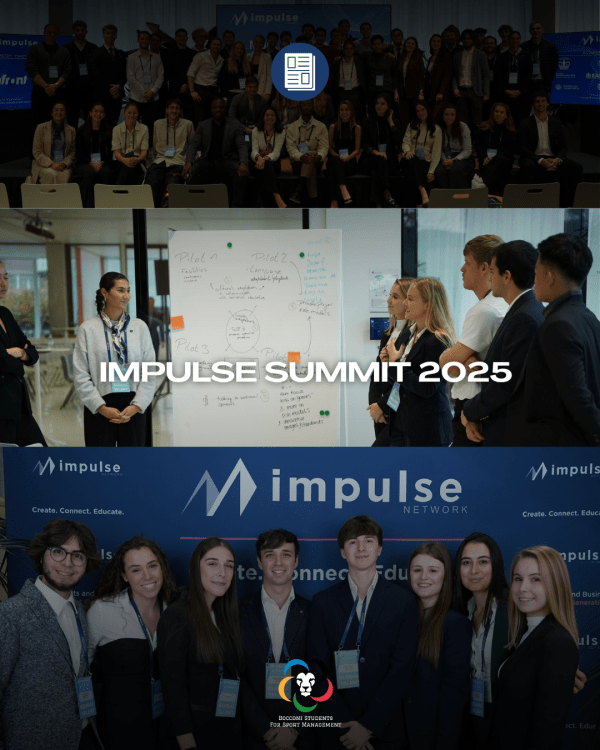
IMPULSE SUMMIT 2025

On the last week of October, we had the opportunity to attend the Impulse Summit as Global Talents. But what exactly are the Impulse Summit and a Global Talent?

The Impulse Summit was founded eight years ago at the University of St. Gallen by the students of the Impulse Network. The Impulse Network is a student association, just like BSSM, dedicated to helping and preparing its members for a career in the sports industry. This is done by offering a wide range of initiatives, such as workshops and case studies, events and networking opportunities with professionals and other students in the same position.

In 2017 the first Impulse Summit was organized by a small group of members with a goal: “the hosting of an international conference at the University of St. Gallen with students and experts from all over the world”. Today, the last edition of the Impulse Summit gathered 52 students from 18 different countries selected as Global Talents, 16 panels on different topics and challenges regarding the sports industry and countless speakers among the most important CEOs, Presidents and executives of the sector.

Three Days as Global Talents

On the first day, students from all over the world arrived in St. Gallen. People were coming from Italy and Portugal as well as Chile, Argentina and even South Africa! Regardless of their unique backgrounds, they were all united by one common passion: sport. The first day was dedicated to settling in, getting familiar with the place and exploring the city. We met at the University, on top of the city’s hill, and started getting to know one another. The Impulse Team presented us the week program and we did a game to get to know each other, with two of us ending on the podium! We then went for a guided tour of the city of St. Gallen and closed the evening having pizza altogether.

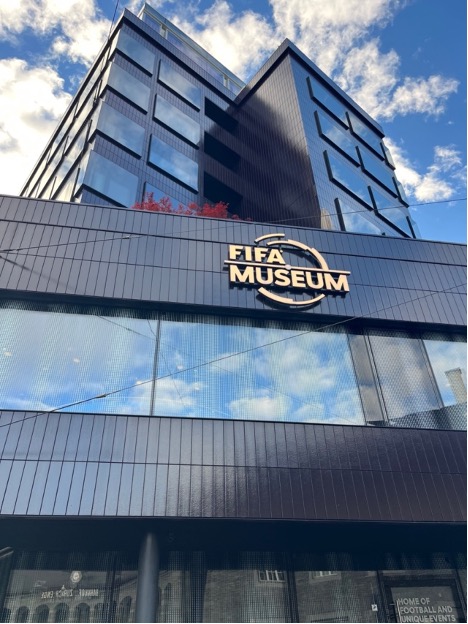
The next day we took the train to the beautiful Zurich! There we visited the FIFA Museum, discovering all its interactive games and activities. For instance, we immersed ourselves in the experience of commenting Grosso’s penalty kick in the 2006 World Cup final, discovered the history behind different nations’ jerseys and posters, as well as playing football in the games area and competing with different editions of the FIFA videogame. 

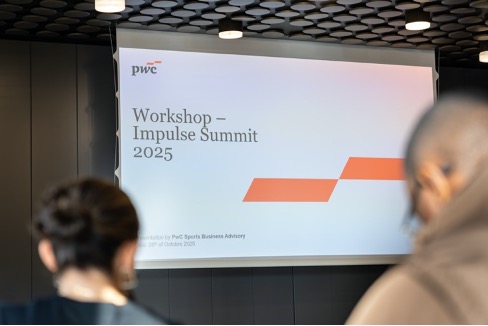
On the second part of the day, we challenged ourselves by taking part in a workshop organized by PwC Switzerland. They explained to us what the current model for assessing how much funds the National Olympic Committee awards to each National Federation and then asked us to think about ways to improve it. The best thing about it? Having the possibility to confront with other students and understand their point of view based on their background and therefore sharing our experiences and thoughts, coming from different Universities and Countries.

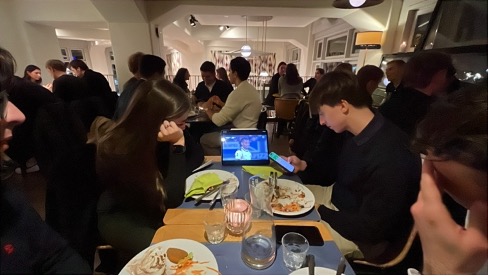
The day ended with a quick visit of the city and the train back to St. Gallen, where we had dinner. We cannot really say that we spent a lot of time together at dinner, as many of us were quite busy watching Serie A’s matches.

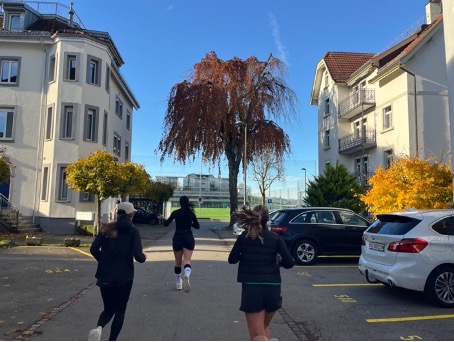
Finally, we kicked off Wednesday with a sport session, where some of us played football, others volleyball and another group went for a run on the hills of St. Gallen. The rest of the day was spent downtown with PwC Switzerland and the IOC with whom we affronted an interesting, but complicated, topic: the management of Boxing at the Olympics. In fact, Boxing is the one and only discipline that is not regulated by the IOC due to the many scandals that keep arising. 

We closed the three days as Global Talents with a Public Session that featured Jordi Quintillà, a player of St. Gallen FC, as host. 

Impulse Summit

The Next Billion Fans was this year’s topic. The several stage sessions and panels we had the possibility to listen to, all focused about what the sport industry must expect from the future. 

During the two days of Summit we had the possibility to listen and talk to several experts of the industry such as Luis Vicente, Chairman of APEX, who inaugurated the Summit and with whom we had also the possibility of a dedicated Q&A Session, exclusively for the Global Talents. Other exceptional speakers were Maheta Molango, CEO of the Professional Football Association for England and Wales; Lukas Eisner, President of Swiss Golf; Elena Mirandola, former CEO Como Women FC and Founder of The Breakaway; some experts from Infront and TEAM Marketing, such as Eliana Amboni, who is also a Bocconi Alumni; Michele Tozzi, CEO of the European Triathlon Association; Peer Naubert, CEO of Bundesliga International; and  many more,

Furthermore, on Thursday evening a Networking dinner with all the speakers and experts that took part in the Summit was held, dedicated to the Global Talents. We had the possibility to talk one on one with them in a dynamic environment and exchange ideas and opinions.

Ending strong, on our last day in St. Gallen, Friday, we participated in yet another workshop. Our Global Talents had the possibility to join a workshop organized either by UEFA or DAZN on Women Football development.

In the first one, we had the opportunity to listen to experts from the UEFA Innovation Hub explaining us their Innovation Programs for the UEFA’s Women’s EURO 2025, which were developed in collaboration with partners such as Adidas, Disney, Amazon, the Swiss Football Association and various Universities around Switzerland. We were then divided into groups and challenged to think outside the box. We had to develop a plan on how to expand these initiatives to other countries and according to which factors. One key insight was the understanding of the cultural differences between the Countries of the group members, as everyone shared their point of view in respect to how their Country of origin would react to such ideas.

Instead, in the second workshop, organized by DAZN, we had the opportunity to explore the topic of sustainable business growth in women’s football, and to discuss how the sport can evolve from short-term “hype” into lasting success.
During the session, DAZN representatives shared some insightful broadcasting data from the latest Women’s European Championship, highlighting both the impressive audience growth and the challenges that still remain to make this progress sustainable.
We were then divided into groups to work on practical ideas to make women’s football more appealing to audiences. Among the proposals that emerged were adapting certain game rules to make matches more dynamic and entertaining, experimenting with new camera angles and production techniques to enhance the viewing experience, and investing more in youth women’s football to nurture stronger, more competitive athletes.
Another interesting insight was the importance of creating iconic figures who can inspire fans and elevate the sport’s visibility.

Finally, the week was concluded with an afterparty hosted by our friends from the Impulse Network, who did an amazing job! We couldn’t be more grateful for this experience and use the occasion to thank them once again. Hopefully this article will inspire other students to apply next year and make the most out of their own experience.

See you on the 29th-30th of October 2026!

By Sofia Negretti and Stefano Castellana

NITTO ATP FINALS: THE LAST SHOWDOWN IN TURIN

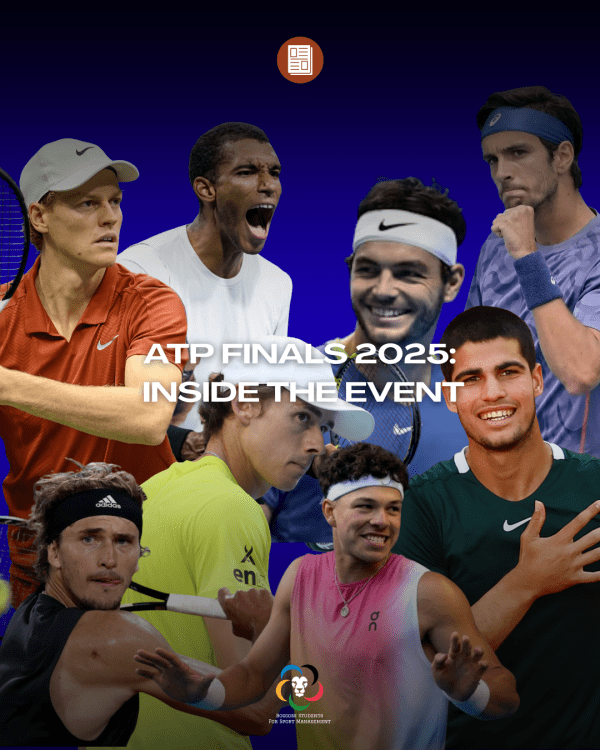
The Nitto ATP Finals are a professional tennis event that takes place at the end of each season. By then, the best eight players and couples of the ranking, are qualified to compete in this event. Since 2021, the ATP Finals are held at the Indoor Tennis Hardcourt of the Inalpi Arena in Turin and will most likely stay there for a few more years. This year, I had the chance to go watch the semifinals in person, giving me a real involvement in the atmosphere. 

Nitto Denko Corporation Title Sponsorship 

Since 2017, the official name has been Nitto ATP Finals due to a title sponsorship with the Japanese manufacturing company, Nitto Denko Corporation. Their collaboration is crucial to the event’s overall identity and branding. In fact, Nitto’s representatives are always present. For example, at the semifinals, the Nitto Denko Corporation CEO, Hideo Takasaki, did the coin toss before the start of both matches.

Tournament Format and Points

Singles matches are contested as best-of-three tie-break sets. Doubles matches consist of two sets with no-ad scoring, and if teams split sets, a Match Tie-break determines the winner.

The eight qualifiers are divided in two groups. The top seed is assigned to Group A, the second to Group B, and the remaining players are allocated in pairs according to seeding. Each participant plays against the other three players in their group. The group winners are placed on opposite sides of the draw, while each runner-up faces the winner of the other group in the semifinals.

Fun fact: groups at the Nitto ATP Finals are named after tennis legends. For instance, this year the singles groups were called the Jimmy Connors Group and the Bjorn Borg Group, while the doubles groups were the Peter Fleming Group and the John McEnroe Group.

In terms of ATP points, players get 200 points for each win in the group stages, 400 points for a semifinal win and 500 points for winning the final. If the player goes undefeated, they can get a total of 1,500 points, which is a significant amount of points as it’s only 500 less than a grand slam, emphasizing the importance of this event.

The Eight Who Made It to Turin

The eight singles players who qualified for this year’s Nitto ATP Finals were:

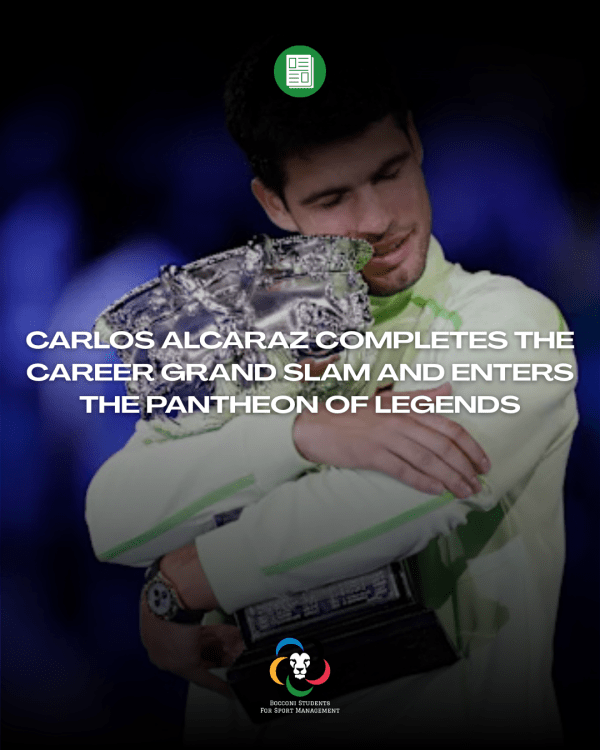
Carlos Alcaraz. He qualified early with strong results at Grand Slams, winning both the French Open and the US Open.

Jannik Sinner. He arrived in Turin after a highly successful season, despite a three-month suspension due to the controversial Clostebol doping case. He won major titles, including Wimbledon and the Australian Open. His qualification was impactful, given strong home support in Italy.

Alexander Zverev. He returned to the year-end event after a solid season with many deep runs in major tournaments.

​Novak Djokovic. He qualified once again after a strong season despite his age. Notably, Djokovic won the ATP 250 event in Athens, defeating Lorenzo Musetti in the final. Musetti needed this win to qualify for Turin, but Djokovic’s victory prevented his entry. After the match, Djokovic reportedly told Musetti he would not participate in the ATP Finals, reflecting a strategic decision to manage his schedule at this stage of his career. Therefore, Lorenzo Musetti took his place at the event.

Ben Shelton. He qualified for the Finals for the first time after a breakthrough season with rapid progress on the tour.

Taylor Fritz. He returned to the event by delivering consistent results throughout the season.

Alex de Minaur. He qualified for the Finals through consistent performance in major tournaments despite only winning one title this year.

Félix Auger-Aliassime. He secured the final qualification spot following a strong performance during the later stages of the season.

Key Results and My Experience 

There were several notable matches during this year’s ATP finals. However, the one that clearly stood out was the final between Carlos Alcaraz and Jannik Sinner. These two players have both had a dominant season this year, separating themselves from the rest of the tour. Jannik Sinner, the defending champion, ended up beating Carlos Alcaraz 7-6, 7-5 in a long-fought battle to claim his second career ATP Finals title.

Other matches, such as Taylor Fritz vs Alex de Minaur and Alexander Zverev vs Félix Auger-Aliassime, were particularly important. These were the last matches of the group stages, and hence for the players, it decided whether they would be going to the semifinals. Surprisingly, both de Minaur and Auger-Aliassime produced upsets by defeating higher-ranked opponents.

As a result, the two semifinals were Jannik Sinner vs Alex de Minaur and Carlos Alcaraz vs Félix Auger-Aliassime. These were the two matchups I was lucky enough to watch live at the Inalpi Arena in Turin.

Attending in person gave me a totally different perspective from watching the event on television. The atmosphere was electric, with fans responding to every point. It was particularly fascinating to see everyone joining in and chanting “Ole, Ole, Ole, Ole, Sinner, Sinner” during the warm-up, after winning the first set and after winning the match, which gave Sinner a lot of confidence going into and through the finals.

I sat in the first row on the North Sector 101, which is amongst some of the best seats in the stadium. This gave me a real court-level perspective on the match. From this perspective, I noticed how significant the level of power and precision that Sinner and Alcaraz play at, which is hard to grasp just by watching the broadcast on television.

Logistically, the event was organised with an easy entry process and a clear arena layout. The lighting and screens inside the arena also played a huge role. The large screens created a sense of immersion throughout the matches. For example, after every ace, all the screens around me instantly displayed the word “ACE,” which energised the crowd. This feature arose from the “Un Ace per la Ricerca” initiative by Intesa Sanpaolo. The leading Italian banking group donated €500 for every ace during the semifinals (€1,000 for the finals and €100 during the group stages). The funds went to the Fondazione Piemontese per la Ricerca sul Cancro. This integration of sport and charity added an essential layer of significance to the Nitto ATP Finals.

The Numbers

This year’s ATP finals wasn’t only intense on court, but it also broke several records. Jannik Sinner took home $5.07 million which is the biggest winner’s cheque in men’s tour history. Across the whole week, the event saw 229,879 fans attending which was an all-time high. The atmosphere also extended beyond the stadium itself since the Sinner vs Alcaraz final became the most-watched tennis match in Italian TV history with over 7 million viewers.

Taken together, these numbers reflect how vital this edition was not only for the players, but also for tennis as a sport. Overall, attending the Nitto ATP Finals offered a unique insight into one of tennis’s most prestigious events, highlighting why Turin remains an ideal host for the season finale.

By Alberto Di Lodovico

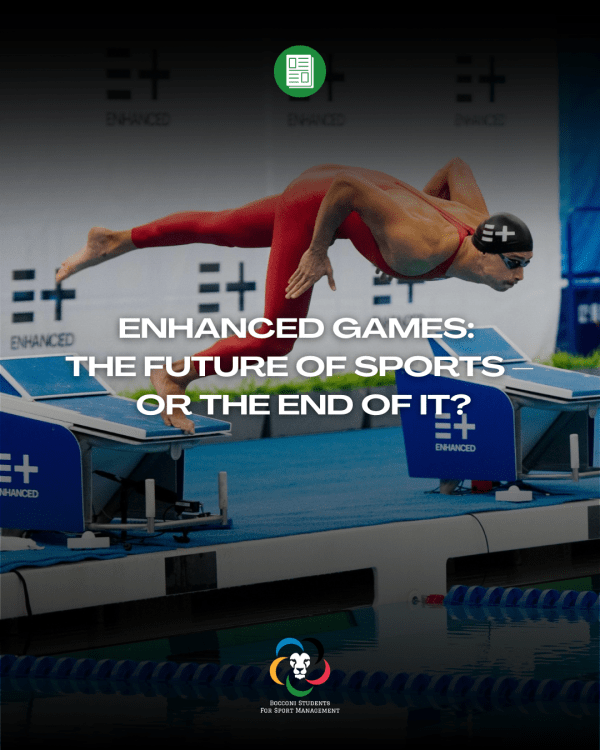
ENHANCED GAMES: THE FUTURE OF SPORTS – OR THE END OF IT?

Created by 40-years-old Australian Aron D’Souza, the Enhanced Games is a new and controversial multi-sport event. The idea behind it is to admit the use of performance-enhancing drugs (PEDs), currently banned by the World Anti-Doping Agency (WADA), under medical supervision and control that, according to the event organizers, will ensure the athletes’ safety and health.

The declared objective of these games is to push beyond the athletes’ natural limits, break existing records and surpass the boundaries of human capability.

The inaugural Enhanced Games will take place in May 2026 in Las Vegas and will feature athletes competing in three main disciplines: swimming, track & field and weightlifting.

The Business Behind the Enhanced Games

The Enhanced Games are deeply commercial. They are structured around high-stakes investments, lucrative athlete payouts and a business model that pivots from traditional sport governance to an “entertainment-first” approach.

Unlike the Olympic Games – which rely on a mix of public and private funding, media rights and sponsorships – the Enhanced Games are entirely privately funded by venture capital funds such as 1789 Capital, and investors including Peter Thiel, Balaji Srinivasan and Christian Angermayer. To date, the project has reportedly raised around $300 million. 

Each event will have a prize pool of $500,000, with $250,000 awarded to the winner and $ 1 million bonus for world record breaking. Moreover, all participating athletes will receive appearance fees.

The Enhanced Games promote themselves as an efficient and athlete-centric event. They aim at cutting unnecessary costs by focusing on fewer sports, using existing infrastructure and reinvesting to fairly pay all athletes.

The Uncomfortable Truth: Why the Enhanced Games are Going to Succeed

 There are several factors that are likely to contribute to the success of the Enhanced Games:

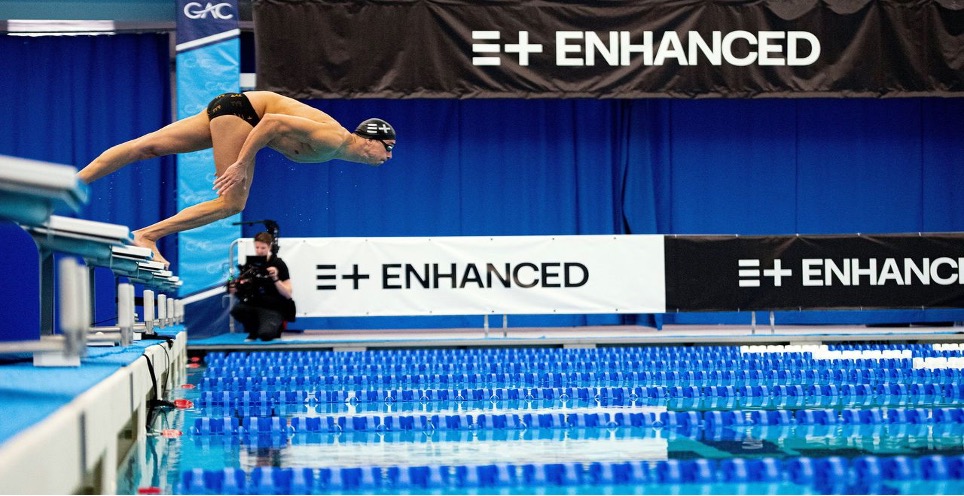
  • Proof of concept. The Enhanced Games have already demonstrated that their model can work in practice. Greek swimmer Christian Gkolomeev broke the long-standing world record in the 50-meters freestyle during filming for the Games’ official documentary. What’s surprising is the fact that the swimmer achieved this just two weeks after joining the Enhanced program. Wether it was luck or not, this result perfectly aligns with the event’s core narrative: that with full medical supervision, financial backing and cutting-edge training facilities, athletes can truly push beyond their natural limits.
  • Unquestionable public interest. Regardless of personal opinions, the Enhanced Games undeniably attract attention. Featuring elite athletes like Ben Proud or James Magnussen, the event arouses curiosity. Furthermore, the timing of the event is ideal: with the next Olympics in 2028 and the conclusion of the swimming and athletics World Championships, the Enhanced Games will stand as the only major event on the calendar.
  • A smart marketing strategy. The Enhanced Games are built on storytelling and spectacle. They recently released a compelling and engaging documentary. Furthermore, their main target audience is the casual sports viewer – people who watch disciplines like swimming or track & field only occasionally or during the Olympics, mainly for national pride but especially to see the best athletes breaking world records. By emphasizing entertainment and frequency, the Enhanced Games aim to fill the long gap between Olympic cycles and transform elite performance into an ongoing show.
  • Transparency and compensation. At the highest level of sports doping has always existed and, in some disciplines, such as  bodybuilding, there is already a clear distinction between “natural” and “enhanced” categories. There is a long-documented history of doping scandals in sports, and not all were sanctioned (for instance, at the Tokyo Olympic Games in 2020, 23 Chinese athletes tested positive and yet were still allowed to compete and win four gold medals). In this sense, the Enhanced Games ensure transparency and fairness.
    Nevertheless, there is also the economic point of view. In a public statement released in May 2025, Christian Gkolomeev’s wife reveals that, during his career, her husband only earned about $5,000 per year, despite full commitment to his sport and continuous WADA testing. His choice to join the Enhanced Games was a purely money-driven – and it’s hard to blame him.
  • The longevity market. The wellness trend is booming. Ordinary people exercise more, eat healthier and take supplement to optimize health and performance. Let’s take creatine as an example: once considered unsafe, it is now mainstream, widely accepted for its physical and even cognitive benefits. From this perspective, the Enhanced Games also serve as a kind of scientific experiment. It wouldn’t be surprising if, in 15-20 years, some substances now labelled as “doping” will be normalized and socially accepted, both in sports and in everyday life.

Conclusion

The criticism raised against the Enhanced Games is entirely legitimate, yet it’s impossible to ignore the brilliance behind the idea. Aron D’Souza has managed to create something completely new and the mix of controversy, innovation and spectacle is likely what will make it a success. 

By Federico Sittaro

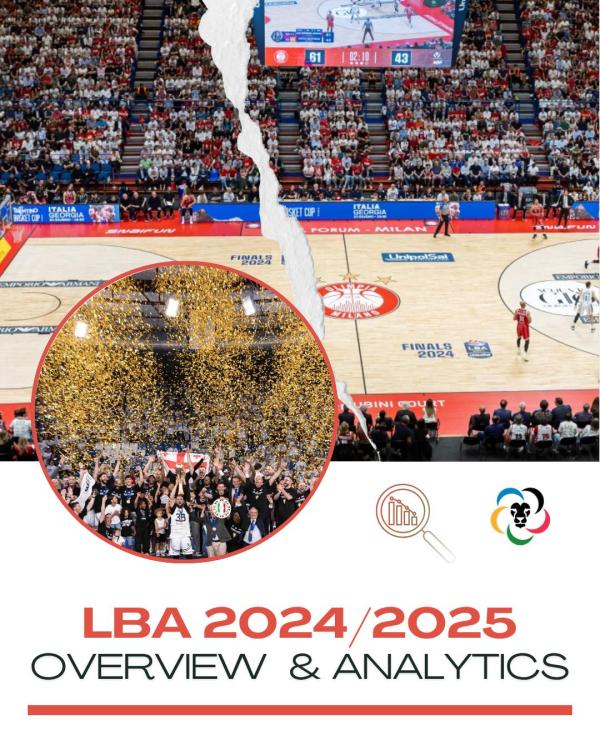
LBA 2024/2025: OVERVIEW & ANALYTICS

As every year, the current season of Italy’s top basketball competition is over. Virtus Segafredo Bologna has been crowned Italian champion, winning the Lega Basket Serie A title for the seventeenth time by defeating Germani Brescia 3–0 in the finals.

To reach the final, Virtus overcame Umana Reyer Venezia 3–2 in the quarterfinals and EA7 Emporio Armani Milano 3–1 in the semifinals. Germani, on the other hand, reached the finals for the first time in its history by defeating both UNAHOTELS Reggio Emilia in the quarterfinals and Trapani Shark in the semifinals, each by a 3–0 sweep.

Regular Season analytics
Italian basketball continues to establish itself as an increasingly attractive product for the public. This is demonstrated by two key data from the 2024/2025 Regular Season: average attendance and revenue per game.

The average revenue per match, calculated across all games played by the 16 teams, was €58,761.

This figure is driven upward by the home games of Olimpia Milano (€120,514), Virtus Bologna (€110,494), and Trapani Shark (€105,541) — the only three teams to surpass the €100,000 mark.

Conversely, the teams pulling the average down were Givova Scafati (€10,160), Vanoli Cremona (€21,850), and Reyer Venezia (€24,131).

The overall average attendance per game was 3,964 spectators.
Here too, the numbers were positively influenced by the strong performances of Milano (average of 8,302 spectators per game), Virtus Bologna (6,071), and Trieste (5,363). The lowest attendance figures were recorded in Scafati (1,727), Derthona (2,256), and Cremona (2,335).

However, when looking at arena capacity utilization, the top-performing teams were Dolomiti Trentino (98.5%), Trapani Shark (96.1%), and Reyer Venezia (95.7%). At the bottom of the ranking were Scafati (46.7%), Virtus Bologna (62.9%), and Sassari (63.9%).

Here is the complete table with all 16 teams in the championship:

TEAMAVERAGE ATTENDANCECAPACITY
(Arena)
CAPACITY UTILIZATION (%)AVERAGE REVENUE (€)
Banco di Sardegna Sassari3.1945.000
(PalaSerradimigni)
63,953.904
Bertram Derthona Tortona2.2563.510
(Pala Ferraris)
64,325.623
Dolomiti Energia Trentino3.9404.000
(PalaTrento)

98,536.053
EA7 Emporio Armani Milano8.30212.331
(Unipol Forum)
67,3120.514
Estra Pistoia2.9833.990
(PalaCarrara)
74,842.016
Germani Brescia4.7205.200
(PalaLeonessa A2A)
90,866.136
Givova Scafati1.7273.700
(PalaMangano)
46,710.160
Napoli Basket2.7793.890
(PalaBarbuto)
71,432.490
Nutribullet Treviso Basket4.1755.344
(PalaVerde)
78,147.590
Openjobmetis Varese4.3635.107
(Palasport Lino Oldrini)
85,483.330
Pallacanestro Trieste5.3636.736
(PalaTrieste)
79,683.773
Trapani Shark4.1574.325
(PalaShark)
96,1105.541
Umana Reyer Venezia3.3553.506
(Taliercio)
95,724.131
UNAHOTELS Reggio Emilia3.7004.530
(PalaBigi)
81,781.332
Vanoli Basket Cremona2.3353.511
(Palasport Radi)
66,521.850
Virtus Segafredo Bologna*6.0719.658
(Segafredo Arena)
62,9110.494
TOTAL3.9645.27175,258.761

* Considering the home games across the domestic league (Regular Season and Playoffs) and the EuroLeague (with an average arena occupancy of 85% and 72% for Olimpia), the black-and-whites recorded a total attendance of 275,204 fans.

The individual games with the highest attendance and revenue primarily featured EA7 Emporio Armani Milano, Virtus Segafredo Bologna, and Trapani Shark. The most attended match was held at the Unipol Forum between Milano and Bologna, drawing 10,869 spectators and generating a record revenue of €215,108. Next in terms of attendance were the games at the Forum against Dolomiti Energia Trentino (10,737 spectators) and Trapani Shark (9,903), the latter bringing in €163,768 in revenue. The return match between Virtus and Olimpia at the Segafredo Arena registered €205,255 in revenue, while Bologna vs. Trapani, with 9,593 spectators, generated €201,203. Rounding out the top 5 in attendance is Milano vs. Napoli (9,136 spectators), while Trapani vs. Milano stands out for its significant revenue of €203,103.

Playoff analytics

The total box office revenue from the Regular Season reached €14,102,640.

To this figure must be added the income generated during the Playoffs—a crucial and highly significant phase of the season—where the importance of the games helps attract more fans and allows clubs to raise ticket prices. During this key stage, a total of 149,682 spectators attended 26 games, averaging 5,757 per match—almost 1,800 more spectators per game compared to the Regular Season.

As expected, the games with the highest average attendance were the Finals between Virtus Bologna and Germani Brescia, with an average of 7,912 spectators over 3 games (23,736 total). The Semifinals also posted strong numbers: an average of 7,490 spectators, totaling 52,430 over 7 games. Among these were the two most attended matches overall: Game 3 and Game 4 at the Unipol Forum in Milan between Olimpia and Virtus, which drew over 12,000 fans per game. The Quarterfinals, by contrast, recorded a total of 73,520 spectators, averaging 4,595 across 16 games.

Lastly, the average arena occupancy rate during the Playoffs stood at 86.3%, marking a 3.3 percentage point increase over last season’s Playoffs.

The best results were once again recorded by Trento (100%) and Venezia (97.7%).

Furthermore, as was the case with the 2025 Frecciarossa Final Eight of the Italian Cup, the Finals—the season’s concluding event—were also given extensive international coverage. Thanks to a collaboration with Euroleague Basketball TV, the games were broadcast free-to-air in the United Kingdom, Switzerland, the Netherlands, Belgium, Denmark, Norway, and Sweden. This coverage in these countries was added to the existing international agreements with Greece, Israel, Turkey, Poland, Georgia, Kazakhstan, Slovakia, the Czech Republic, Ukraine, the United States, South America, the Balkan countries, and the Baltic states, facilitated by Infront Sports & Media AG, the official advisor for LBA.

LBA target audience
Confirming these significant figures, at the start of the current sports season it was estimated that 16.7 million Italians were fans of the LBA-an increase of 2% compared to the previous season and nearly 50% higher than a 2019 survey.
This audience is mainly composed of:

  • men (59%)
  • residents of Northern Italy (43%)
  • people aged 35-44 (24%)
  • individuals with a medium-high or high socio-economic status

LBA Final Eight 2024
During the season, as per tradition, the Frecciarossa Italian Cup Final Eight took place at the Inalpi Arena in Turin. For the first time in its history, the trophy was won by Dolomiti Trentino.

The data from the previous edition, also held in Turin and currently the latest available, report a total attendance of 45,631, including 25,351 unique spectators.

The total estimated economic impact was € 6,866,000, with a benefit to the Piedmont region amounting to € 4,516,000.

In detail:

  • The B2C segment generated a direct impact of € 3,487,000, with local effects of € 2,169,000, mainly from:
  • overnight stays (23%)
  • catering (22%)
  • ticketing (20%)
  • The B2B segment produced a direct impact of € 3,379,000, with a local benefit of € 2,347,000, mainly due to:
  • setups, shows, and catering (27%)
  • sports halls and related services (20%

By Tommaso Villa

FIFA CLUB WORLD CUP 2025: AN INTRODUCTION

The current football season will feature a major innovation: the introduction of the new FIFA Club World Cup format, which will take place in the USA between June 14 and July 15.

The previous format involved the six reigning champions of the main confederation competitions, who competed in single-elimination knockout matches. In the last edition, Real Madrid was crowned world champions after defeating Mexico’s Pachuca 3-0 on December 18, 2024, at the Lusail Iconic Stadium in Qatar.

The new format is completely innovative compared to the previous one and follows that of the World Cup for nations: there will be a total of 63 matches thanks to the expansion to 32 teams, divided into 8 groups of 4. The top two teams from each group will advance to the knockout stage, which includes the round of 16, quarterfinals, semifinals, and final.

All matches will be available exclusively on DAZN, selected as the exclusive global broadcaster, and in Italy also co-broadcast by Mediaset, which — thanks to a sublicensing agreement — will air one match per day on free-to-air TV.

How are the 32 teams selected?

Each Confederation has a predefined number of allocated slots, specifically distributed as follows:

  • UEFA (Europe): 12 slots
  • CONMEBOL (South America): 6 slots
  • AFC (Asia): 4 slots
  • CAF (Africa): 4 slots
  • CONCACAF (Central and North America): 4 slots
  • OFC (Oceania): 1 slot

An additional slot is granted to the host Confederation, in this case assigned to Leo Messi’s Inter Miami, winners of the 2024 MLS Supporters’ Shield.

Slots are allocated to the clubs that have won the top-tier competition of their Confederation (UEFA Champions League, AFC Champions League, CAF Champions League, CONCACAF Champions Cup, Copa Libertadores, and OFC Champions League) up to the 2021 edition, or via a specific ranking system established by the Confederation the club belongs to.

The most prominent teams representing each Confederation include:

  • UEFA: Real Madrid (winners of the 2022 and 2024 Champions League), Manchester City (2023 winners), Chelsea (2021 winners), Bayern Munich, PSG, Inter, Juventus, and Atletico Madrid
  • CONMEBOL: Palmeiras, Flamengo, River Plate, and Boca Juniors
  • AFC: Al Hilal and Al Ain
  • CAF: Al Ahly SC and Wydad AC
  • CONCACAF: CF Monterrey and Seattle Sounders FC
  • OFC: Auckland City FC

Fifa World Cup 2025 prize money

According to a FIFA statement, the 32 participating teams will compete for a total prize pool of $1 billion, with the winning team earning up to $125 million. More specifically, the prize money will be distributed based on two criteria: participation ($525 million) and sporting results ($475 million).

The following table shows the detailed breakdown of how the prize pool will be distributed (in millions of dollars):

PARTICIPATIONSPORTING RESULTS
European clubs: between 12.81 and 38.19, based on a ranking that considers sporting and commercial criteriaGroup stage win: 2
South American clubs: 15.2Group stage draw: 1
North, Central, and Caribbean clubs: 9.5Qualification to the round of 16: 7.5
Asian clubs: 9.5Qualification to quarter-finals: 13.125
African clubs: 9.5Qualification to semi-finals: 21
Oceania club: 3.6Runner-up: 30  
 Winner: 40

Stadiums

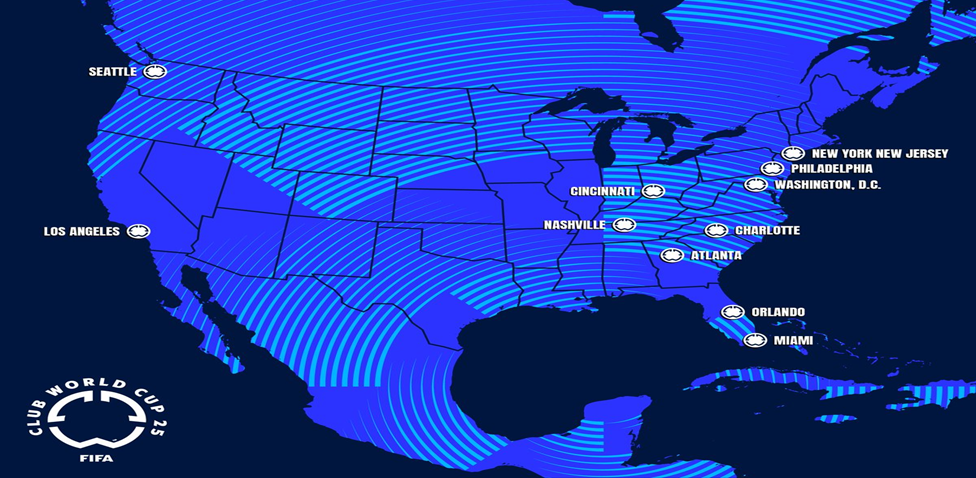
The FIFA Club World Cup, as mentioned, will take place in the United States, serving as a prelude to the 2026 FIFA World Cup for national teams, which will also be hosted by the USA in collaboration with Canada and Mexico.

The 11 host cities for the competition are mainly located on the East Coast, with the exceptions of Seattle and Los Angeles. Specifically, the cities are: New York, Miami, Atlanta, Washington, and Orlando – the latter hosting matches in two different stadiums, for a total of 12 stadiums.

The stadiums with the largest capacities are:

  • Mercedes-Benz Stadium – Atlanta, GA (75,000 seats)
  • Bank of America Stadium – Charlotte, NC (75,000 seats)
  • Rose Bowl Stadium – Los Angeles, CA (88,500 seats)
  • Hard Rock Stadium – Miami, FL (65,000 seats)
  • MetLife Stadium – New York, NY (82,500 seats) – selected to host the final
  • Camping World Stadium – Orlando, FL (65,000 seats)
  • Lincoln Financial Field – Philadelphia, PA (69,000 seats)
  • Lumen Field – Seattle, WA (69,000 seats)

Extraordinary Transfer Window

Finally, on the occasion of the World Cup, FIFA has introduced a new and unprecedented transfer market slot, active from 1 to 10 June.

One of the most debated issues revolves around the so-called “squad lists”, the players in each club will be allowed to register for the competition. The tournament will take place during the typical summer transfer period and close to the end of players’ contracts (late June), making this a particularly sensitive topic.

Each team will be able to register a minimum of 26 and a maximum of 35 players, including at least 3 goalkeepers. The final squad must be selected from a preliminary list of up to 50 names, submitted in advance. However, only 26 players may be included on the matchday squad list for each game.

As for transfers and expiring contracts, the regulations allow clubs to make up to 6 changes to their final squad between June 27 and July 3. This includes replacing players already on the list and adding up to 2 new players. Importantly, a player cannot participate in the competition with more than one club.

So, what kind of tournament should we expect? Will teams, and especially players, approach it with the right level of motivation and intensity? One of the key questions will be how energy levels are managed, particularly for clubs that reach the final stages: will they be able to adequately prepare for the new season, given that domestic leagues resume in August and recovery time will be limited to just a few weeks?

Maybe the real challenge will be just that: finding a balance between ambition, physical management, and strategic planning in a calendar that’s becoming increasingly packed with matches.

By Tommaso Villa

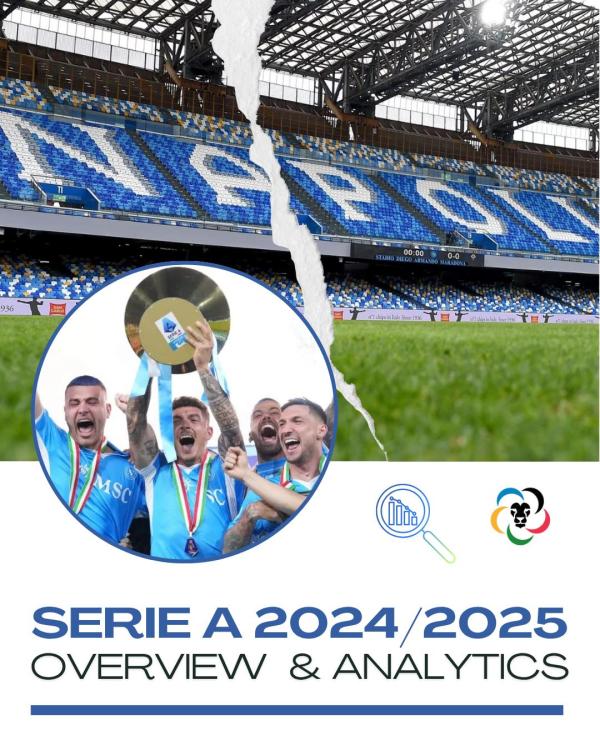
SERIE A 2024/2025: OVERVIEW & ANALYTICS

Final outcomes
Once again, the season of Italy’s top football competition has come to an end. Napoli have secured the fourth Scudetto in their history — their second in the last three years. According to the final outcomes, alongside Napoli, Inter, Atalanta, and Juventus will compete in the 2025/2026 UEFA Champions League, having finished second, third, and fourth respectively.

The race for the final Champions League spot remained open until the very last matchday: Juventus, with a 3-2 away win against Venezia, not only clinched qualification but also condemned the Venetian side to relegation and pushed Roma down to the UEFA Europa League 2025/2026. Joining the Giallorossi in Europe’s second-tier competition will be Bologna, thanks to their 1-0 victory over AC Milan in the 2024/2025 Coppa Italia final.

AC Milan and Lazio, following two disappointing seasons, will not participate in any European competition next season. The last available European slot goes to Fiorentina, who — with a record 65 points (their best performance since the 2012/2013 season, when they reached 70 points) — will once again feature in the UEFA Conference League 2025/2026.

Alongside Venezia, the teams relegated to Serie B are Monza, who with 18 points at least avoided setting the record for the lowest point tally in a 20-team Serie A with the 3-point win system (still held by Salernitana with 17 points last season), and Empoli, who failed to avoid the drop after losing 2-1 at home to Hellas Verona on the final day.

Fan engagement
Interest in Serie A continues to grow, as highlighted by the latest stadium attendance figures. The current season closed with an average of 30,824 spectators per match, confirming the upward trend of recent years and marking an event that hadn’t occurred in over two decades: for the second consecutive season, the average attendance surpassed the 30,000 mark. Last season, the average was slightly higher, at 30,911 spectators per match.

These numbers are reminiscent of the late 1990s, the golden era of Italian football, when between the 1997/1998 and 1999/2000 seasons, Serie A averaged 30,670 spectators per game. Following those years, Italian football experienced a steep decline, largely due to the scandals linked to the Calciopoli scandal. In the immediate aftermath, the league recorded a drastic drop, with the 2006/2007 season averaging just 19,307 spectators per match. Compared to that low point, the increase today stands at around +60% — or 11,517 more spectators per match, on average.

According to data collected by Transfermarkt, the just-concluded season saw a total of 11,662,951 spectators across all matches — a slight decrease of -0.73% (85,236 fewer) compared to the 11,748,187 from the previous season. This drop is largely attributed to the Genoa vs. Juventus match held behind closed doors on September 28.

Surprisingly, given their on-field performance, AC Milan * recorded the highest home attendance, drawing a total of 1,358,734 spectators to San Siro — including approximately 12,000 foreign fans per match. This is further evidence of football’s appeal as a driver of tourism. At the other end of the spectrum, the club with the lowest home attendance was Como, which attracted just 199,960 spectators over the season. This was in part due to the limited capacity of the Stadio Sinigaglia (10,524 seats), one of the smallest venues in the league.

In terms of stadium occupancy rates, the top-performing clubs were Cagliari and Juventus. The Sardinian side filled the Unipol Domus to 98% capacity, averaging 16,085 fans per match (out of a maximum of 16,365) for a total of 305,617 spectators over the season. Juventus recorded a 97% occupancy rate, with 764,498 fans attending matches at the Allianz Stadium — an average of 40,237 per game, with a total capacity of 41,507.

The club with the lowest occupancy rate was Fiorentina (47%), mainly due to the ongoing renovation of the Stadio Artemio Franchi. Despite a total capacity of 43,147, the stadium averaged only 20,358 spectators per game. Renovations are expected to be completed by the end of October. Meanwhile, Atalanta posted the highest year-on-year increase in stadium occupancy: from 59% last season to 91% this year, thanks to the completion of renovations at the Gewiss Stadium.

* The figures referenced in this paragraph refer to tickets sold per match, not actual attendance — which is not publicly disclosed. The most notable discrepancy between reported sales and visual impressions inside the stadium concerns AC Milan, which suffered from a “no-show” phenomenon: many season ticket holders opted not to attend matches in person due to disappointing on-field results.

Sponsorship & TV rights revenues

As we know, the main revenue streams for football clubs are: sponsorships, TV rights, matchday income, merchandising, and player trading or capital gains. Detailed information for each club, including the breakdown of these revenue sources, will only become available once the teams publish their financial statements as of June 30. However, what is already known are the revenues from main sponsors and the distribution of TV rights.

Leading the ranking for main sponsor income are Inter and Juventus, each generating €30 million from their shirt sponsors — Betsson for the Nerazzurri and Jeep and Visit Detroit for the Bianconeri. Juventus’ case is particularly interesting, as the club only secured these deals in the final weeks of the season, largely in anticipation of the upcoming Club World Cup. For most of the year, Juventus played with the Save the Children logo on their jerseys — a partnership that did not include any financial compensation.

Nonetheless, Italy’s top clubs remain far behind their European competitors such as Manchester City, Real Madrid, and PSG, whose sponsorship deals with Etihad, Emirates, and Qatar Airways respectively bring in between €70 and €80 million annually.
Here is the complete Serie A ranking by revenues from the main sponsors::

CLUBSPONSORMILLIONS (€)
InterBetsson30
JuventusJeep & Visit Detroit30
FiorentinaMediacom25
MilanEmirates19
RomaRiyadh Season12
NapoliMSC9
AtalantaLete5
BolognaSaputo4
TorinoSuzuki2,25
MonzaMotorola2
ParmaPrometeon1,4
UdineseBluenergy1,2
GenoaPulsee1,2
LecceDeghi1
Verona958 Santero1
EmpoliComputer Gross0,8
ComoUber0,7
VeneziaCynar0,6
Cagliari  Regione Sardegna & Mobynd
LazioNessun main sponsor/

Tabella 1: Juventus, Fiorentina and Bologna present as main sponsor a “related party”, that is, a company owned by the club’s owners.

Regarding TV rights revenues, their distribution is based on the Melandri Law (later revised by the Lotti reform), and is structured as follows:

  • 50% is distributed equally among all clubs;
  • 28% is based on sporting results (11.2% based on the final ranking of the most recent season, 2.8% on points earned in the most recent season, 9.33% on performance over the five seasons preceding the most recent one, and 4.67% on historical results);
  • 22% is based on social engagement (1.1% tied to minutes played by young Italian players, 12.54% based on stadium attendance, and 8.36% based on TV viewership).

The most impactful metric related to sporting results is the league placement in the most recent season (11.2%). Therefore, based on the final standings of the just-ended season, the clubs have generated the following revenues:

CLUB (IN ORDER OF RANKING)MILLIONS (€)
Napoli15,7
Inter13,2
Atalanta11,3
Juventus9,4
Roma8,1
Fiorentina6,9
Lazio5,6
Milan5,0
Bologna4,4
Como3,8
Torino3,1
Udinese2,8
Genoa2,5
Verona2,2
Cagliari1,9
Parma1,6
Lecce1,3
Empoli0,9
Venezia0,6
Monza0,3

By Tommaso Villa

FORMULA 1’S MARKETING REVOLUTION: TURNING RACING INTO A GLOBAL ENTERTAINMENT ECOSYSTEM

Formula 1 has become one of the most striking examples of how sport marketing can evolve through strategic storytelling, digital engagement, and targeted sponsorship deals. In recent years, the sport has expanded beyond the racetrack, becoming a global entertainment product and a case study in marketing innovation.

The transformation of F1’s commercial position demonstrates how a traditional sport can modernize its identity, attract younger audiences, and double its sponsorship revenue in just five years.

Drive to Survive: Netflix as F1’s Digital Turning Point

In 2019, the launch of the Netflix series Drive to Survive represented a crucial milestone in F1’s marketing strategy. The series pulled back the curtain on the sport, showing drivers’ personal stories, rivalries, and the intensity of life inside the paddock.

This behind-the-scenes narrative was perfectly aligned with the new generation of fans who value connection over competition alone. The results were impressive:

  • F1’s global fan base reached 750 million by 2024
  • 42% of these fans are under the age of 35
  • Female fans increased from 37% in 2018 to 41% in 2024

The Netflix effect expanded F1’s presence into the US market like never before, laying the foundation for new races in Miami, Las Vegas, and Austin — all of which attracted over 400,000 spectators.

A Sponsorship Boom: New Brands, New Values

F1’s repositioning also triggered a new era for brand partnerships. Historically tied to luxury brands, automotive companies, and energy drinks, the sport has now become attractive to mainstream consumer brands seeking visibility in the entertainment world.

In 2024, F1’s sponsorship revenues hit $632 million, doubling from 2019 levels.

Among the new entries:

  • Kit Kat (Nestlé)
  • McDonald’s
  • Hot Wheels (Mattel)
  • Lego
  • Moët & Chandon (LVMH)

Notably, the average sponsorship deal value rose to over $5 million, while contract durations shortened from 5.2 to 3.2 years, a sign of greater flexibility and faster brand rotation.

The Role of Digital Engagement

Modern F1 marketing strategy places fans at the center of the content ecosystem. Teams and drivers have become social media creators, with platforms like TikTok and Instagram essential to connecting with younger audiences.

This digital-first approach amplifies brand visibility far beyond race weekends. The viral potential of driver memes, behind-the-scenes clips, and interactive fan content ensures that F1 remains culturally relevant every day not just on Sundays.

F1’s New Marketing Blueprint: Lessons for the Sports Industry

The Formula 1 case shows that the future of sports marketing is shaped by three key pillars:

  1. Storytelling: Brands win when they create emotional connections through human stories.
  2. Digitalization: Fans demand access, interactivity, and personalized content.
  3. Flexibility: Shorter, dynamic sponsorships allow brands to react to fast-changing trends.

Conclusion

Formula 1’s marketing revolution highlights how a sport rooted in tradition can reimagine itself for a new era of entertainment. The strategic mix of Netflix storytelling, global expansion, and brand diversification has repositioned F1 as a lifestyle phenomenon.

This evolution offers a clear signal to all sports organizations: the race for fan engagement is no longer only on the track, it’s everywhere fans consume content.

SMART STADIUMS ARE CHANGING THE GAME

The Santiago Bernabeu Stadium earned its crown as World’s Best Stadium 2024. This achievement shows how smart stadium technology has reshaped the scene of modern sports venues. Its state-of-the-art pitch and 360-degree video screen make this architectural marvel a symbol of stadium breakthroughs.

Sports arenas and stadiums have seen an unprecedented rise. Between 2020 and 2024, developers rebuilt 18 venues and constructed 32 new ones. Stadium infrastructure investment reached €800 million in 2023, which accounts for 6.2% of revenue. Modern venues now combine AI-driven analytics, 5G networks, augmented reality experiences and biometric payment systems.

Smart stadiums have changed how fans watch and experience games. These venues offer tailored merchandise suggestions and display live player statistics right on the field. This technology creates a new dimension of fan involvement that seemed impossible a few years ago.

How Stadiums Evolved to Digital Hubs

The story of stadium architecture shows remarkable progress since the early 20th century. Back then, venues were simple concrete bowls that offered minimal amenities. The original stadiums had basic concrete tiers with uncomfortable seating. These facilities focused only on hosting large crowds before television broadcasts became popular.

Tragic events in UK stadiums during the 1980s, including fires and overcrowding, led to crucial safety improvements. These changes made venues more available and comfortable for various spectators. The upgrades also brought new business opportunities through merchandising, museums, and restaurants.

Today’s stadiums have become smart entertainment hubs. They feature high-speed Wi-Fi, interactive mobile apps, and immersive technologies. Los Angeles’ SoFi Stadium showcases this innovation perfectly with its 70,000-square-foot dual-sided video board, AI-powered concessions, and seamless ticketing systems.

Modern venues use IoT networks (Internet of Things) to monitor heat mapping and manage crowds in real time. Augmented reality creates interactive experiences that boost fan engagement. Digital twins generate hyper-realistic virtual stadium representations that enable virtual tours and improve game-day features.

This progress reflects new priorities in stadium design. The focus has changed from maximizing seats to creating intimate, atmospheric venues with premium amenities and better fan experiences. Modern stadiums stand as architectural marvels. They serve not just as sporting venues but as iconic landmarks that create lasting emotional connections with spectators.

AI and AR Technologies Enhance Fan Immersion Beyond the Game

AI now creates individual-specific fan experiences that go beyond the playing field. The Orlando Magic leads this innovation by putting AI and machine learning at the heart of their fan strategy. Their approach resulted in a remarkable 120% increase in game-day app users and a 20% increase in fan satisfaction scores for in-stadium technology.

AI algorithms analyze data from fan priorities, viewing patterns, and social media activity to create custom experiences. Fans receive video highlights, betting tips, and team news that match their interests. AI helps stadium spectators find shorter food lines and suggests the best viewing spots based on live crowd movement analysis.

AR changes the way fans involve themselves with live sports. The FIFA World Cup in Qatar brought the innovative FIFA+ Stadium Experience to life. In-venue fans could access video replays, multiple camera angles including VAR replays, and live AR displays showing statistics and heatmaps. The NFL has also launched AR apps that let fans see detailed player stats by pointing their phones at the field.

These technologies also boost business operations. The Orlando Magic utilizes AI platforms to spot season ticket holders who might leave and sends them special offers early. This evidence-based strategy helps retain customers in today’s competitive entertainment market.

Conclusion

Technology has transformed traditional sporting experiences into remarkable smart stadiums. These architectural marvels combine state-of-the-art technology with cherished sporting traditions that create exceptional fan experiences and operational improvements.

Smart stadium technology shows promising developments. Up-to-the-minute data analysis and AI-driven systems make game days enjoyable. Teams learn about their supporters’ priorities and behaviors while stadium operators can manage crowds better.

IoT networks, artificial intelligence, and augmented reality work together to create immersive experiences that connect fans with the action. Market growth projections indicate smart stadiums will become common in professional sports.

Smart stadium technology enhances the special aspects of attending games instead of replacing traditional elements. These venues maintain the communal spirit of live sports through careful integration of digital breakthroughs. They also provide the convenience and interaction that today’s audiences need.

HOW GOVERNANCE IS SYNONYMOUS WITH SUCCESS

In the world of sports, the concept of governance plays a crucial role in determining the long-term success of an organization. In the corporate sphere, governance refers to the set of rules, processes, practices, and structures through which a company is directed and controlled. It defines the relationships between key stakeholders and establishes decision-making and accountability mechanisms, ensuring the achievement of corporate objectives efficiently, transparently, and sustainably.

Applying these principles to sports, it becomes evident that solid management and competent leadership are often determining factors for success both on and off the field. Governance, in fact, is not limited to administrative management but directly impacts a club’s competitiveness, influencing market strategies, infrastructure investments, and talent development.

A concrete example is represented by the three most decorated football clubs in Italy: Juventus, Inter, and Milan. Although managerial continuity has been different for the two Milanese clubs compared to Juventus, it is undeniable that the Agnelli, Moratti, and Berlusconi families have played a decisive role in ensuring economic stability and sporting success. Through targeted investments and a clear strategic vision, these ownerships have been able to build winning teams and strengthen their brand internationally.

The most exemplary case of successful sports governance is that of Juventus, which has been led by the Agnelli family for nearly a century. The bond between the club and the Turin-based industrial dynasty is one of the longest-standing in the global football landscape and has been a decisive factor in the team’s growth and stability. Under the Agnelli leadership, Juventus has gone through eras of great success, becoming Italy’s most decorated club and one of the most respected football institutions on an international level.

In particular, in recent years, Andrea Agnelli implemented a governance model that led the club to dominate Serie A, securing nine consecutive league titles from 2011 to 2020. Agnelli’s management stood out for the construction of modern infrastructure, such as the Juventus Stadium, a strategy of brand internationalization, and financial management that combined ambitious investments with economic sustainability. However, Juventus has faced a financial crisis in recent years due to a combination of factors, including the economic impact of the pandemic, risky market operations, and difficulties in maintaining a sustainable balance sheet. These issues led to the end of the Agnelli era and a change in presidency, with Gianluca Ferrero taking over to restore the club’s financial health and bring back stability. This transition highlights how delicate the role of governance is in balancing sporting ambitions with economic sustainability.

Looking beyond Italy’s borders, Real Madrid perhaps represents the most emblematic example of successful governance. Under the presidency of Florentino Pérez, the club has adopted a management model that combines financial solidity with sporting ambition, focusing on a global expansion strategy, careful resource management, and brand enhancement. This approach has enabled the club to consolidate its leadership in world football, both in terms of trophies won and economic value.

Beyond Real Madrid, another international example of effective governance is Bayern Munich. The German club has distinguished itself for impeccable financial management and an organizational model based on sustainability and the active involvement of former players in management. Through a prudent spending policy, targeted investments, and a strong corporate identity, Bayern has maintained consistent competitiveness, winning numerous national and international titles without ever compromising economic stability. Bayern’s model demonstrates that solid governance does not only mean sporting success but also the ability to withstand global economic crises and ensure long-term growth.

The experiences of these clubs show that success is never a matter of chance but the result of effective governance, capable of combining financial sustainability with sporting competitiveness. At a time when football and sports in general are facing increasingly complex economic challenges, the role of solid and forward-thinking management becomes even more crucial. The balance between smart investments, cost control, and a clear strategy is the key to ensuring not only victories on the field but also lasting growth over time.

By Alessandro Caldera

Sito web creato con WordPress.com.

Su ↑