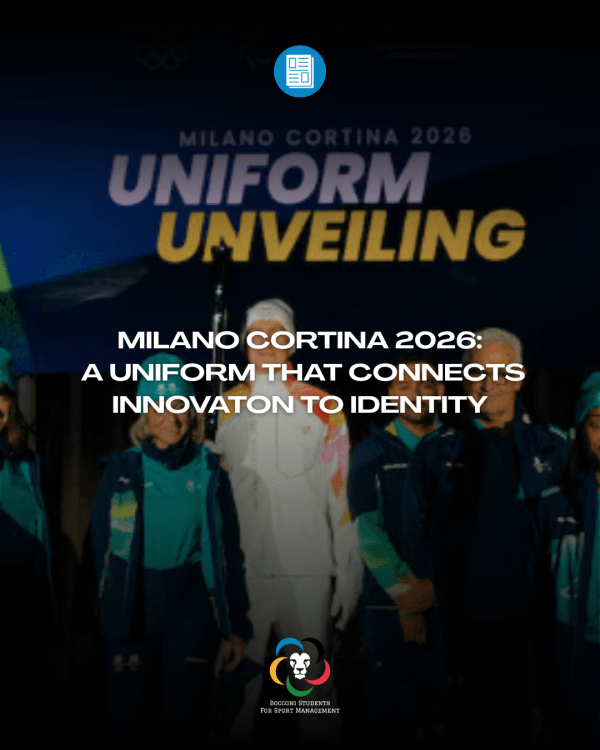
MILANO CORTINA 2026: A UNIFORM THAT CONNECTS INNOVATION TO IDENTITY

The Fondazione Milano Cortina 2026 has finally announced the official uniforms for the Olympic and Paralympic Winter Games. Created in collaboration with Salomon, the event’s Premium Partner, these uniforms will be worn by more than 25,000 people, including volunteers and organizing committee staff. They were realized to represent the human and operational face of the Games, to be a symbol of unity, hospitality, and team spirit.


A project born from collaboration

As a result of over two years of specific and dedicated work, this collection combines the vision of Fondazione with Salomon’s technical expertise. The French brand, with nearly 80 years of experience in mountain sports, is a true giant in the industry. The outcome was revealed with style: a collection of 17 coordinated elements – over 400,000 units in total – designed to perform optimally in every environment, from urban locations to the most extreme alpine settings.

“The uniforms are more than simple clothing: they represent design, style, and functionality. They are the symbol of authentic teamwork, capable of uniting territories, cultures, and people under a single identity.”
Andrea Varnier, CEO of Milano Cortina 2026


Performance and identity: a closer look at the kit

Aiming to achieve performance and adaptability, the project was designed to ensure comfort and protection in all weather conditions. Each garment was created to offer total practicality without compromising on style or visual recognizability – a key aspect for both volunteers and staff members.

The outdoor jacket, inspired by a Salomon best-seller, is the most iconic and distinctive piece of the kit. It ensures thermal insulation, waterproofing, and a strong visual identity.
All the mid-layers combine comfort and versatility, while the pants, available in two different versions – insulated or lightweight – guarantee freedom of movement and durability.
To finally complete the set there are accessories such as hats, gloves and the TRAILBLAZER 20 backpack, which, together with the X ULTRA 360 MID GORE-TEX boots, were chosen for outdoor activities thanks to their stability, functionality, and grip on any field.


Design with a clear purpose

Developed over 18 months
 by Salomon’s Design Center in Annecy in close collaboration with the Fondazione, the uniforms embody a new kind of functional aesthetic, where every detail contributes to a coherent and dynamic harmony. The overall look, inspired by Salomon’s mountain DNA and heritage is enriched by the “vibes” of the Look of the Games. The gear tells the story of a perfect fusion between technical performance and visual identity.

“These uniforms represent the essence of how design and collaboration can shape new futures. They transform technique into emotion, and the Games into a collective story.”
Scott Mellin, Global Chief Brand Officer of Salomon


Beyond the Olympics: the legacy of the Uniforms

Each uniform is designed to last over time, especially through the meaning it carries: a true symbol of pride, belonging, and memory.
Even the torchbearers, who will accompany the Olympic and Paralympic Flame on its journey across Italy, will wear a special version of the kit. The design follows the same visual identity, featuring a luminous palette and reflective details that evoke motion and continuity, a symbolic metaphor for the journey toward the Milano Cortina Olympic Games.

They are more than just clothes; these remarkable uniforms represent the human part of the Games: an unforgettable and beautiful memory that will live on in the hearts of all who take part in this historic event.

Video of the presentation

By Tommaso Cagno

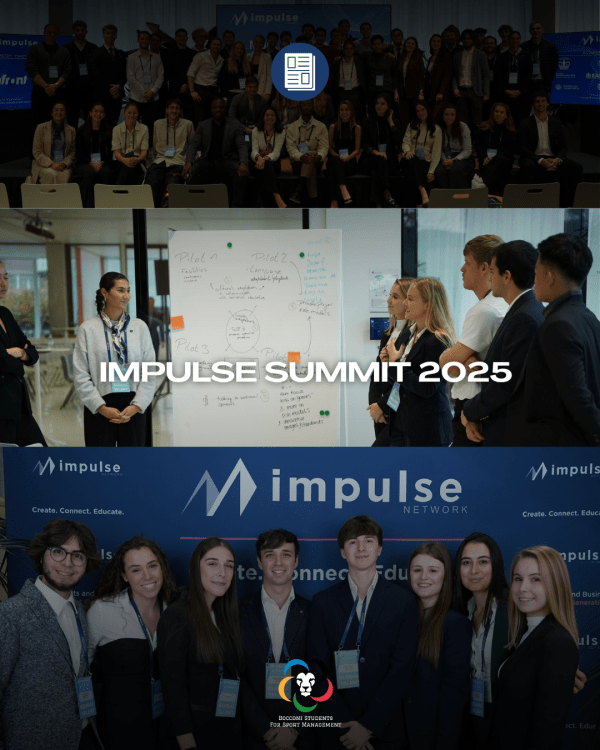
IMPULSE SUMMIT 2025

On the last week of October, we had the opportunity to attend the Impulse Summit as Global Talents. But what exactly are the Impulse Summit and a Global Talent?

The Impulse Summit was founded eight years ago at the University of St. Gallen by the students of the Impulse Network. The Impulse Network is a student association, just like BSSM, dedicated to helping and preparing its members for a career in the sports industry. This is done by offering a wide range of initiatives, such as workshops and case studies, events and networking opportunities with professionals and other students in the same position.

In 2017 the first Impulse Summit was organized by a small group of members with a goal: “the hosting of an international conference at the University of St. Gallen with students and experts from all over the world”. Today, the last edition of the Impulse Summit gathered 52 students from 18 different countries selected as Global Talents, 16 panels on different topics and challenges regarding the sports industry and countless speakers among the most important CEOs, Presidents and executives of the sector.

Three Days as Global Talents

On the first day, students from all over the world arrived in St. Gallen. People were coming from Italy and Portugal as well as Chile, Argentina and even South Africa! Regardless of their unique backgrounds, they were all united by one common passion: sport. The first day was dedicated to settling in, getting familiar with the place and exploring the city. We met at the University, on top of the city’s hill, and started getting to know one another. The Impulse Team presented us the week program and we did a game to get to know each other, with two of us ending on the podium! We then went for a guided tour of the city of St. Gallen and closed the evening having pizza altogether.

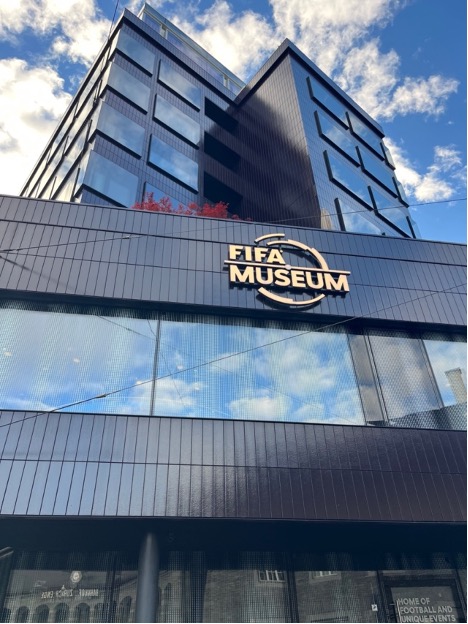
The next day we took the train to the beautiful Zurich! There we visited the FIFA Museum, discovering all its interactive games and activities. For instance, we immersed ourselves in the experience of commenting Grosso’s penalty kick in the 2006 World Cup final, discovered the history behind different nations’ jerseys and posters, as well as playing football in the games area and competing with different editions of the FIFA videogame. 

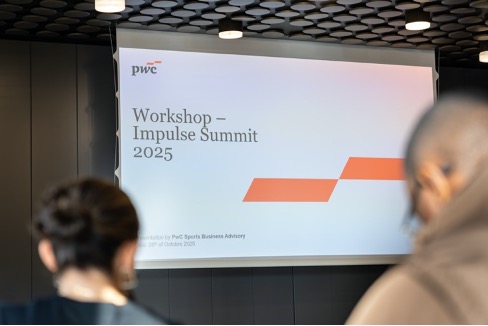
On the second part of the day, we challenged ourselves by taking part in a workshop organized by PwC Switzerland. They explained to us what the current model for assessing how much funds the National Olympic Committee awards to each National Federation and then asked us to think about ways to improve it. The best thing about it? Having the possibility to confront with other students and understand their point of view based on their background and therefore sharing our experiences and thoughts, coming from different Universities and Countries.

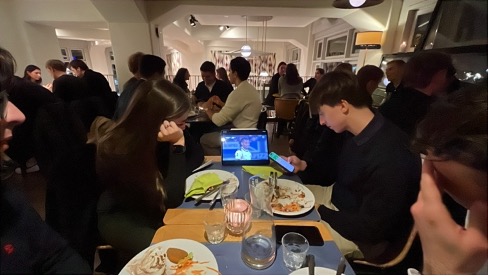
The day ended with a quick visit of the city and the train back to St. Gallen, where we had dinner. We cannot really say that we spent a lot of time together at dinner, as many of us were quite busy watching Serie A’s matches.

Finally, we kicked off Wednesday with a sport session, where some of us played football, others volleyball and another group went for a run on the hills of St. Gallen. The rest of the day was spent downtown with PwC Switzerland and the IOC with whom we affronted an interesting, but complicated, topic: the management of Boxing at the Olympics. In fact, Boxing is the one and only discipline that is not regulated by the IOC due to the many scandals that keep arising. 

We closed the three days as Global Talents with a Public Session that featured Jordi Quintillà, a player of St. Gallen FC, as host. 

Impulse Summit

The Next Billion Fans was this year’s topic. The several stage sessions and panels we had the possibility to listen to, all focused about what the sport industry must expect from the future. 

During the two days of Summit we had the possibility to listen and talk to several experts of the industry such as Luis Vicente, Chairman of APEX, who inaugurated the Summit and with whom we had also the possibility of a dedicated Q&A Session, exclusively for the Global Talents. Other exceptional speakers were Maheta Molango, CEO of the Professional Football Association for England and Wales; Lukas Eisner, President of Swiss Golf; Elena Mirandola, former CEO Como Women FC and Founder of The Breakaway; some experts from Infront and TEAM Marketing, such as Eliana Amboni, who is also a Bocconi Alumni; Michele Tozzi, CEO of the European Triathlon Association; Peer Naubert, CEO of Bundesliga International; and  many more,

Furthermore, on Thursday evening a Networking dinner with all the speakers and experts that took part in the Summit was held, dedicated to the Global Talents. We had the possibility to talk one on one with them in a dynamic environment and exchange ideas and opinions.

Ending strong, on our last day in St. Gallen, Friday, we participated in yet another workshop. Our Global Talents had the possibility to join a workshop organized either by UEFA or DAZN on Women Football development.

In the first one, we had the opportunity to listen to experts from the UEFA Innovation Hub explaining us their Innovation Programs for the UEFA’s Women’s EURO 2025, which were developed in collaboration with partners such as Adidas, Disney, Amazon, the Swiss Football Association and various Universities around Switzerland. We were then divided into groups and challenged to think outside the box. We had to develop a plan on how to expand these initiatives to other countries and according to which factors. One key insight was the understanding of the cultural differences between the Countries of the group members, as everyone shared their point of view in respect to how their Country of origin would react to such ideas.

Instead, in the second workshop, organized by DAZN, we had the opportunity to explore the topic of sustainable business growth in women’s football, and to discuss how the sport can evolve from short-term “hype” into lasting success.
During the session, DAZN representatives shared some insightful broadcasting data from the latest Women’s European Championship, highlighting both the impressive audience growth and the challenges that still remain to make this progress sustainable.
We were then divided into groups to work on practical ideas to make women’s football more appealing to audiences. Among the proposals that emerged were adapting certain game rules to make matches more dynamic and entertaining, experimenting with new camera angles and production techniques to enhance the viewing experience, and investing more in youth women’s football to nurture stronger, more competitive athletes.
Another interesting insight was the importance of creating iconic figures who can inspire fans and elevate the sport’s visibility.

Finally, the week was concluded with an afterparty hosted by our friends from the Impulse Network, who did an amazing job! We couldn’t be more grateful for this experience and use the occasion to thank them once again. Hopefully this article will inspire other students to apply next year and make the most out of their own experience.

See you on the 29th-30th of October 2026!

By Sofia Negretti and Stefano Castellana

NITTO ATP FINALS: THE LAST SHOWDOWN IN TURIN

The Nitto ATP Finals are a professional tennis event that takes place at the end of each season. By then, the best eight players and couples of the ranking, are qualified to compete in this event. Since 2021, the ATP Finals are held at the Indoor Tennis Hardcourt of the Inalpi Arena in Turin and will most likely stay there for a few more years. This year, I had the chance to go watch the semifinals in person, giving me a real involvement in the atmosphere. 

Nitto Denko Corporation Title Sponsorship 

Since 2017, the official name has been Nitto ATP Finals due to a title sponsorship with the Japanese manufacturing company, Nitto Denko Corporation. Their collaboration is crucial to the event’s overall identity and branding. In fact, Nitto’s representatives are always present. For example, at the semifinals, the Nitto Denko Corporation CEO, Hideo Takasaki, did the coin toss before the start of both matches.

Tournament Format and Points

Singles matches are contested as best-of-three tie-break sets. Doubles matches consist of two sets with no-ad scoring, and if teams split sets, a Match Tie-break determines the winner.

The eight qualifiers are divided in two groups. The top seed is assigned to Group A, the second to Group B, and the remaining players are allocated in pairs according to seeding. Each participant plays against the other three players in their group. The group winners are placed on opposite sides of the draw, while each runner-up faces the winner of the other group in the semifinals.

Fun fact: groups at the Nitto ATP Finals are named after tennis legends. For instance, this year the singles groups were called the Jimmy Connors Group and the Bjorn Borg Group, while the doubles groups were the Peter Fleming Group and the John McEnroe Group.

In terms of ATP points, players get 200 points for each win in the group stages, 400 points for a semifinal win and 500 points for winning the final. If the player goes undefeated, they can get a total of 1,500 points, which is a significant amount of points as it’s only 500 less than a grand slam, emphasizing the importance of this event.

The Eight Who Made It to Turin

The eight singles players who qualified for this year’s Nitto ATP Finals were:

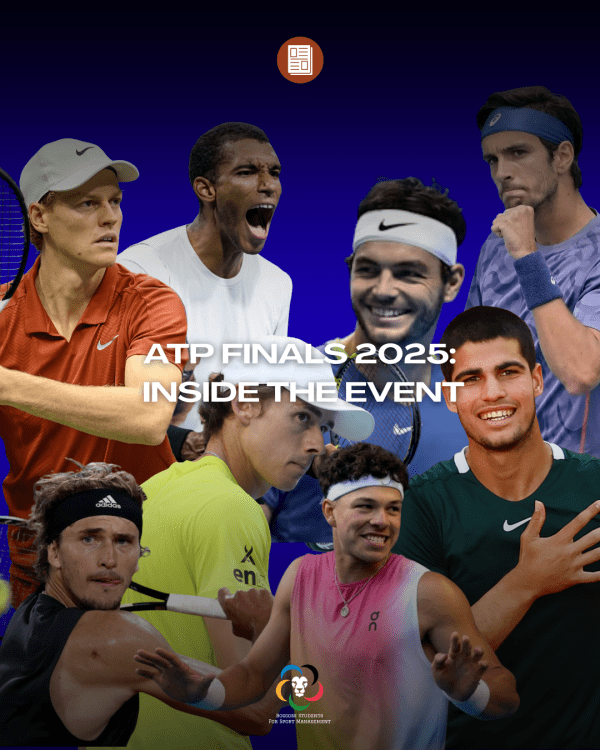
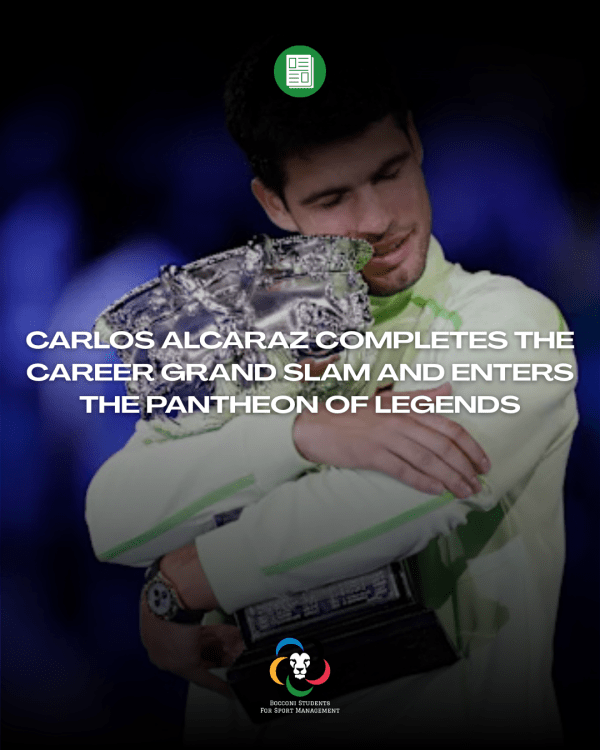
Carlos Alcaraz. He qualified early with strong results at Grand Slams, winning both the French Open and the US Open.

Jannik Sinner. He arrived in Turin after a highly successful season, despite a three-month suspension due to the controversial Clostebol doping case. He won major titles, including Wimbledon and the Australian Open. His qualification was impactful, given strong home support in Italy.

Alexander Zverev. He returned to the year-end event after a solid season with many deep runs in major tournaments.

​Novak Djokovic. He qualified once again after a strong season despite his age. Notably, Djokovic won the ATP 250 event in Athens, defeating Lorenzo Musetti in the final. Musetti needed this win to qualify for Turin, but Djokovic’s victory prevented his entry. After the match, Djokovic reportedly told Musetti he would not participate in the ATP Finals, reflecting a strategic decision to manage his schedule at this stage of his career. Therefore, Lorenzo Musetti took his place at the event.

Ben Shelton. He qualified for the Finals for the first time after a breakthrough season with rapid progress on the tour.

Taylor Fritz. He returned to the event by delivering consistent results throughout the season.

Alex de Minaur. He qualified for the Finals through consistent performance in major tournaments despite only winning one title this year.

Félix Auger-Aliassime. He secured the final qualification spot following a strong performance during the later stages of the season.

Key Results and My Experience 

There were several notable matches during this year’s ATP finals. However, the one that clearly stood out was the final between Carlos Alcaraz and Jannik Sinner. These two players have both had a dominant season this year, separating themselves from the rest of the tour. Jannik Sinner, the defending champion, ended up beating Carlos Alcaraz 7-6, 7-5 in a long-fought battle to claim his second career ATP Finals title.

Other matches, such as Taylor Fritz vs Alex de Minaur and Alexander Zverev vs Félix Auger-Aliassime, were particularly important. These were the last matches of the group stages, and hence for the players, it decided whether they would be going to the semifinals. Surprisingly, both de Minaur and Auger-Aliassime produced upsets by defeating higher-ranked opponents.

As a result, the two semifinals were Jannik Sinner vs Alex de Minaur and Carlos Alcaraz vs Félix Auger-Aliassime. These were the two matchups I was lucky enough to watch live at the Inalpi Arena in Turin.

Attending in person gave me a totally different perspective from watching the event on television. The atmosphere was electric, with fans responding to every point. It was particularly fascinating to see everyone joining in and chanting “Ole, Ole, Ole, Ole, Sinner, Sinner” during the warm-up, after winning the first set and after winning the match, which gave Sinner a lot of confidence going into and through the finals.

I sat in the first row on the North Sector 101, which is amongst some of the best seats in the stadium. This gave me a real court-level perspective on the match. From this perspective, I noticed how significant the level of power and precision that Sinner and Alcaraz play at, which is hard to grasp just by watching the broadcast on television.

Logistically, the event was organised with an easy entry process and a clear arena layout. The lighting and screens inside the arena also played a huge role. The large screens created a sense of immersion throughout the matches. For example, after every ace, all the screens around me instantly displayed the word “ACE,” which energised the crowd. This feature arose from the “Un Ace per la Ricerca” initiative by Intesa Sanpaolo. The leading Italian banking group donated €500 for every ace during the semifinals (€1,000 for the finals and €100 during the group stages). The funds went to the Fondazione Piemontese per la Ricerca sul Cancro. This integration of sport and charity added an essential layer of significance to the Nitto ATP Finals.

The Numbers

This year’s ATP finals wasn’t only intense on court, but it also broke several records. Jannik Sinner took home $5.07 million which is the biggest winner’s cheque in men’s tour history. Across the whole week, the event saw 229,879 fans attending which was an all-time high. The atmosphere also extended beyond the stadium itself since the Sinner vs Alcaraz final became the most-watched tennis match in Italian TV history with over 7 million viewers.

Taken together, these numbers reflect how vital this edition was not only for the players, but also for tennis as a sport. Overall, attending the Nitto ATP Finals offered a unique insight into one of tennis’s most prestigious events, highlighting why Turin remains an ideal host for the season finale.

By Alberto Di Lodovico

HYROX MANIA: STRENGHT MEETS ENDURANCE – FEATURING UNIQUE INSIGHTS FROM FILIPPO TENCA

What is HYROX?

HYROX is a dynamic fitness competition that combines running with functional workouts, presenting a unique challenge for athletes at all levels. Established in 2017 in Germany by Christian Toetzke, a sports event expert, and Moritz Fürste, a double Olympic field hockey champion, HYROX was created to offer a race format accessible to both elite athletes and fitness enthusiasts. Its standardized structure allows participants to compare their results globally, making it a truly international competition. The event is typically held indoors, in large exhibition halls or sports arenas, and features multiple categories: Individual (Pro and Open), Doubles, and Relay.

Race structure

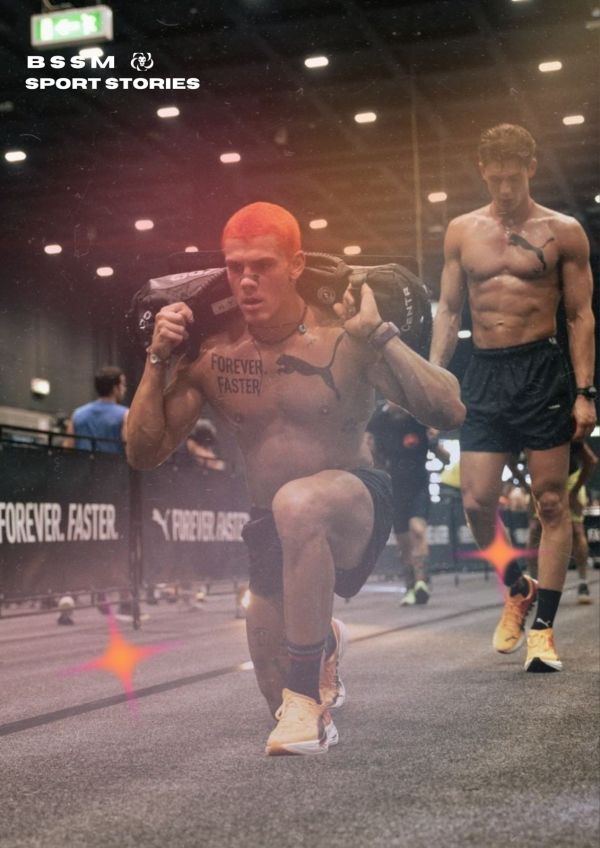
The core concept of HYROX lies in the combination of strength and endurance, with athletes performing a series of functional workouts while running long distances. The race consists of 8 kilometers of running, combined with 8 functional workouts. The sequence is always the same: 1 km of running followed by: SkiErg, Sled Pull, Burpee Broad Jumps, Rowing, Farmers Carry, Sandbag Lunges, and Wall Balls. This setup pushes competitors not only to maintain speed but also to excel in exercises demanding power, stamina, and technique. While HYROX is fundamentally an endurance race, success hinges on more than just running. The functional exercises at each station require a blend of strength, mobility, and coordination. Unlike traditional races focused solely on running or strength competitions that prioritize power, this format tests athletes across a wide spectrum of physical capabilities. This comprehensive approach makes HYROX a true test of overall fitness, pushing athletes to perform at their best across every aspect of their physical abilities.

The Role of Puma

Puma has played a key role in the development and expansion of this new race format, becoming the official apparel and footwear partner for all events from 2024 to 2027. This partnership has solidified Puma’s presence in the growing fitness sector, launching the Puma x HYROX collection in January 2025, which includes performance-driven gear designed for both training and competition. By aligning with HYROX, Puma entered a rapidly developing market, tapping into a global community of fitness enthusiasts. This early partnership allowed the brand to expand its reach and position itself as a leader in the emerging fitness racing industry. Though it was a bold risk to enter such a niche market, Puma’s decision has paid off, as the brand is now recognized as the top player in the HYROX space. This symbiotic relationship not only boosts Puma’s visibility but also supports HYROX’s mission to equip athletes with the best tools for performance, highlighting how strategic risk-taking in evolving industries can lead to significant long-term rewards.

Unique Insights from Filippo Tenca

To gain deeper insight into this world, I spoke with Filippo Tenca, a well-known face in the Italian HYROX scene and a brand partner of Puma. Filippo holds a personal best of 1:01:01 in the Hyrox Doubles category, achieved alongside Gioele Patroni at the Milan event in 2024. He also clocked an impressive 54:04 in the Team Relay at RiminiWellness 2024, competing with Guido Susani, Gioele Patroni, and Dylan Caruso. To learn more about his journey and passion for the sport, I asked Filippo to take us back to the beginning.

How did you first get into the world of Hyrox, and what initially drew you to a competition that was still relatively unknown in Italy at the time?

“It’s actually quite a funny story,” Filippo begins. “It all started completely by accident. I got home from a night out around 5 a.m.—which is rare for me, since I’m not really into clubbing. Just a few hours later, around 8 a.m., my phone started ringing nonstop. This was back in 2023, right at the beginning of HYROX in Italy. My friends were competing in the HYROX relay in Milan that morning, but one of the team members got sick, so they called me to step in. I showed up with barely any sleep, no specific training, and figured out how the race worked as I went along. My debut was anything but planned, but after that first race, I was hooked.”

Which do you think has a greater impact on overall race performance: the running or the exercise stations?

“Many people think it’s 50-50 between running and the exercise stations, but in reality, running has the biggest impact. While the stations test strength and technique, running requires both physical and mental endurance. If you’re not prepared for the intensity, it can drain you and affect your performance at the stations. In my experience, mastering the run makes the rest of the race much more manageable.”

From your experience, what are the key aspects of effective Hyrox training?

“As I mentioned earlier, running requires special attention. When it comes to the exercise stations, I prefer to focus on mastering one movement at a time. I’m not a fan of mixed circuits where everything is thrown together, leaving you drained without properly refining your technique. Building a solid foundation in each movement is essential for overall performance, and it’s equally important to repeatedly practice each exercise to get faster and more efficient.”

What advice would you give to someone who’s just getting into Hyrox for the first time?

“That’s a great question, my biggest piece of advice would be to focus on running. The exercises can be learned and perfected over time, but running is the foundation of the race. It’s what ties the whole race together and often determines your overall performance. People tend to underestimate it, but in HYROX, running is what makes or breaks your race.”

by Ludovica Di Labio

AMID BANNED ARMBANDS AND FAKE FANS: WELCOME TO DOHA

Between England and Spain’s goal fests, Morocco and Croatia’s goalless draw, Qatar’s lackluster debut, and the shocking defeats of Germany and Argentina, one element has remained constant throughout this World Cup: controversy. 

For months, if not years, major media outlets worldwide have been shedding light on the troubling issues behind awarding the World Cup to Qatar. From corruption within FIFA to the tragic, unquantifiable death toll of workers building the tournament’s infrastructure, the event has been shrouded in shadows. Leaving these broader themes aside for a moment, this article focuses on more recent and less widely debated developments. 

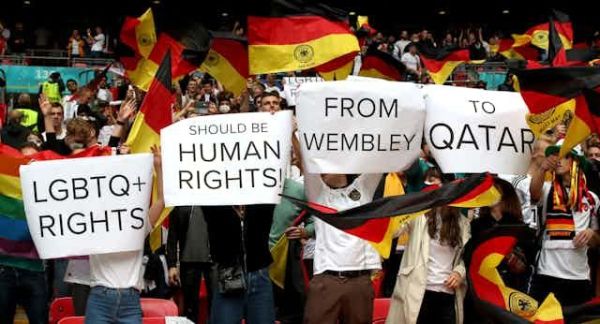
At the start of the tournament, FIFA threatened sanctions for any team captains wearing the rainbow armband in support of the LGBTQ+ community during matches. The penalty? A yellow card. Many European federations were forced to reconsider, worried about jeopardizing their players’ tournament prospects due to suspension risks after two yellow cards. However, these federations did not shy away from criticizing the decision. 

One of the most striking responses came on November 23, before Germany’s match against Japan. The German team posed for their official pre-match photo with all 11 players covering their mouths—a powerful and symbolic image. The German Football Association shared the photo on Twitter, stating: 

“With our captain’s armband, we wanted to embody the values of diversity and mutual respect. […] This isn’t about making a political statement; human rights are non-negotiable. […] Banning the armband is equivalent to silencing us.”

This act, coupled with German Interior Minister Nancy Faeser wearing the controversial armband in the VIP box, delivered a sharp rebuke to FIFA and its president Gianni Infantino. Notably, English ex-footballer Alex Scott also wore the armband on air as a BBC commentator days earlier. 

Another contentious aspect surrounding this World Cup concerns the fans—or lack thereof. Social media has been abuzz with videos of “fake fans,” allegedly hired (some reports claim for payment) to parade in support of various teams. On November 22, La Repubblica described encountering a group of young men on the metro, all wearing mismatched gear—scarves, capes made of flags, and counterfeit jerseys representing four different teams. They spoke the same language and likely hailed from India or Nepal, regions from which much of Doha’s labor force is drawn. 

Despite these attempts to create a lively atmosphere, the World Cup seems devoid of real fans. Streets and bars near stadiums often appear deserted, and stadiums themselves rarely seem full, despite official attendance figures claiming otherwise. The emptiness is visible even on TV broadcasts, with glaringly vacant seats contradicting FIFA’s statistics. 

So, the question arises: was all this really necessary? 

By Rodolfo Bianchini 

Sito web creato con WordPress.com.

Su ↑