JANNIK SINNER AND THE CONFUSING ANTI-DOPING LEGAL FRAMEWORK IN TENNIS

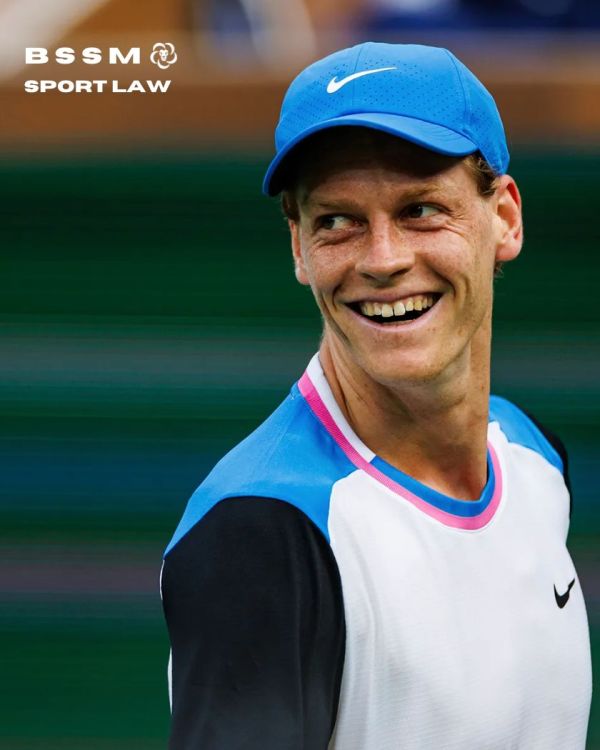
Doping scandals in professional sports are always controversial, but even more so when the case involves claims of unintentional contamination. The case of Jannik Sinner, the current ATP World No. 1, raised debates on the consistency of anti-doping rulings and whether top players receive more favourable treatment. With WADA having appealed the tribunal’s decision, this case was set to establish a major precedent in sports law and anti-doping regulation.

The Case: What Happened?

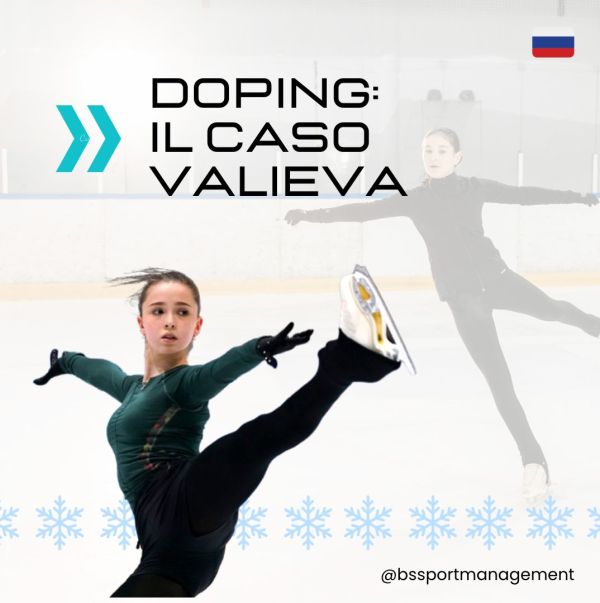
In March 2024, Sinner tested positive for clostebol, a banned anabolic steroid, during the Indian Wells tournament. A second out-of-competition test, conducted eight days later, confirmed the presence of the substance. Sinner argued that the contamination was accidental, through his physiotherapist, who had applied on himself a wound-healing spray containing clostebol. Later, without wearing gloves, he massaged Sinner, unintentionally transferring traces of the banned substance onto the player’s skin.

An independent tribunal of the ITIA accepted Sinner’s explanation and found it “credible.” It ruled that he was blameless and without fault, thereby clearing him of suspension. However, as a strict procedural penalty, his results, ATP points, and prize money at Indian Wells were nullified.

Are Top Players Given a Free Pass?

The ruling immediately sparked heated debates about whether elite players get preferential treatment in doping cases. Among the first (and last) to comment was Nick Kyrgios, a player as famous for his brilliance on the tennis court as for his loud and provocative behaviour. Given the Australian’s history of frequent on-court outbursts, fines, and even accusations of tanking matches, Kyrgios implied that lower-ranked players might not have been cleared so easily. Denis Shapovalov also echoed similar concerns, stating that anti-doping decisions are often inconsistent and tend to favour those with better lawyers and stronger institutional support.

A related comparison emerged with the case of former WTA World No. 1 Iga Swiatek, who also faced an anti-doping investigation in late 2024 after returning a positive test for a banned substance. Like Sinner, however, she successfully argued contamination, and the ruling in her favour attracted relatively less media and community scrutiny in tennis.

These incidents reinforced the perception that high-profile players have better legal representation and, often, escape with lighter punishment.

Counterexamples: When High-Profile Players Were Not Spared

History has shown time and again, however, that being a star is no guarantee of clemency. Several big names in tennis have received severe sanctions, proving that strict liability remains the guiding principle in most cases:

  • Marin Čilić (2013) – The former US Open champion tested positive for nikethamide, claiming it was due to a contaminated glucose supplement. He was suspended for nine months, later reduced to four months on appeal.

  • Maria Sharapova (2016) – The five-time Grand Slam champion tested positive for meldonium, a substance recently added to the banned list. Despite insisting she was unaware of the rule change, she was suspended for 15 months.

  • Andre Agassi (1997, Covered Up) – Unlike Sharapova or Čilić, Agassi’s case was never made public until years later. After testing positive for methamphetamine, Agassi submitted a personal letter claiming accidental ingestion, and the ATP allegedly covered up the case—something a lower-profile player likely wouldn’t have been able to negotiate.

These examples suggest that preferential treatment is not always guaranteed. While top players do have advantages in legal defence, history shows that they are not always spared from severe consequences.

WADA’s Appeal and Legal Consequences

Despite the independent tribunal’s ruling in Sinner’s favour, the World Anti-Doping Agency (WADA) appealed the decision, arguing that the tribunal misinterpreted anti-doping principles, particularly strict liability, which states that athletes are responsible for any banned substance in their body, regardless of intent.

In February 2025, Sinner reached a settlement with WADA, agreeing to a three-month suspension from all competitions, including training and coaching. Therefore, he will lose 1600 ATP ranking points and will be ineligible to compete until May 2025, when he is expected to make his return at the Rome Masters.

Conclusion

Jannik Sinner’s case reignited debates about fairness in anti-doping enforcement. While some argued that top players receive more favourable treatment, historical cases suggest that many stars have faced severe punishments in the past.

With the case now settled, this outcome sets a precedent for future accidental contamination claims in tennis and beyond. It highlights the ongoing tension between the need for strict enforcement and the right of athletes to a fair and evidence-based hearing.

It remains to be seen whether sports law will continue evolving to better address cases of accidental doping, or if strict liability will remain the dominant principle in anti-doping regulation.

by Lodovico Sanna
FOOTBALL BETTING – THE FAGIOLI AND TONEY CASE, ANALOGIES AND DIFFERENCES FROM A LEGAL STANDPOINT

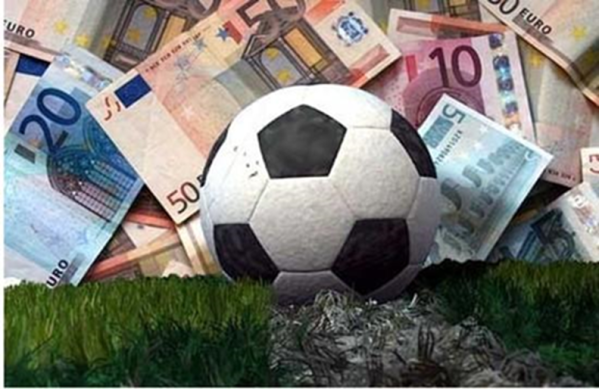
Footballers who bet on football, especially on matches involving their own team or competition, face serious legal, sporting, and financial consequences. In fact, strict rules prohibit players from betting on football in order to preserve the integrity of the game and prevent match-fixing or any perception of unfair manipulation.

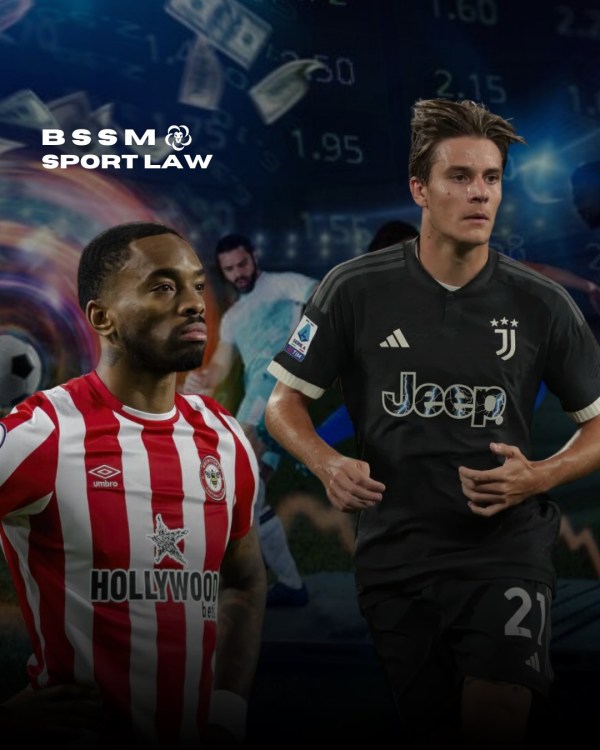
The Nicolò Fagioli case is an important example of the legal and sporting consequences that a professional footballer faces regarding accusations related to sports betting. Fagioli is an Italian midfielder currently playing for Juventus and the Italy National Team who was at the center of a sports betting scandal that ultimately lifted the lid on some very grave repercussions from such betting infractions within professional football. A detailed breakdown of the case, both from the legal and sports regulatory perspective, is discussed herein.

After the investigation, Fagioli was temporarily suspended by the FIGC from all football activities during the period the case remained open, which is a common precautionary measure in such cases. Suspension criteria by the FIGC ranged from some months up to a few years, depending on the seriousness of the infringement.

Besides the suspension, Fagioli faces fines or other monetary penalties either by the FIGC or his club Juventus. All that and the player’s commercial value, endorsements and all sponsorships, may take a hit, too, since many clubs and sponsors move away from players embroiled in gambling scandals.

In November 2023, he reached a settlement with the Italian Football Federation, accepting a seven-month suspension. A rather moderate sentence if one takes into account the seriousness of the violation.

This suspension was reduced to five months after Fagioli cooperated with the investigators and attended a rehabilitation program for gambling addiction. The factor that might have influenced the sentence in his case is that sometimes these aspects result in lighter sentences, especially when the player shows commitment to getting the problem resolved.

The Ivan Toney case is another high-profile example of a professional footballer being penalized for breaching sports betting regulations. Like Nicolò Fagioli, Toney’s situation points to how seriously players can be with when involved in gambling activities.

Toney became the subject of one of the big investigations back in 2022 when it was revealed he had placed numerous bets on football matches, including ones involving his own team, Brentford.

He was subsequently charged by the FA for a breach of the betting regulations, particularly those regarding betting under the FA rules. It was found that Toney did this through several online portals. Toney pleaded guilty to these charges. “The FA has been informed by Ivan Toney that he has breached FA Betting Rules, with the matter now referred to an independent Regulatory Commission,” confirmed the FA in a statement.

In May 2023, Ivan Toney was finally served with an eight-month ban from all football activities after going through a disciplinary hearing. The suspension came into effect immediately, thus locking out Toney from participating in any football matches and football events during its duration. Moreover, the Football Association fined him £50,000.

No criminal charges were pressed against him. This is because, per se, betting on football matches and placing bets was not illegal, but on grounds of betting rules violation for footballers, that became an internal matter of football bodies.

The legal risk of criminal prosecution would only arise if Toney had been found to be involved in match-fixing or manipulating the outcome of games, which was not the case here.

Both the Fagioli and Toney cases revolve around violations of football’s betting regulations, with serious penalties for breaching the integrity of the game. However, their cases differ in keyways:

  • Fagioli’s practice of sports betting was, to some extent, justified by addiction to gambling; this fact allowed some mitigation in his sentence, which was partially meant for rehabilitation.
  • The case of Toney is clearer regarding the betting on the outcomes of football matches. While his practices were considered extensive, there were no appeals to addiction.

In both cases, the FA and FIGC took no prisoners in safeguarding against betting infringements and made it clear that integrity and sportsmanship within the game are worth more than the most unfortunate of player situations.

THE KAEPERNICK’S CASE

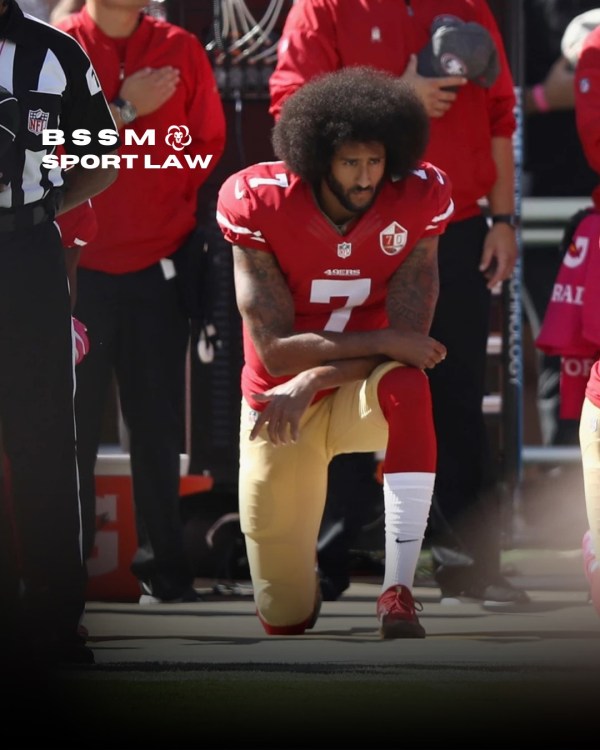
The case of Colin Kaepernick has made quite an impact on both the sporting world and laws governing free speech, workplace rights, and race relations in the U.S. He was an NFL quarterback who courted controversy by kneeling during the National Anthem in the 2016 NFL postseason to protest racial injustice and police brutality.

His actions have since ignited countless national conversations about the intersection of sports and politics with social justice issues, prompting numerous legal or legislative responses that continue to reverberate into the present day. 

At the beginning of his protest, Kaepernick found himself immersed in controversies, while some hailed him as one who spotlighted matters affecting minority communities and others condemned him for dishonoring his national identity. This raised the question of employee rights, particularly on politicians speaking for their institutions in sports.

Kaepernick’s kneeling, however, resulted in his departure from the National Football League. After the 2016 season, he had become a free agent, and no team would take him in-an apparent retaliation against Kaepernick on grounds of his protests. In 2017, he had filed a lawsuit against the NFL under the collective bargaining agreement, stating team owners colluded to keep him out of the league on account of his activism. It put forth stark questions about the rights of employees and their status in public life. 

This case raised important questions surrounding free speech connected to the workplace. While First Amendment freedoms safeguard individuals against government reprisals, private employers-most specifically, NFL teams-have greater liberty in controlling speech. Nonetheless, this case invited conversations on whether or not there should be protection for an employee’s expression concerning social justice issues from potential eventual retaliation from the employer. 

Since the outcome of Kaepernick’s lawsuit was confidential, information has leaked that the settlement was reached in early 2019 with many estimates placing the amount in the tens of millions paid by the NFL. Seeing that resolution which drew light on the peculiar circumstances of Kaepernick’s case, allowed other athletes to be free in their activism, knowing they would be able to use the law to defend themselves if they encountered retaliation for their beliefs.

This wider context has spurred the Kaepernick case to foster an emergent trend of athletes speaking out on social issues, most directly embodied in movements like Black Lives Matter.

Kaepernick’s case also ignited legislative proposals focused on improving worker protections for employees who voice political concerns. In recent years, numerous states have crafted new laws prohibiting the reprimanding of employees for speaking out on political issues, a testament to the growing conviction that free expression deserves protection in every walk of life, within the workplace being one of them. 

To sum it all up, the Kaepernick case pushes itself into a potent milestone on the intersection between law, rights at work, and the world of sports. It opened room for vital discussions on the right of employees to express political beliefs and provided a highlight on the need for more robust protections in places of work, especially those working in sports. 

by Paolo Zalum

2025 CLUB WORLD CUP: THE FIFPRO VS FIFA LEGAL CONTROVERSY

FIFPRO Europe, the organization representing European footballers, has submitted a complaint regarding FIFA’s match schedule, arguing that it poses significant risks to players’ health. The unions believe that FIFA’s actions violate the EU Charter of Fundamental Rights, which guarantees workers’ rights, such as healthy working conditions and paid leave.

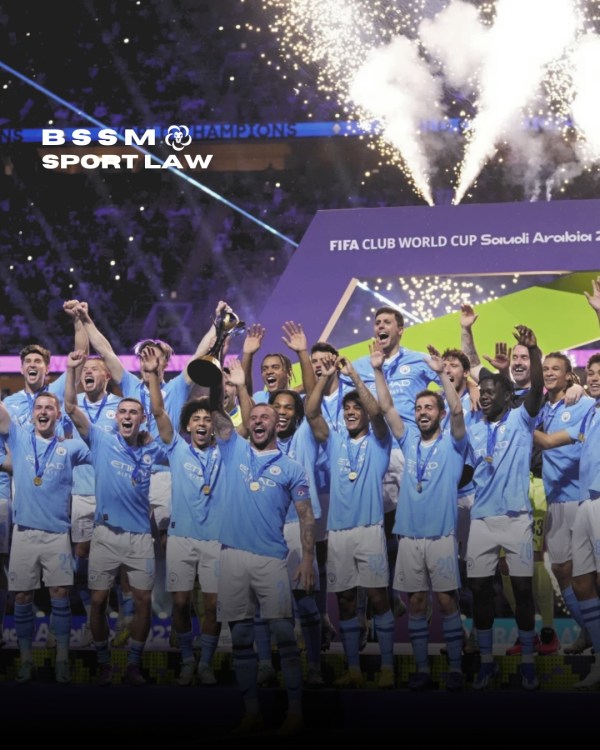
This season, all three European club competitions have expanded to include 36 teams each. In response, FIFPRO have initiated legal action against FIFA over the men’s Club World Cup which also expanded to 32 teams and will begin in June 2025 in the USA. The players’ union argue that the tournament disregards players’ well-being, by adding to an already overcrowded calendar.

Specifically, the scheduling of the 2025 Club World Cup will overlap with the period when players would take their annual rest. Therefore, some players could face almost an entire year without enough rest between club and international duties. A report from FIFPRO highlighted that the increasingly packed football calendar, has resulted in some athletes having as little as 12% of the year available for rest. The report also projected that, for example players like Federico Valverde, Nicolo Barella, and Phil Foden could end up playing as many as 80 matches in future seasons due to the continued expansion of competitions.

FIFA President Gianni Infantino has dismissed the legal challenge, insisting that FIFA is responsible for organizing only a small portion of the matches. He stated that “98 to 99 percent of matches are organized by other bodies” and defended FIFA, by explaining that the “few” matches they organize, help financially support football development worldwide and promote the sport on a global level. As a result, FIFPRO Europe has taken the case to the Brussels Court of Commerce, requesting a referral to the European Court of Justice (ECJ) for a preliminary ruling.

Nevertheless, this legal battle marks a significant moment in the ongoing conflict between FIFA’s competition expansions and the rights of players.

By Yolanda Pandi

BETTING SCANDAL: WHO ARE (FOR NOW) AND WHAT RISKS THE PLAYERS INVOLVED IN THE SCANDAL FACE

In recent days, a new football scandal has emerged: the names of young players accused of betting on illegal platforms have been revealed. 

It all stems from an investigation by the Turin Prosecutor’s Office, which began this summer, into gambling on some websites that did not have a license from the State Monopolies. The Turin prosecutors discovered that among the bettors is Fagioli, a Juventus midfielder, and the news was anticipated by the well-known television personality Fabrizio Corona. 

A few days ago, two other names were revealed: Tonali and Zaniolo. In Coverciano, the two national team players were notified of investigative acts by the Turin Prosecutor’s Office and were forced to leave the national team camp at the request of FIGC. 

This is not the old “match-fixing” scandal, where games were sold and bought, but rather bets and wagers of large sums of money on football match outcomes on illegal sites, suggesting that the protagonists might be true gambling addicts. 

The statements by Fabrizio Corona continue to shake the world of Italian football. In a phone call with a journalist from the Corriere della Sera a few days ago, he declared that he is in possession of a long list, 50 names of players involved in betting episodes. 

The investigation, therefore, seems to be only at the beginning, other declarations are awaited, but in the meantime, the involvement of many players represents a serious threat to the image of Italian football at the international level. 

From a criminal standpoint, if the protagonists are only players and not organizers of the bets, they can settle or pay a fine. From a sports perspective, however, the Prosecutor’s Office is investigating the violation of the ban on betting by registered players, as an athlete, under Article 24 of the Code of Sports Justice, cannot bet on their own discipline and risks up to 3 years of disqualification. 

In the case of Nicolò Fagioli, FIGC has already formalized the measures: 7 months of disqualification (the reduction of the sentence was foreseen for the immediate plea bargain) starting from October 20, in addition to another five months converted into the alternative penalty of a therapeutic rehabilitation path, and the payment of a €12,500 fine for having participated in betting on football matches. 

At the moment, there are no risks for the clubs of the players under investigation. Only if it were proven that the result of a match was manipulated with the collaboration of the managers would sanctions be triggered; the possible failure to report, if the managers were aware, would lead to personal accountability.  By Chiara Arsieni

ALPINE SKIING WORLD CUP: GREEN LIGHT FOR THE ZERMATT-CERVINIA CROSS-BORDER RACES 

After environmental challenges, confirmation comes for the November races. 

Expectations are sky-high: after last year’s interruption due to a lack of snow, this year there is great enthusiasm thanks to better snow conditions and more careful planning. However, some complications related to the environment have cast a shadow over the races scheduled for November 11 and 12. 

Environmental Challenges and Administrative Issues 

In the last ten days, the organizers not only had to prepare the course but also faced administrative and legal challenges. 

It all began when some environmental groups raised concerns about work on the Theodul Glacier, located in Swiss territory. In response to these reports, the Building Commission of the Canton of Valais decided to immediately ban the use of parts of the course outside the ski area, pending approval of the necessary building permits. 

Investigation in Italy as well 

The environmental issues triggered an investigation in Italy regarding the work on the Italian side. 

During a regional council session, the Economic Development Commissioner, Luigi Bertschy, clarified the situation, stating that the work is proceeding in compliance with regulations. The two sections on the Italian side in question include one designated for the World Cup course, while the other concerns a tourist slope of the Ventina – 7 Bis. 

It should be noted that at present there are no suspects or allegations of wrongdoing, and the investigation will not affect the regular progression of the race. In fact, the company responsible for the work had already obtained all the necessary authorizations and permits to operate lawfully, even during last year’s edition. 

The Sporting Verdict: Despite environmental uncertainties, the organizing committee has ensured that the necessary adjustments will be made without compromising the sporting aspect of the course. 

Optimal Snow Conditions 

There is reassuring news: the snow control conducted by FIS (International Ski Federation) yielded positive results, guaranteeing the feasibility of the men’s downhill races. In addition to recent snowfall, the organizers have benefited from a considerable amount of snow accumulated in previous months. 

By Maddalena Loro 

THE BUDGET CAP ISSUE

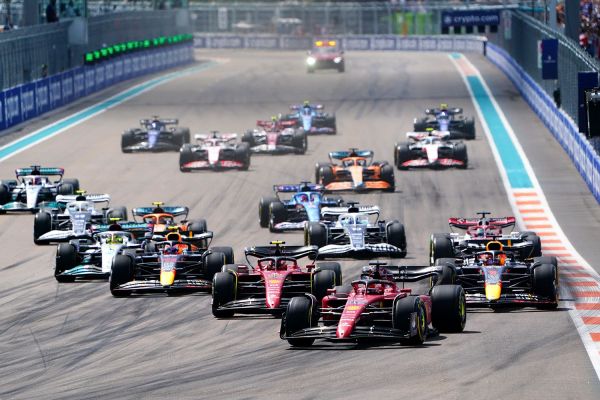
On October 11, 2022, an FIA statement significantly stirred emotions regarding the Budget Cap issue in Formula 1. The matter, which had already been known in previous weeks, took a sudden turn following Max Verstappen’s championship win, achieved with his first-place finish at the Japanese Grand Prix in Suzuka. Verstappen’s team, Oracle Red Bull Racing, alongside Aston Martin, was found guilty by the Fédération Internationale de l’Automobile (FIA) of violating financial regulations. However, there is a distinction between the two cases: while Aston Martin’s infraction was merely procedural (failing to include a budgetary item that should have been accounted for), resulting in a simple fine, Red Bull breached the cost cap, albeit to a lesser extent. 

The term “minor breach,” as stated in the FIA’s official communication, caused some confusion among Italian media, but the FIA’s interpretation refers to a violation below 5% of the $145 million Budget Cap, equating to $7.25 million. In the days leading up to the verdict, Red Bull worked with the FIA to argue that certain items should not be included in the Budget Cap, though the FIA disagreed. This effort allowed them to avoid falling into the category of a “material breach,” which would have resulted in more severe consequences. However, the situation remains significant. 

The aspect raising the most doubts is the fact that this regulatory infraction pertains to the 2020-2021 season. This season was notably won by Red Bull driver Max Verstappen in the final race against Lewis Hamilton. Initially, economic reports suggested that Red Bull made illegal modifications to the rear wing to generate greater downforce. However, more recent reports indicate the team exceeded the Budget Cap due to personnel vacation costs and post-race catering expenses. Nonetheless, these claims, which Red Bull has not denied, should not be automatically accepted as true, given that penalties also depend on which budget items were involved. Consequently, it could be in Red Bull’s interest to promote such narratives. 

A post on Red Bull’s social media channels does not indicate any intention from the team to admit guilt or back down, suggesting that this matter could persist for some time. Meanwhile, the FIA has reserved the right to decide in the coming days. Potential penalties, which can be combined, include: 

– Public reprimand; 

– Fine; 

– Exclusion from sessions, except the race; 

– Limitations on wind tunnel usage for future developments; 

– Budget Cap reductions for future seasons. 

These are the most probable sanctions, though there is concern that this dangerous historical precedent might lead other teams to exceed the Budget Cap deliberately to win a championship, accepting minor penalties in the following season—or, as in this case, two years later. For this reason, two additional sanctions could be more appropriate: 

– Deduction of points in the 2020-2021 Constructors’ Championship (won by Mercedes); 

– Deduction of points in the Drivers’ Championship, leading to the 2020-2021 title being awarded to Lewis Hamilton. 

Further developments are sure to follow, as the 2020-2021 World Championship is once again under scrutiny. For the FIA, this will be a historic decision, which could take more time to finalize. Regardless of the outcome, one thing is certain: from this moment on, Formula 1 will never be the same. 

By Spampinato Antonio

STORM OVER BARCELONA: THE CLUB ACCUSED OF CORRUPTION FACES CHAMPIONS LEAGUE RISK

The Blaugrana club is in crisis over the Negreira case: serious penalties are being considered, including exclusion from European competitions and the dissolution of the club.

September 28, 2023 – Barcelona is facing a serious situation due to the “Negreira case.” The police conducted searches at the Spanish Football Federation and the headquarters of the referees’ body. The Catalan club has been accused of making substantial payments, totaling around 7.5 million euros, between 2001 and 2018, to former referee and vice-president of the Spanish refereeing body, José María Enriquez Negreira.

Currently, Joaquín Aguirre, the investigating judge at Court Number 1 in Barcelona, is leading the investigation. He has issued an order against the club and former presidents Sandro Rosell and Josep María Bartomeu, stating that the payments made “served the interests of the club,” producing “the desired refereeing effects for Barcelona, with a disparity of treatment compared to other teams.”

According to Aguirre, the offense is not only a sports-related matter but also a criminal one. The judge has recently modified the charge from “corruption of individuals” to “corruption of authorities or public officials” since, at the time of the events, the Spanish Football Federation, from which the Technical Refereeing Committee was dependent and of which Negreira was vice-president, “carried out public functions,” thereby aggravating the potential penalties.

According to the Spanish newspaper El Mundo, the Catalan club could face bankruptcy if convicted, as “as a legal entity, it should be punished with a fine ranging between three to five times the profit obtained, which should be calculated based on the profits made from titles won in the 18 years of allegedly manipulated competitions.” The judge, according to El Mundo, could also order “the closure of premises, the stadium, suspension of activities, ban from competitions, and even dissolution” of the club.

As for sports competitions, UEFA, in its official statement, has decided to admit Barcelona provisionally to the upcoming Champions League edition, while for La Liga, the case has expired since the last Discalia report dates back to 2018, and according to Article 112, “more serious infractions are prescribed after three years.”

By Chiara Arsieni

MULTIPLE OWNERSHIP: UEFA AT A CROSSROADS

The sale of Manchester United is one of the most talked-about events of the moment regarding off-field issues. The huge global media attention the matter has generated can be traced back both to the names associated with the club as potential buyers, including Al Thani and Ratcliffe, and to the club’s history and importance, regardless of sports results (last Champions League won in 2008, last Premier League in 2013, and last Europa League in 2017). Just as the brand and revenue also remain important, according to La Repubblica, in 2022, Manchester United ranked fourth in the world with a revenue of 688.6 million euros.

But it is the first of these reasons—namely the names proposed as candidates for the club’s purchase—that has once again raised a question that has concerned and continues to concern world and European football, also affecting our country: multiple ownership. Ratcliffe is the largest shareholder of the petrochemical giant Ineos, which owns Nice in Ligue 1 and Lausanne in Switzerland. Al Thani, on the other hand, is the president of Qatar Investment Bank and the son of the country’s former prime minister. In his case, it must be emphasized that in Qatar it is practically impossible for two funds to operate independently, or rather, without the Emir and the president of Paris Saint-Germain, Nasser Al-Khelaifi, agreeing. In the event that the second bid wins, two of the largest European teams, PSG and Manchester United, would be linked to Qatar.

But why is this problem raised despite Article 5 of the UEFA regulations, which prohibits this possibility by stating that “no club participating in a UEFA competition may directly or indirectly hold or negotiate shares or titles of any other club participating in such competition, and no individual or legal entity may have decisive influence over more than one club participating in a UEFA competition”? Or rather, why is there a need for a new rule despite an existing one that clearly prohibits multiple ownership?
It is necessary, first of all, to distinguish the various cases of multiple ownership that have been observed in recent years. For example, when the Suning Group owned both Inter and Jiangsu in the Chinese Super League, the chances of any crossovers on the field were practically nonexistent. This type of multiple ownership did not seem to pose any particular issues. Similarly, the multiple ownerships of the American fund 777 Partners (Genoa, Hertha Berlin in Germany, Standard Liege in Belgium, Red Star in France, Vasco da Gama in Brazil, Melbourne Victory in Australia) and those of the City Group (Palermo, Manchester City in England, New York City in the USA, Torque in Uruguay, Melbourne City in Australia, Girona in Spain, Mumbai City in India, Lommel in Belgium, and Troyes in France) do not seem to pose particular problems today. However, in this case, the conditional is necessary: who can exclude that one of these teams, for example, Palermo, might one day aim for qualification in the Champions League, where it could face Manchester City? The possibility (and the problem that would arise), although it seems very unlikely today, deserves to be addressed. Especially to avoid a repeat of the embarrassment that occurred in 2018 when Leipzig and Salzburg, both clearly connected to the Red Bull Group, were drawn into the same Europa League group, facing each other twice.

It is also worth remembering the cases that have affected and continue to affect us closely. In Italy, there is currently a moratorium that delays the ban on owning two professional clubs until the 2028/29 season, allowing De Laurentiis to maintain his multiple ownership of Napoli and Bari, and Setti to keep Verona and Mantua. Lazio owner Lotito, on the other hand, was forced to sell Salernitana after the club’s promotion to Serie A, selling it to Iervolino.

According to CIES, the Swiss football research center, there are currently around 200 cases of multiple ownership in football. This situation is further amplified by the growing interest of global financial funds. In fact, many clubs in different countries share the same shareholders, who remain minorities, thus avoiding any control.

This phenomenon appears to be growing continuously, raising doubts among many professionals and others in the football world. Many perceive the risk that leagues and cups could be distorted by multiple ownership. Therefore, UEFA is faced with a decision, where at the two extremes are either strengthening the current Article 5 (thus denying the legitimacy of multiple ownership) or regulating the phenomenon, accepting it, considering the amount of money that financial funds and various figures like Ratcliffe and Al Thani could bring to the sport. UEFA president Ceferin seems to be seriously considering changing the rule. In an interview with Gary Neville, speaking about the subject, he asked Neville for confirmation that no coach or player would accept a presidential order to lose a match because multiple ownership would benefit from it (La Repubblica), perhaps oversimplifying the issue, which is actually delicate and crucial.

by Rodolfo Bianchini

Sito web creato con WordPress.com.

Su ↑