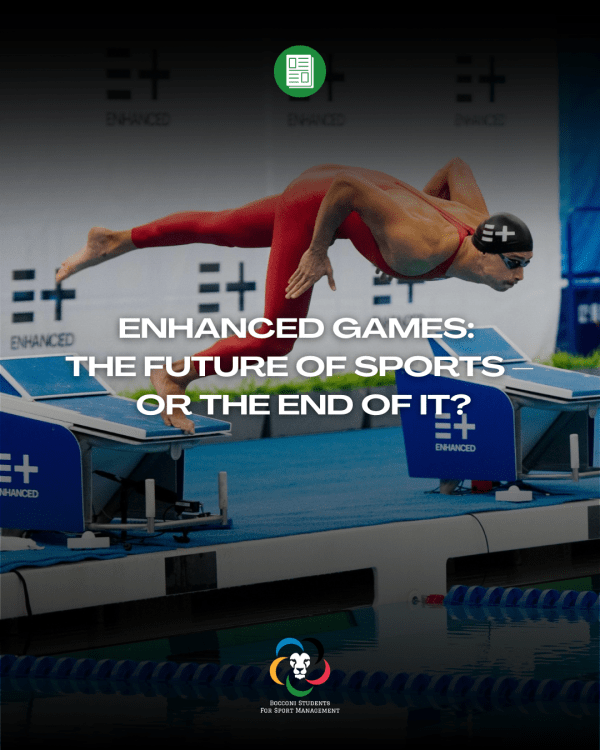
ENHANCED GAMES: THE FUTURE OF SPORTS – OR THE END OF IT?

Created by 40-years-old Australian Aron D’Souza, the Enhanced Games is a new and controversial multi-sport event. The idea behind it is to admit the use of performance-enhancing drugs (PEDs), currently banned by the World Anti-Doping Agency (WADA), under medical supervision and control that, according to the event organizers, will ensure the athletes’ safety and health.

The declared objective of these games is to push beyond the athletes’ natural limits, break existing records and surpass the boundaries of human capability.

The inaugural Enhanced Games will take place in May 2026 in Las Vegas and will feature athletes competing in three main disciplines: swimming, track & field and weightlifting.
The Business Behind the Enhanced Games

The Enhanced Games are deeply commercial. They are structured around high-stakes investments, lucrative athlete payouts and a business model that pivots from traditional sport governance to an “entertainment-first” approach.

Unlike the Olympic Games – which rely on a mix of public and private funding, media rights and sponsorships – the Enhanced Games are entirely privately funded by venture capital funds such as 1789 Capital, and investors including Peter Thiel, Balaji Srinivasan and Christian Angermayer. To date, the project has reportedly raised around $300 million. 

Each event will have a prize pool of $500,000, with $250,000 awarded to the winner and $ 1 million bonus for world record breaking. Moreover, all participating athletes will receive appearance fees.

The Enhanced Games promote themselves as an efficient and athlete-centric event. They aim at cutting unnecessary costs by focusing on fewer sports, using existing infrastructure and reinvesting to fairly pay all athletes.

The Uncomfortable Truth: Why the Enhanced Games are Going to Succeed

 There are several factors that are likely to contribute to the success of the Enhanced Games:

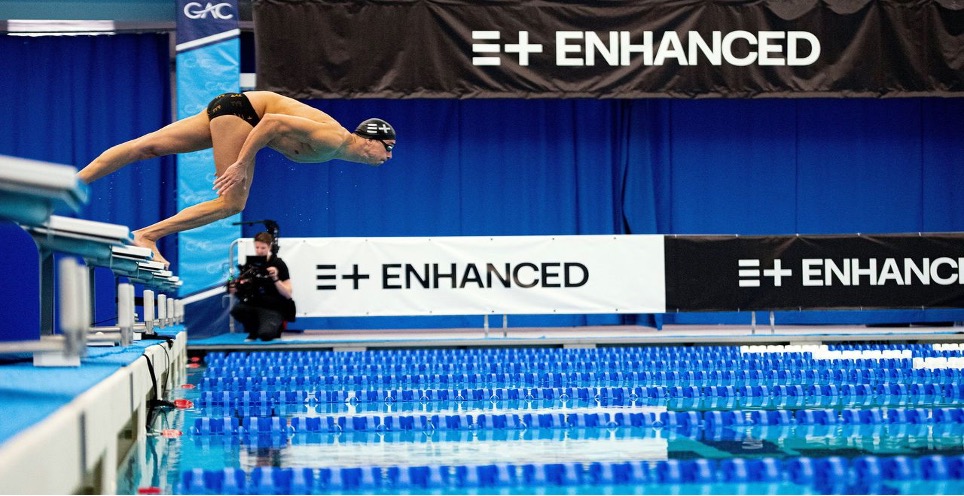
  • Proof of concept. The Enhanced Games have already demonstrated that their model can work in practice. Greek swimmer Christian Gkolomeev broke the long-standing world record in the 50-meters freestyle during filming for the Games’ official documentary. What’s surprising is the fact that the swimmer achieved this just two weeks after joining the Enhanced program. Wether it was luck or not, this result perfectly aligns with the event’s core narrative: that with full medical supervision, financial backing and cutting-edge training facilities, athletes can truly push beyond their natural limits.
  • Unquestionable public interest. Regardless of personal opinions, the Enhanced Games undeniably attract attention. Featuring elite athletes like Ben Proud or James Magnussen, the event arouses curiosity. Furthermore, the timing of the event is ideal: with the next Olympics in 2028 and the conclusion of the swimming and athletics World Championships, the Enhanced Games will stand as the only major event on the calendar.
  • A smart marketing strategy. The Enhanced Games are built on storytelling and spectacle. They recently released a compelling and engaging documentary. Furthermore, their main target audience is the casual sports viewer – people who watch disciplines like swimming or track & field only occasionally or during the Olympics, mainly for national pride but especially to see the best athletes breaking world records. By emphasizing entertainment and frequency, the Enhanced Games aim to fill the long gap between Olympic cycles and transform elite performance into an ongoing show.
  • Transparency and compensation. At the highest level of sports doping has always existed and, in some disciplines, such as  bodybuilding, there is already a clear distinction between “natural” and “enhanced” categories. There is a long-documented history of doping scandals in sports, and not all were sanctioned (for instance, at the Tokyo Olympic Games in 2020, 23 Chinese athletes tested positive and yet were still allowed to compete and win four gold medals). In this sense, the Enhanced Games ensure transparency and fairness.
    Nevertheless, there is also the economic point of view. In a public statement released in May 2025, Christian Gkolomeev’s wife reveals that, during his career, her husband only earned about $5,000 per year, despite full commitment to his sport and continuous WADA testing. His choice to join the Enhanced Games was a purely money-driven – and it’s hard to blame him.
  • The longevity market. The wellness trend is booming. Ordinary people exercise more, eat healthier and take supplement to optimize health and performance. Let’s take creatine as an example: once considered unsafe, it is now mainstream, widely accepted for its physical and even cognitive benefits. From this perspective, the Enhanced Games also serve as a kind of scientific experiment. It wouldn’t be surprising if, in 15-20 years, some substances now labelled as “doping” will be normalized and socially accepted, both in sports and in everyday life.

Conclusion

The criticism raised against the Enhanced Games is entirely legitimate, yet it’s impossible to ignore the brilliance behind the idea. Aron D’Souza has managed to create something completely new and the mix of controversy, innovation and spectacle is likely what will make it a success. 

By Federico Sittaro
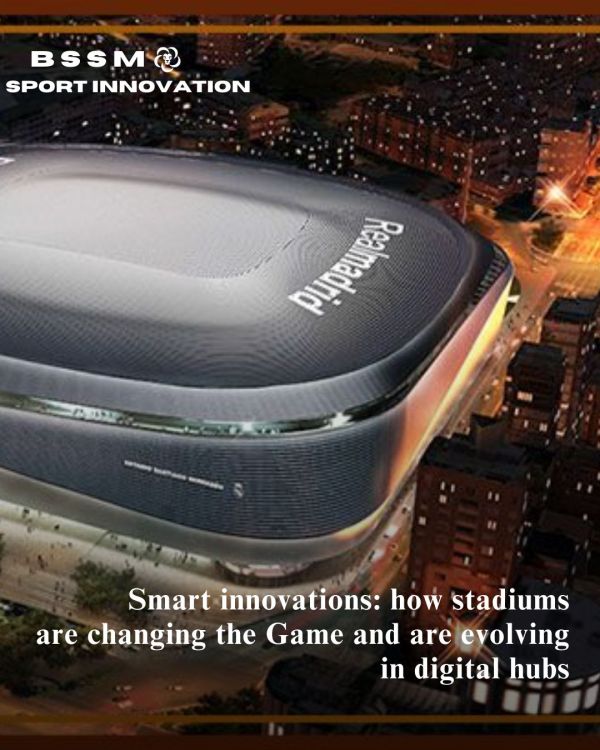
SMART STADIUMS ARE CHANGING THE GAME

The Santiago Bernabeu Stadium earned its crown as World’s Best Stadium 2024. This achievement shows how smart stadium technology has reshaped the scene of modern sports venues. Its state-of-the-art pitch and 360-degree video screen make this architectural marvel a symbol of stadium breakthroughs.

Sports arenas and stadiums have seen an unprecedented rise. Between 2020 and 2024, developers rebuilt 18 venues and constructed 32 new ones. Stadium infrastructure investment reached €800 million in 2023, which accounts for 6.2% of revenue. Modern venues now combine AI-driven analytics, 5G networks, augmented reality experiences and biometric payment systems.

Smart stadiums have changed how fans watch and experience games. These venues offer tailored merchandise suggestions and display live player statistics right on the field. This technology creates a new dimension of fan involvement that seemed impossible a few years ago.

How Stadiums Evolved to Digital Hubs

The story of stadium architecture shows remarkable progress since the early 20th century. Back then, venues were simple concrete bowls that offered minimal amenities. The original stadiums had basic concrete tiers with uncomfortable seating. These facilities focused only on hosting large crowds before television broadcasts became popular.

Tragic events in UK stadiums during the 1980s, including fires and overcrowding, led to crucial safety improvements. These changes made venues more available and comfortable for various spectators. The upgrades also brought new business opportunities through merchandising, museums, and restaurants.

Today’s stadiums have become smart entertainment hubs. They feature high-speed Wi-Fi, interactive mobile apps, and immersive technologies. Los Angeles’ SoFi Stadium showcases this innovation perfectly with its 70,000-square-foot dual-sided video board, AI-powered concessions, and seamless ticketing systems.

Modern venues use IoT networks (Internet of Things) to monitor heat mapping and manage crowds in real time. Augmented reality creates interactive experiences that boost fan engagement. Digital twins generate hyper-realistic virtual stadium representations that enable virtual tours and improve game-day features.

This progress reflects new priorities in stadium design. The focus has changed from maximizing seats to creating intimate, atmospheric venues with premium amenities and better fan experiences. Modern stadiums stand as architectural marvels. They serve not just as sporting venues but as iconic landmarks that create lasting emotional connections with spectators.

AI and AR Technologies Enhance Fan Immersion Beyond the Game

AI now creates individual-specific fan experiences that go beyond the playing field. The Orlando Magic leads this innovation by putting AI and machine learning at the heart of their fan strategy. Their approach resulted in a remarkable 120% increase in game-day app users and a 20% increase in fan satisfaction scores for in-stadium technology.

AI algorithms analyze data from fan priorities, viewing patterns, and social media activity to create custom experiences. Fans receive video highlights, betting tips, and team news that match their interests. AI helps stadium spectators find shorter food lines and suggests the best viewing spots based on live crowd movement analysis.

AR changes the way fans involve themselves with live sports. The FIFA World Cup in Qatar brought the innovative FIFA+ Stadium Experience to life. In-venue fans could access video replays, multiple camera angles including VAR replays, and live AR displays showing statistics and heatmaps. The NFL has also launched AR apps that let fans see detailed player stats by pointing their phones at the field.

These technologies also boost business operations. The Orlando Magic utilizes AI platforms to spot season ticket holders who might leave and sends them special offers early. This evidence-based strategy helps retain customers in today’s competitive entertainment market.

Conclusion

Technology has transformed traditional sporting experiences into remarkable smart stadiums. These architectural marvels combine state-of-the-art technology with cherished sporting traditions that create exceptional fan experiences and operational improvements.

Smart stadium technology shows promising developments. Up-to-the-minute data analysis and AI-driven systems make game days enjoyable. Teams learn about their supporters’ priorities and behaviors while stadium operators can manage crowds better.

IoT networks, artificial intelligence, and augmented reality work together to create immersive experiences that connect fans with the action. Market growth projections indicate smart stadiums will become common in professional sports.

Smart stadium technology enhances the special aspects of attending games instead of replacing traditional elements. These venues maintain the communal spirit of live sports through careful integration of digital breakthroughs. They also provide the convenience and interaction that today’s audiences need.

AWS AND F1: AI REVOLUTIONIZES FAN ENGAGEMENT IN FORMULA 1

Formula 1’s fan engagement has increased dramatically in the last few years. The sport has seen a rapid growth in viewership, as one-third of Formula 1’s current fans discovered the sport in just the last four years. Liberty Media’s acquisition in 2017 is what sparked this meaningful change in F1’s approach to reaching fans. Sports moved away from its old reputation and built a strong presence across digital platforms.

The AWS (Amazon Web Services) partnership in 2018 marked a new chapter in F1’s technological advancement, as F1 fans are witnessing a complete transformation in how they experience the races. Amazon SageMaker built a machine learning system that gives race analytics a new direction. The system processes several data streams, like live telemetry from 300+ car sensors, track condition measurements and historical performance metrics. Each race weekend creates more than 1.5 terabytes of data per car. This massive amount of data turns into practical insights through the AWS F1 partnership.

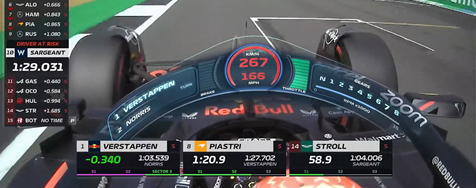
This collaboration helps create 20 analytical F1 Insights for live TV that changes how fans understand race strategies and car performance. The partnership has a clear goal: innovative technology that brings fans closer to racing action. Formula 1 enthusiasts now have access to live race predictions, strategy analysis, and performance metrics that teams previously kept in their garages. This technological breakthrough has not only improved broadcasts but also created a new way for millions of fans worldwide to get involved. So, AWS highlights how artificial intelligence and cloud computing shape Formula 1’s fan experience.

Live analytics now power F1’s approach to fan engagement. They deliver customized content to 1.5 billion viewers, especially younger audiences. AWS machine learning has revolutionized race insights presentation and made complex racing strategies easily understandable to fans at every level. This analytical approach led to significant growth. There are many specific examples of those insights that make racing approachable for fans.

To begin with, Battle Forecast technology marks a significant advancement in race prediction capabilities. Track history analysis and projected driver pace help predict precisely how many laps a pursuing car needs to reach striking distance of its target. Up-to-the-minute data analysis reveals the complex nature of overtaking and brings fans closer to each race’s strategic elements.

Pit Stop analysis has also fundamentally changed through advanced data processing. The system processes critical metrics including tire wear patterns, competitor positions, track conditions and many more.

The Alternative Strategy solution stands out as the most innovative feature. It simulates different race outcomes based on various strategic decisions. The multiple data points that contribute to this analysis include race pace, tire degradation, weather conditions and track conditions. These technologies help broadcast partners show viewers how different strategic choices could affect race outcomes and displays knowledge that only teams’ strategists previously had.

Thus, the broadcast capabilities have undergone one of the biggest improvements in F1’s viewing experience. The broadcasts display 15-20 graphic overlays that show live updates, from gear indicators to tachometer readings. StatBot, powered by AWS’s generative AI, has also brought a new era to the commentary support systems. This tool gives quick access to historical race data and cuts research time from ten minutes to seconds. Amazon Transcribe helps create automated subtitles in multiple languages and has boosted broadcast efficiency.

In conclusion, AWS and Formula 1’s technological partnership shows how data and artificial intelligence have revolutionized motorsport fan involvement. These analytics give F1 fans the chance to better understand the sport in an easy and insightful way. Processing over 1.1 million data points per second has created an experience that brings fans closer to racing action than ever before and keeps Formula 1 leading sports breakthroughs.

By Yolanda Pandi

THE TECHNOLOGY BEHIND SPORT BRAS

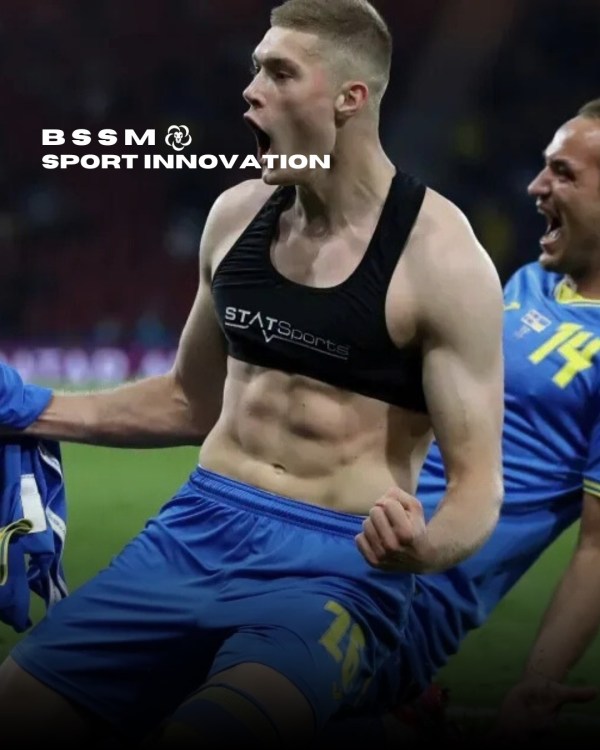
In recent years, we have surely noticed that footballers now wear some kind of bra during every single match, and it is not just a simple muscle band but a real hi-tech item called sport bra.
The sport bras are worn under the shirt at chest height; they contain a GPS system that records everything that happens and everything the player does on the pitch, obtaining telemetry of the player’s path. The GPS system is positioned at the back, i.e. on the players’ backs, and is held firmly and securely on the bra and does not only keep track of the kilometres travelled but literally everything that happens on the pitch during the game.
Thanks to the satellite link, this instrument records everything: movements, accelerations, changes of direction, number of impacts with the ball, heart rate. The bra is a real performance tracker.
Using the data obtained, the technical staff of a team can trace back every number needed and scientifically analyse the performance – both physical and tactical – of each individual footballer in minute detail.
It is worn by footballers of all positions, even goalkeepers, as it is a comfortable, practical, lightweight garment, optimised for running and competitive activity and which, despite the GPS on its shoulders, does not impede any kind of contrast or movement on the pitch.
Technology has become an indispensable and fundamental tool for monitoring the performance and analysing the performance of players, not only in official matches but also during training. It is very indicative of a player’s on-field behaviour and health.
The first to use such technology was Zlatan Ibrahimovic and was initially used by maniacal professionals who wanted to keep an eye on their performance. Today, it is not only used by top professionals but by practically everyone with the aim of growth and improvement.
It would be interesting to unveil this data to viewers and maybe even live, as already happens in other sports, but for now it remains reserved for insiders.

By Alessandro Caldera

Sources:
• Radio Deejay
• La Gazzetta dello Sport
• Sport magazine

LIVERPOOL AND TACTICAI: HOW AI IS CHANGING FOOTBALL

As Arne Slot begins his role as Liverpool’s new head coach, he’s bringing in fresh ideas with the help of his coaching team. Assistant coaches Sipke Hulshoff and John Heitinga have new training techniques, while Ruben Peeters, the lead physical coach, adds lots of energy. Fabian Otte, who is in charge of goalkeeper coaching, is also coming up with creative training drills.


Off the field, Liverpool has been developing a new assistant to help with set-pieces—but this assistant isn’t human. Liverpool’s famous analytics team, led by William Spearman since 2023, has teamed up with Google DeepMind to create TacticAI, an AI tool to improve corner kick strategies. This project was highlighted in a paper published in Nature Communications. Researchers Zhe Wang and Petar Velickovic used data from 9,693 corner kicks from Premier League seasons between 2020 and early 2023.


TacticAI is an AI tool that helps coaches improve their game strategies. The main focus is on set plays, like corner kicks, which can be key chances to score when done right.


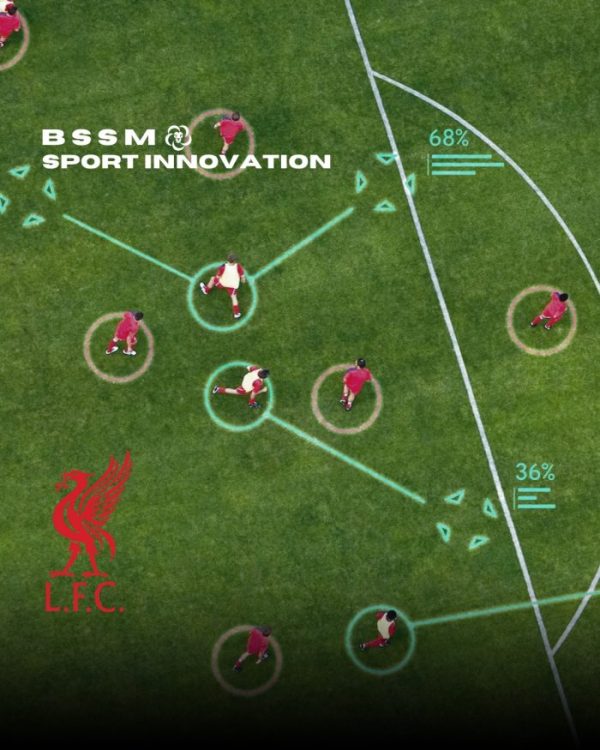
TacticAI uses smart models to predict what might happen next, such as which player will get the ball or if someone will take a shot, all based on where the players are standing. It also suggests changes in player positions to either increase or reduce the chances of certain outcomes. It uses detailed information, like players’ height, weight, position, and movements, to forecast what might happen next during a corner. For instance, it can predict which player is most likely to get the ball or whether a shot will be attempted. It can also suggest small changes, like shifting a defender’s position, to reduce the risk of conceding a goal.


For example, TacticAI might look at how defenders are lined up during a corner and suggest moving them to reduce the risk of the other team getting a shot. This helps coaches adjust their tactics during the game to increase their chances of success.


Liverpool has already shown how important good corner tactics can be, like in their famous 2019 comeback against Barcelona, when Trent Alexander-Arnold’s quick corner kick set up a crucial goal. Google DeepMind also found that expert reviewers preferred the AI’s suggestions over the usual tactics 90% of the time.


The goal of TacticAI is to make the analysis process faster and more efficient. Coaches no longer need to spend hours watching videos of opponents and have more time creating winning strategies. Instead, the AI analyzes the data and provides quick insights on how to improve their strategies.


While TacticAI hasn’t yet been fully implemented in Liverpool’s games, the project shows how seriously clubs are taking set-pieces, with nearly 30% of Premier League goals last season coming from dead-ball situations. Even a small improvement in tactics could make a big difference across a season.


This partnership highlights Liverpool’s role as a leader in using technology to improve football analysis and Liverpool’s use of AI is just the latest example of how technology is transforming football. But while AI can offer valuable insights, it will always be up to the coaches and players to execute the strategies on the pitch.

By Alexandra Taub

MILAN, FROM FOOTBALL CLUB TO 360° ENTERTAINMENT COMPANY 

“Today, A.C. Milan is a modern entertainment company capable of creating media events that engage millions of people worldwide,” is how A.C. Milan describes itself on its official LinkedIn profile. Not just a sports club, but an entertainment company. 

As stated in November 2022 by Casper Stylsvig, Chief Revenue Officer of the Milanese club, a football club can no longer rely solely on ticket sales and merchandising. It must seek to increase interaction moments with its target audience, making them more profitable. This shift by the Rossoneri has its roots in the acquisition by Elliott Management, but it truly took off with the transition to RedBird. 

The key aspect of this transformation is the desire to partially detach sporting results from commercial ones. The goal today is to maximize fan interaction moments, both during the match itself and during breaks from the game. 

The first step in this direction was building its own Media House. This has revolutionized how Rossoneri fans worldwide consume media, producing exclusive content designed to let fans experience the Club in a 360° way. This direct-to-consumer (D2C) model has further strengthened the emotional bond with the fan base and engaged new users. The numbers prove it: Milan is currently the second most-followed football club in Italy (behind Juventus) with 70.5 million followers as of late October 2023 across major social platforms. 

In addition to digital content, Milan is also heavily involved in collaborations. No longer just simple billboards at San Siro or Milanello, but strategic agreements aimed at creating a “Rossoneri ecosystem,” capable of engaging fans through various initiatives. 

It was with this vision that, in mid-2022, Milan launched a co-branded prepaid card in collaboration with the British fintech REPX. The card was designed to further strengthen fan loyalty and team aggregation by offering discounts and opportunities to participate in numerous club-related experiences, such as prize draws for exclusive tickets and branded apparel. 

The recent launch of “AC Milan Connect” is moving in the same direction: a SIM card developed in collaboration with Afinna One and entirely dedicated to Rossoneri fans. The project, unique in Italy, aims to “offer fans an additional connection with their beloved team.” As with the previous case, SIM holders are entitled to exclusive content and discounts for purchasing official merchandise. 

While extra-football loyalty is increasingly important, the match itself remains the heart of any football club. However, even here, opportunities to connect with fans are multiplying, both on and off the pitch. This is precisely the concept behind two initiatives: Club 1899 and the partnership with Fanblock. 

Club 1899 aims to create “an experience within an experience,” allowing fans to enjoy matches uniquely: pitchside seats, lounge areas, meals, DJ sets, and VIP rooms where they can meet Milan legends. Hospitality services are certainly common among European clubs, yet Milan’s emphasis on these initiatives is notable. As repeatedly stated by various club representatives, these efforts can only be fully developed with a proprietary stadium. 

The partnership with Fanblock, established in October 2023, introduces the unprecedented opportunity to own a piece of Milan’s digital pitch. The platform allows fans to purchase “Fanblocks,” representing a small digital segment of the playing field. Owners of these blocks earn points during the season’s matches, granting them specific rewards based on what happens in their owned area, offering an entirely innovative way to follow a game’s development. 

The club’s new pioneering commercial approach can once again be summed up in the words of Casper Stylsvig: “The goal is to expand the magic of the pitch, allowing fans, who are at the center of everything, to experience unforgettable moments through the Rossoneri colors.” 

By Federico Petrella

FOREST GREEN ROVERS: WHEN SOCCER AND SUSTAINABILITY UNITE

In England, there is a soccer team in Nailsworth, Gloucestershire, with a fascinating story: the Forest Green Rovers. This English soccer team is making a difference in the sports world by adopting a fully sustainable approach. Founded in 1889, the team is known for its environmental sustainability policy, which has led to a series of innovative initiatives drawing attention worldwide.

This transformation began in 2011, when the club, struggling with financial issues, was acquired by entrepreneur Dale Vince. Vince is a green energy entrepreneur, founder, and president of Ecotricity, where all profits are reinvested into new projects to create increasingly cutting-edge forms of sustainable energy.

Vince immediately implemented key measures to make the team environmentally friendly: solar panels were installed on the stands, and the playing surface was replaced with 100% organic grass maintained by a solar-powered robot lawn mower and irrigated using an eco-friendly rainwater collection system. Fossil fuels were banned, and electric cars and vans were purchased, with free charging stations made available at the stadium parking lot for fans and the community. The players wear kits made entirely from fabric derived from recycled coffee grounds and plastic.

These innovations earned Forest Green the Institute of Groundsmanship’s “Sustainability and Environment” award.

The players’ diet was also radically changed to a vegan one, educating team members to follow a dietary regime that minimizes environmental impact. For this choice, Forest Green Rovers received the support of the Vegan Society, the world’s oldest vegan organization, which provides nutritional and environmental education programs. Fans were involved in the project as well: vegan food stalls appeared outside the stadium, where staff educate supporters about making more sustainable dietary choices.

In 2018, the team was named the world’s most sustainable soccer club by the United Nations Framework Convention on Climate Change (UNFCCC). That same year, it became the first soccer club globally to achieve “Carbon Neutrality” certification, balancing emissions produced and absorbed as per UN protocols.

This model seems to point toward success on the field as well. In just a few years, the green-and-black team became one of the strongest in England’s lower leagues, debuting this season in League One, the third tier of English soccer, for the first time in its history.

The next step is constructing a 5,000-seat stadium made entirely of wood. It will be the centerpiece of a sports complex called Eco Park, comprising many other sports facilities, offices, and scientific research labs. The choice of wood as the primary construction material perfectly embodies the ecological philosophy of the Rovers’ board. Additionally, the timber used will come from sources that respect tree regeneration cycles.

In short, seeing how a soccer club, even in the lower leagues, follows such a virtuous path suggests that other clubs could—and perhaps should—draw inspiration to make the soccer world increasingly sustainable.

By Marco Munari

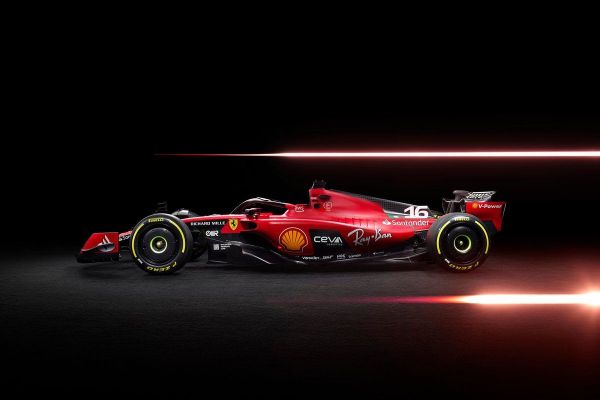
FERRARI: THE NEW SF-23 UNVEILED

On February 14, Ferrari unveiled the new SF-23, the single-seater from the Maranello stable set to hit the track for the 2023 F1 championship, now just around the corner. The news of its presentation, followed by the subsequent show, created a stir among fans of the Prancing Horse, but also brought pressure.

And rightly so, as last season was more positive for Ferrari compared to previous years: the team returned to victory. However, what began with high hopes ended in disappointment, leaving the realization that perhaps the pit wall lacked the experience and prestige of rivals such as Red Bull and Mercedes.

The two drivers expressed high praise for the new car, whose design takes inspiration from last year’s model but incorporates numerous innovations. Why be optimistic? Because it stems from a strong foundation (the F1-75) and is not merely an evolution. It marks the culmination of a process, with targeted interventions primarily in two areas.

One of last year’s car’s weak points—reliability—should now be resolved. The engine, which in 2022 never operated at full power and was later downgraded to conservative mappings following failures in Barcelona and Baku with Leclerc, and in Austria with Sainz, is expected to deliver an increase of at least 20 horsepower without breaking.

The other major flaw was the performance drop-off during race pace compared to qualifying, particularly evident in the latter half of the season: the rear tires tended to wear quickly in slow corners due to lateral sliding caused by a lack of aerodynamic load. To address this issue, extensive research on the underbody was required to better utilize airflow and improve grip at low speeds, without compromising performance at high speeds. This process involved gradual steps, utilizing simulators and wind tunnel tests, with a series of aerodynamic tweaks invisible to the naked eye.

For the unveiling, Ferrari made no secret of its ambitions, conducting laps at Fiorano with both drivers. While these were not proper tests and no conclusions can be drawn, Leclerc’s radio message to Sainz, saying, “I’m not letting you take it,” referring to a driver switch during the laps, offers hope for a strong season.

A reflection is necessary, though: it’s true that the atmosphere at Ferrari is different. Binotto is gone, replaced by a daring Vasseur, who appears very optimistic and enthusiastic about this season. However, Vasseur’s contribution to the development of the SF-23 has been minimal, as most of the work was done during the previous season under the direction of former TP Mattia Binotto. This doesn’t imply inefficiency—in fact, quite the opposite—but it does mean that Vasseur cannot be blamed for potential shortcomings in the car’s development.

Another consideration is that Mercedes appears to be in form this year, judging by the end of last season. Lewis Hamilton, coming off the first winless season of his career, will be highly motivated, and early rumors suggest the German team could be the true surprise of the season. It is unlikely they will falter for two consecutive years, presenting Ferrari with another serious competitor for the title. Under a Ferrari presentation post, Mercedes even teased the team. Yet the stakes remain open, and only time will tell.

Finally, presenting the car on Valentine’s Day may not be a coincidence—perhaps it’s a sign that fans will fall madly in love with the SF-23.

By Antonio Spampinato

“BREAK POINT,” “DRIVE TO SURVIVE,” “ALL OR NOTHING”: TV SERIES AS A VEHICLE FOR SPORTS PROMOTION

The promotion of sports also passes through its representation on the small screen: now, the phenomenon of TV series has reached the world of sports, with the recent release of Break Point on Netflix. This series narrates the stories of some of the most talented tennis players in the world as they navigate the sports season, aiming to bring home the trophies up for grabs. Among them is the Italian Matteo Berrettini, who finds himself in the spotlight of the show.

Presenting sports in a way that is accessible to series enthusiasts has already been an idea brewing in the minds of producers for some time. Among the most successful examples is Drive to Survive, produced by BoxToBox Production, which also created Break Point. It recounts the ups and downs of a Formula 1 season, offering an inside look at the emotions, stories, and conversations within the teams, from both drivers and team principals. The production company also has plans for future releases, including a series on golf titled Full Swings, another on the Tour de France, and one on the recent Qatar World Cup, set to be released later.

Moreover, how can we not mention the now-famous series All or Nothing? It began with American football, moved to rugby, and later entered the world of soccer, where it gained maximum visibility. This series also delves into the internal workings of a team as it approaches a sports season, exploring in depth the management of an entire sports organization as well as the team itself.

These productions have allowed countless fans to discover the less visible side of athlete preparation for sporting events. Athletes lay themselves bare before the camera, sharing emotions, thoughts, and even explanations of certain events, such as injuries, transfers, accidents, triumphant victories, and painful defeats. In short, these series offer a 360-degree view of what characterizes the life of a professional athlete.

Indirectly, this has also expanded the visibility opportunities for both athletes and teams, and therefore for organizations, which have realized the economic potential of such content. Showcasing the behind-the-scenes of the sports world inevitably attracts more fans to follow the sporting events these organizations are part of. From an economic perspective, this represents a potential advantage, although, as always, everything depends on the performances delivered on the field or on the track.

In conclusion, sports too have opened their doors to global broadcasting, striving to create increasingly captivating products for the general public. These efforts are also aimed at gaining competitive advantages over other organizations in terms of revenue and visibility, particularly in countries where these sports are still developing, but also in places where they are already well established, with the goal of strengthening fan and supporter loyalty.

By Marco Munari

Sito web creato con WordPress.com.

Su ↑