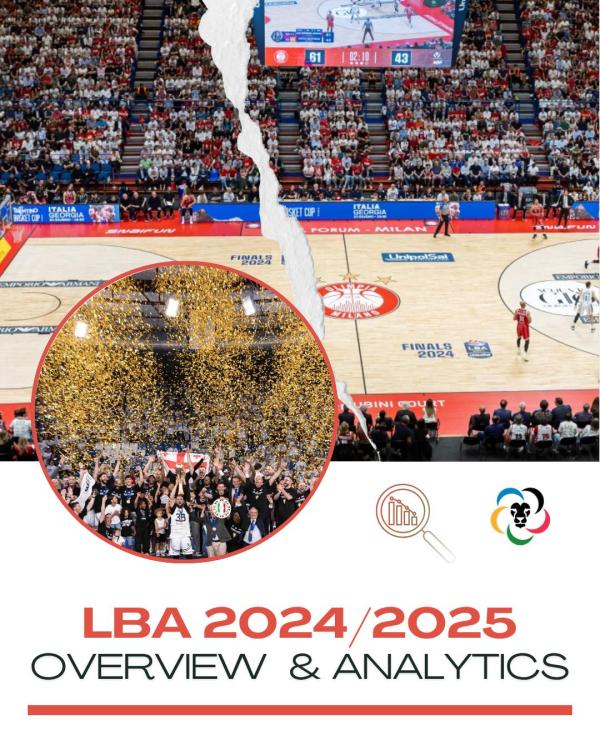
LBA 2024/2025: OVERVIEW & ANALYTICS

As every year, the current season of Italy’s top basketball competition is over. Virtus Segafredo Bologna has been crowned Italian champion, winning the Lega Basket Serie A title for the seventeenth time by defeating Germani Brescia 3–0 in the finals.

To reach the final, Virtus overcame Umana Reyer Venezia 3–2 in the quarterfinals and EA7 Emporio Armani Milano 3–1 in the semifinals. Germani, on the other hand, reached the finals for the first time in its history by defeating both UNAHOTELS Reggio Emilia in the quarterfinals and Trapani Shark in the semifinals, each by a 3–0 sweep.

Regular Season analytics
Italian basketball continues to establish itself as an increasingly attractive product for the public. This is demonstrated by two key data from the 2024/2025 Regular Season: average attendance and revenue per game.

The average revenue per match, calculated across all games played by the 16 teams, was €58,761.

This figure is driven upward by the home games of Olimpia Milano (€120,514), Virtus Bologna (€110,494), and Trapani Shark (€105,541) — the only three teams to surpass the €100,000 mark.

Conversely, the teams pulling the average down were Givova Scafati (€10,160), Vanoli Cremona (€21,850), and Reyer Venezia (€24,131).

The overall average attendance per game was 3,964 spectators.
Here too, the numbers were positively influenced by the strong performances of Milano (average of 8,302 spectators per game), Virtus Bologna (6,071), and Trieste (5,363). The lowest attendance figures were recorded in Scafati (1,727), Derthona (2,256), and Cremona (2,335).

However, when looking at arena capacity utilization, the top-performing teams were Dolomiti Trentino (98.5%), Trapani Shark (96.1%), and Reyer Venezia (95.7%). At the bottom of the ranking were Scafati (46.7%), Virtus Bologna (62.9%), and Sassari (63.9%).

Here is the complete table with all 16 teams in the championship:

TEAMAVERAGE ATTENDANCECAPACITY
(Arena)
CAPACITY UTILIZATION (%)AVERAGE REVENUE (€)
Banco di Sardegna Sassari3.1945.000
(PalaSerradimigni)
63,953.904
Bertram Derthona Tortona2.2563.510
(Pala Ferraris)
64,325.623
Dolomiti Energia Trentino3.9404.000
(PalaTrento)

98,536.053
EA7 Emporio Armani Milano8.30212.331
(Unipol Forum)
67,3120.514
Estra Pistoia2.9833.990
(PalaCarrara)
74,842.016
Germani Brescia4.7205.200
(PalaLeonessa A2A)
90,866.136
Givova Scafati1.7273.700
(PalaMangano)
46,710.160
Napoli Basket2.7793.890
(PalaBarbuto)
71,432.490
Nutribullet Treviso Basket4.1755.344
(PalaVerde)
78,147.590
Openjobmetis Varese4.3635.107
(Palasport Lino Oldrini)
85,483.330
Pallacanestro Trieste5.3636.736
(PalaTrieste)
79,683.773
Trapani Shark4.1574.325
(PalaShark)
96,1105.541
Umana Reyer Venezia3.3553.506
(Taliercio)
95,724.131
UNAHOTELS Reggio Emilia3.7004.530
(PalaBigi)
81,781.332
Vanoli Basket Cremona2.3353.511
(Palasport Radi)
66,521.850
Virtus Segafredo Bologna*6.0719.658
(Segafredo Arena)
62,9110.494
TOTAL3.9645.27175,258.761

* Considering the home games across the domestic league (Regular Season and Playoffs) and the EuroLeague (with an average arena occupancy of 85% and 72% for Olimpia), the black-and-whites recorded a total attendance of 275,204 fans.

The individual games with the highest attendance and revenue primarily featured EA7 Emporio Armani Milano, Virtus Segafredo Bologna, and Trapani Shark. The most attended match was held at the Unipol Forum between Milano and Bologna, drawing 10,869 spectators and generating a record revenue of €215,108. Next in terms of attendance were the games at the Forum against Dolomiti Energia Trentino (10,737 spectators) and Trapani Shark (9,903), the latter bringing in €163,768 in revenue. The return match between Virtus and Olimpia at the Segafredo Arena registered €205,255 in revenue, while Bologna vs. Trapani, with 9,593 spectators, generated €201,203. Rounding out the top 5 in attendance is Milano vs. Napoli (9,136 spectators), while Trapani vs. Milano stands out for its significant revenue of €203,103.

Playoff analytics

The total box office revenue from the Regular Season reached €14,102,640.

To this figure must be added the income generated during the Playoffs—a crucial and highly significant phase of the season—where the importance of the games helps attract more fans and allows clubs to raise ticket prices. During this key stage, a total of 149,682 spectators attended 26 games, averaging 5,757 per match—almost 1,800 more spectators per game compared to the Regular Season.

As expected, the games with the highest average attendance were the Finals between Virtus Bologna and Germani Brescia, with an average of 7,912 spectators over 3 games (23,736 total). The Semifinals also posted strong numbers: an average of 7,490 spectators, totaling 52,430 over 7 games. Among these were the two most attended matches overall: Game 3 and Game 4 at the Unipol Forum in Milan between Olimpia and Virtus, which drew over 12,000 fans per game. The Quarterfinals, by contrast, recorded a total of 73,520 spectators, averaging 4,595 across 16 games.

Lastly, the average arena occupancy rate during the Playoffs stood at 86.3%, marking a 3.3 percentage point increase over last season’s Playoffs.

The best results were once again recorded by Trento (100%) and Venezia (97.7%).

Furthermore, as was the case with the 2025 Frecciarossa Final Eight of the Italian Cup, the Finals—the season’s concluding event—were also given extensive international coverage. Thanks to a collaboration with Euroleague Basketball TV, the games were broadcast free-to-air in the United Kingdom, Switzerland, the Netherlands, Belgium, Denmark, Norway, and Sweden. This coverage in these countries was added to the existing international agreements with Greece, Israel, Turkey, Poland, Georgia, Kazakhstan, Slovakia, the Czech Republic, Ukraine, the United States, South America, the Balkan countries, and the Baltic states, facilitated by Infront Sports & Media AG, the official advisor for LBA.

LBA target audience
Confirming these significant figures, at the start of the current sports season it was estimated that 16.7 million Italians were fans of the LBA-an increase of 2% compared to the previous season and nearly 50% higher than a 2019 survey.
This audience is mainly composed of:

  • men (59%)
  • residents of Northern Italy (43%)
  • people aged 35-44 (24%)
  • individuals with a medium-high or high socio-economic status

LBA Final Eight 2024
During the season, as per tradition, the Frecciarossa Italian Cup Final Eight took place at the Inalpi Arena in Turin. For the first time in its history, the trophy was won by Dolomiti Trentino.

The data from the previous edition, also held in Turin and currently the latest available, report a total attendance of 45,631, including 25,351 unique spectators.

The total estimated economic impact was € 6,866,000, with a benefit to the Piedmont region amounting to € 4,516,000.

In detail:

  • The B2C segment generated a direct impact of € 3,487,000, with local effects of € 2,169,000, mainly from:
  • overnight stays (23%)
  • catering (22%)
  • ticketing (20%)
  • The B2B segment produced a direct impact of € 3,379,000, with a local benefit of € 2,347,000, mainly due to:
  • setups, shows, and catering (27%)
  • sports halls and related services (20%

By Tommaso Villa

FIFA CLUB WORLD CUP 2025: AN INTRODUCTION

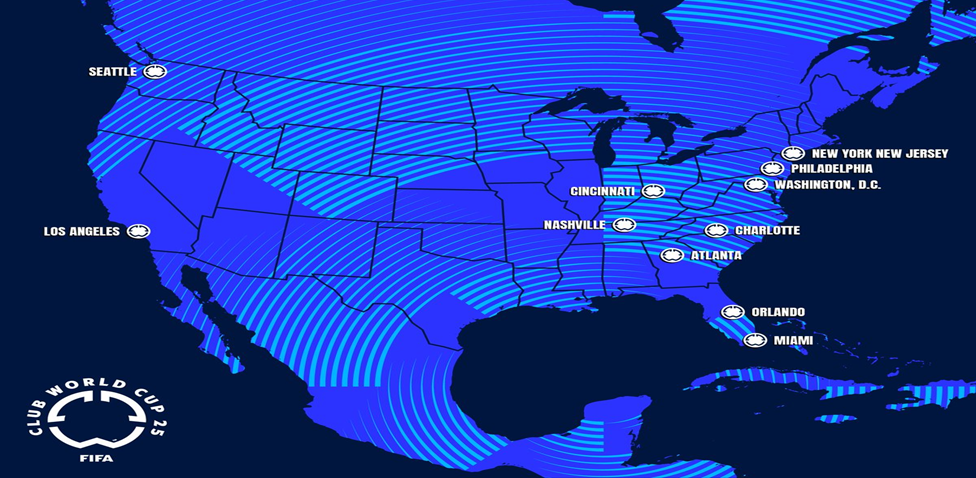
The current football season will feature a major innovation: the introduction of the new FIFA Club World Cup format, which will take place in the USA between June 14 and July 15.

The previous format involved the six reigning champions of the main confederation competitions, who competed in single-elimination knockout matches. In the last edition, Real Madrid was crowned world champions after defeating Mexico’s Pachuca 3-0 on December 18, 2024, at the Lusail Iconic Stadium in Qatar.

The new format is completely innovative compared to the previous one and follows that of the World Cup for nations: there will be a total of 63 matches thanks to the expansion to 32 teams, divided into 8 groups of 4. The top two teams from each group will advance to the knockout stage, which includes the round of 16, quarterfinals, semifinals, and final.

All matches will be available exclusively on DAZN, selected as the exclusive global broadcaster, and in Italy also co-broadcast by Mediaset, which — thanks to a sublicensing agreement — will air one match per day on free-to-air TV.

How are the 32 teams selected?

Each Confederation has a predefined number of allocated slots, specifically distributed as follows:

  • UEFA (Europe): 12 slots
  • CONMEBOL (South America): 6 slots
  • AFC (Asia): 4 slots
  • CAF (Africa): 4 slots
  • CONCACAF (Central and North America): 4 slots
  • OFC (Oceania): 1 slot

An additional slot is granted to the host Confederation, in this case assigned to Leo Messi’s Inter Miami, winners of the 2024 MLS Supporters’ Shield.

Slots are allocated to the clubs that have won the top-tier competition of their Confederation (UEFA Champions League, AFC Champions League, CAF Champions League, CONCACAF Champions Cup, Copa Libertadores, and OFC Champions League) up to the 2021 edition, or via a specific ranking system established by the Confederation the club belongs to.

The most prominent teams representing each Confederation include:

  • UEFA: Real Madrid (winners of the 2022 and 2024 Champions League), Manchester City (2023 winners), Chelsea (2021 winners), Bayern Munich, PSG, Inter, Juventus, and Atletico Madrid
  • CONMEBOL: Palmeiras, Flamengo, River Plate, and Boca Juniors
  • AFC: Al Hilal and Al Ain
  • CAF: Al Ahly SC and Wydad AC
  • CONCACAF: CF Monterrey and Seattle Sounders FC
  • OFC: Auckland City FC

Fifa World Cup 2025 prize money

According to a FIFA statement, the 32 participating teams will compete for a total prize pool of $1 billion, with the winning team earning up to $125 million. More specifically, the prize money will be distributed based on two criteria: participation ($525 million) and sporting results ($475 million).

The following table shows the detailed breakdown of how the prize pool will be distributed (in millions of dollars):

PARTICIPATIONSPORTING RESULTS
European clubs: between 12.81 and 38.19, based on a ranking that considers sporting and commercial criteriaGroup stage win: 2
South American clubs: 15.2Group stage draw: 1
North, Central, and Caribbean clubs: 9.5Qualification to the round of 16: 7.5
Asian clubs: 9.5Qualification to quarter-finals: 13.125
African clubs: 9.5Qualification to semi-finals: 21
Oceania club: 3.6Runner-up: 30  
 Winner: 40

Stadiums

The FIFA Club World Cup, as mentioned, will take place in the United States, serving as a prelude to the 2026 FIFA World Cup for national teams, which will also be hosted by the USA in collaboration with Canada and Mexico.

The 11 host cities for the competition are mainly located on the East Coast, with the exceptions of Seattle and Los Angeles. Specifically, the cities are: New York, Miami, Atlanta, Washington, and Orlando – the latter hosting matches in two different stadiums, for a total of 12 stadiums.

The stadiums with the largest capacities are:

  • Mercedes-Benz Stadium – Atlanta, GA (75,000 seats)
  • Bank of America Stadium – Charlotte, NC (75,000 seats)
  • Rose Bowl Stadium – Los Angeles, CA (88,500 seats)
  • Hard Rock Stadium – Miami, FL (65,000 seats)
  • MetLife Stadium – New York, NY (82,500 seats) – selected to host the final
  • Camping World Stadium – Orlando, FL (65,000 seats)
  • Lincoln Financial Field – Philadelphia, PA (69,000 seats)
  • Lumen Field – Seattle, WA (69,000 seats)

Extraordinary Transfer Window

Finally, on the occasion of the World Cup, FIFA has introduced a new and unprecedented transfer market slot, active from 1 to 10 June.

One of the most debated issues revolves around the so-called “squad lists”, the players in each club will be allowed to register for the competition. The tournament will take place during the typical summer transfer period and close to the end of players’ contracts (late June), making this a particularly sensitive topic.

Each team will be able to register a minimum of 26 and a maximum of 35 players, including at least 3 goalkeepers. The final squad must be selected from a preliminary list of up to 50 names, submitted in advance. However, only 26 players may be included on the matchday squad list for each game.

As for transfers and expiring contracts, the regulations allow clubs to make up to 6 changes to their final squad between June 27 and July 3. This includes replacing players already on the list and adding up to 2 new players. Importantly, a player cannot participate in the competition with more than one club.

So, what kind of tournament should we expect? Will teams, and especially players, approach it with the right level of motivation and intensity? One of the key questions will be how energy levels are managed, particularly for clubs that reach the final stages: will they be able to adequately prepare for the new season, given that domestic leagues resume in August and recovery time will be limited to just a few weeks?

Maybe the real challenge will be just that: finding a balance between ambition, physical management, and strategic planning in a calendar that’s becoming increasingly packed with matches.

By Tommaso Villa

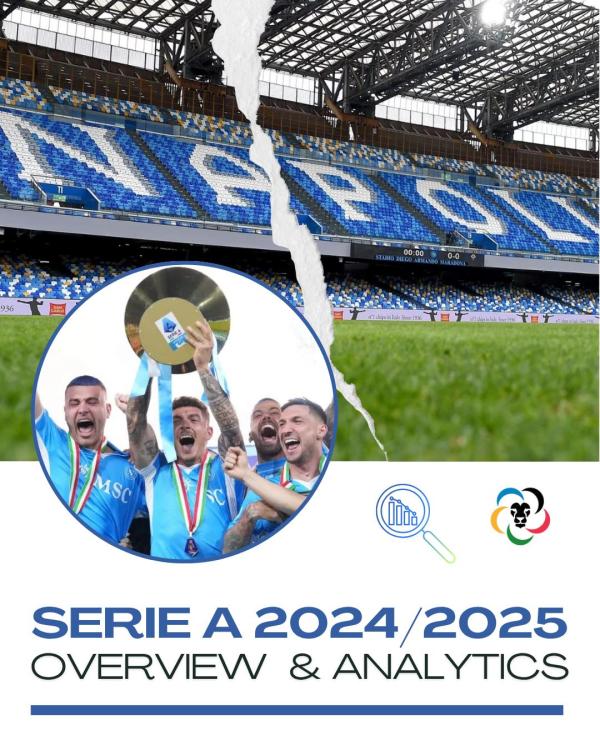
SERIE A 2024/2025: OVERVIEW & ANALYTICS

Final outcomes
Once again, the season of Italy’s top football competition has come to an end. Napoli have secured the fourth Scudetto in their history — their second in the last three years. According to the final outcomes, alongside Napoli, Inter, Atalanta, and Juventus will compete in the 2025/2026 UEFA Champions League, having finished second, third, and fourth respectively.

The race for the final Champions League spot remained open until the very last matchday: Juventus, with a 3-2 away win against Venezia, not only clinched qualification but also condemned the Venetian side to relegation and pushed Roma down to the UEFA Europa League 2025/2026. Joining the Giallorossi in Europe’s second-tier competition will be Bologna, thanks to their 1-0 victory over AC Milan in the 2024/2025 Coppa Italia final.

AC Milan and Lazio, following two disappointing seasons, will not participate in any European competition next season. The last available European slot goes to Fiorentina, who — with a record 65 points (their best performance since the 2012/2013 season, when they reached 70 points) — will once again feature in the UEFA Conference League 2025/2026.

Alongside Venezia, the teams relegated to Serie B are Monza, who with 18 points at least avoided setting the record for the lowest point tally in a 20-team Serie A with the 3-point win system (still held by Salernitana with 17 points last season), and Empoli, who failed to avoid the drop after losing 2-1 at home to Hellas Verona on the final day.

Fan engagement
Interest in Serie A continues to grow, as highlighted by the latest stadium attendance figures. The current season closed with an average of 30,824 spectators per match, confirming the upward trend of recent years and marking an event that hadn’t occurred in over two decades: for the second consecutive season, the average attendance surpassed the 30,000 mark. Last season, the average was slightly higher, at 30,911 spectators per match.

These numbers are reminiscent of the late 1990s, the golden era of Italian football, when between the 1997/1998 and 1999/2000 seasons, Serie A averaged 30,670 spectators per game. Following those years, Italian football experienced a steep decline, largely due to the scandals linked to the Calciopoli scandal. In the immediate aftermath, the league recorded a drastic drop, with the 2006/2007 season averaging just 19,307 spectators per match. Compared to that low point, the increase today stands at around +60% — or 11,517 more spectators per match, on average.

According to data collected by Transfermarkt, the just-concluded season saw a total of 11,662,951 spectators across all matches — a slight decrease of -0.73% (85,236 fewer) compared to the 11,748,187 from the previous season. This drop is largely attributed to the Genoa vs. Juventus match held behind closed doors on September 28.

Surprisingly, given their on-field performance, AC Milan * recorded the highest home attendance, drawing a total of 1,358,734 spectators to San Siro — including approximately 12,000 foreign fans per match. This is further evidence of football’s appeal as a driver of tourism. At the other end of the spectrum, the club with the lowest home attendance was Como, which attracted just 199,960 spectators over the season. This was in part due to the limited capacity of the Stadio Sinigaglia (10,524 seats), one of the smallest venues in the league.

In terms of stadium occupancy rates, the top-performing clubs were Cagliari and Juventus. The Sardinian side filled the Unipol Domus to 98% capacity, averaging 16,085 fans per match (out of a maximum of 16,365) for a total of 305,617 spectators over the season. Juventus recorded a 97% occupancy rate, with 764,498 fans attending matches at the Allianz Stadium — an average of 40,237 per game, with a total capacity of 41,507.

The club with the lowest occupancy rate was Fiorentina (47%), mainly due to the ongoing renovation of the Stadio Artemio Franchi. Despite a total capacity of 43,147, the stadium averaged only 20,358 spectators per game. Renovations are expected to be completed by the end of October. Meanwhile, Atalanta posted the highest year-on-year increase in stadium occupancy: from 59% last season to 91% this year, thanks to the completion of renovations at the Gewiss Stadium.

* The figures referenced in this paragraph refer to tickets sold per match, not actual attendance — which is not publicly disclosed. The most notable discrepancy between reported sales and visual impressions inside the stadium concerns AC Milan, which suffered from a “no-show” phenomenon: many season ticket holders opted not to attend matches in person due to disappointing on-field results.

Sponsorship & TV rights revenues

As we know, the main revenue streams for football clubs are: sponsorships, TV rights, matchday income, merchandising, and player trading or capital gains. Detailed information for each club, including the breakdown of these revenue sources, will only become available once the teams publish their financial statements as of June 30. However, what is already known are the revenues from main sponsors and the distribution of TV rights.

Leading the ranking for main sponsor income are Inter and Juventus, each generating €30 million from their shirt sponsors — Betsson for the Nerazzurri and Jeep and Visit Detroit for the Bianconeri. Juventus’ case is particularly interesting, as the club only secured these deals in the final weeks of the season, largely in anticipation of the upcoming Club World Cup. For most of the year, Juventus played with the Save the Children logo on their jerseys — a partnership that did not include any financial compensation.

Nonetheless, Italy’s top clubs remain far behind their European competitors such as Manchester City, Real Madrid, and PSG, whose sponsorship deals with Etihad, Emirates, and Qatar Airways respectively bring in between €70 and €80 million annually.
Here is the complete Serie A ranking by revenues from the main sponsors::

CLUBSPONSORMILLIONS (€)
InterBetsson30
JuventusJeep & Visit Detroit30
FiorentinaMediacom25
MilanEmirates19
RomaRiyadh Season12
NapoliMSC9
AtalantaLete5
BolognaSaputo4
TorinoSuzuki2,25
MonzaMotorola2
ParmaPrometeon1,4
UdineseBluenergy1,2
GenoaPulsee1,2
LecceDeghi1
Verona958 Santero1
EmpoliComputer Gross0,8
ComoUber0,7
VeneziaCynar0,6
Cagliari  Regione Sardegna & Mobynd
LazioNessun main sponsor/

Tabella 1: Juventus, Fiorentina and Bologna present as main sponsor a “related party”, that is, a company owned by the club’s owners.

Regarding TV rights revenues, their distribution is based on the Melandri Law (later revised by the Lotti reform), and is structured as follows:

  • 50% is distributed equally among all clubs;
  • 28% is based on sporting results (11.2% based on the final ranking of the most recent season, 2.8% on points earned in the most recent season, 9.33% on performance over the five seasons preceding the most recent one, and 4.67% on historical results);
  • 22% is based on social engagement (1.1% tied to minutes played by young Italian players, 12.54% based on stadium attendance, and 8.36% based on TV viewership).

The most impactful metric related to sporting results is the league placement in the most recent season (11.2%). Therefore, based on the final standings of the just-ended season, the clubs have generated the following revenues:

CLUB (IN ORDER OF RANKING)MILLIONS (€)
Napoli15,7
Inter13,2
Atalanta11,3
Juventus9,4
Roma8,1
Fiorentina6,9
Lazio5,6
Milan5,0
Bologna4,4
Como3,8
Torino3,1
Udinese2,8
Genoa2,5
Verona2,2
Cagliari1,9
Parma1,6
Lecce1,3
Empoli0,9
Venezia0,6
Monza0,3

By Tommaso Villa

HOW GOVERNANCE IS SYNONYMOUS WITH SUCCESS

In the world of sports, the concept of governance plays a crucial role in determining the long-term success of an organization. In the corporate sphere, governance refers to the set of rules, processes, practices, and structures through which a company is directed and controlled. It defines the relationships between key stakeholders and establishes decision-making and accountability mechanisms, ensuring the achievement of corporate objectives efficiently, transparently, and sustainably.

Applying these principles to sports, it becomes evident that solid management and competent leadership are often determining factors for success both on and off the field. Governance, in fact, is not limited to administrative management but directly impacts a club’s competitiveness, influencing market strategies, infrastructure investments, and talent development.

A concrete example is represented by the three most decorated football clubs in Italy: Juventus, Inter, and Milan. Although managerial continuity has been different for the two Milanese clubs compared to Juventus, it is undeniable that the Agnelli, Moratti, and Berlusconi families have played a decisive role in ensuring economic stability and sporting success. Through targeted investments and a clear strategic vision, these ownerships have been able to build winning teams and strengthen their brand internationally.

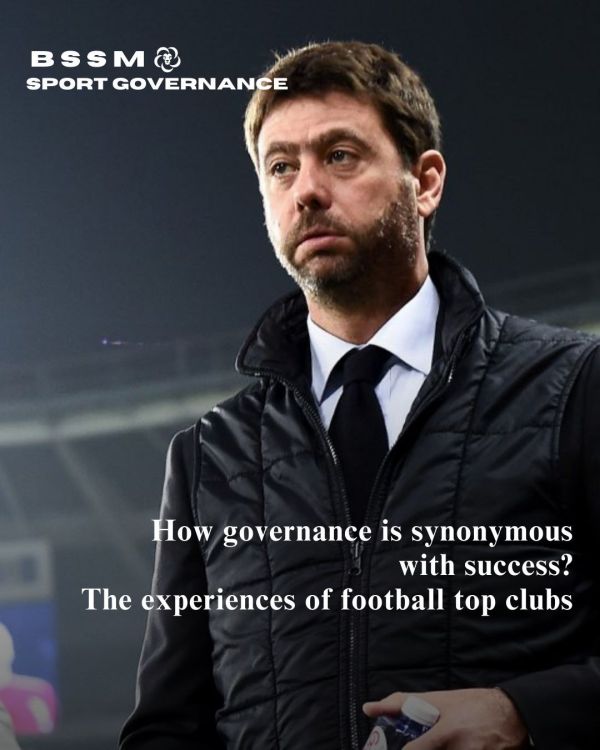
The most exemplary case of successful sports governance is that of Juventus, which has been led by the Agnelli family for nearly a century. The bond between the club and the Turin-based industrial dynasty is one of the longest-standing in the global football landscape and has been a decisive factor in the team’s growth and stability. Under the Agnelli leadership, Juventus has gone through eras of great success, becoming Italy’s most decorated club and one of the most respected football institutions on an international level.

In particular, in recent years, Andrea Agnelli implemented a governance model that led the club to dominate Serie A, securing nine consecutive league titles from 2011 to 2020. Agnelli’s management stood out for the construction of modern infrastructure, such as the Juventus Stadium, a strategy of brand internationalization, and financial management that combined ambitious investments with economic sustainability. However, Juventus has faced a financial crisis in recent years due to a combination of factors, including the economic impact of the pandemic, risky market operations, and difficulties in maintaining a sustainable balance sheet. These issues led to the end of the Agnelli era and a change in presidency, with Gianluca Ferrero taking over to restore the club’s financial health and bring back stability. This transition highlights how delicate the role of governance is in balancing sporting ambitions with economic sustainability.

Looking beyond Italy’s borders, Real Madrid perhaps represents the most emblematic example of successful governance. Under the presidency of Florentino Pérez, the club has adopted a management model that combines financial solidity with sporting ambition, focusing on a global expansion strategy, careful resource management, and brand enhancement. This approach has enabled the club to consolidate its leadership in world football, both in terms of trophies won and economic value.

Beyond Real Madrid, another international example of effective governance is Bayern Munich. The German club has distinguished itself for impeccable financial management and an organizational model based on sustainability and the active involvement of former players in management. Through a prudent spending policy, targeted investments, and a strong corporate identity, Bayern has maintained consistent competitiveness, winning numerous national and international titles without ever compromising economic stability. Bayern’s model demonstrates that solid governance does not only mean sporting success but also the ability to withstand global economic crises and ensure long-term growth.

The experiences of these clubs show that success is never a matter of chance but the result of effective governance, capable of combining financial sustainability with sporting competitiveness. At a time when football and sports in general are facing increasingly complex economic challenges, the role of solid and forward-thinking management becomes even more crucial. The balance between smart investments, cost control, and a clear strategy is the key to ensuring not only victories on the field but also lasting growth over time.

By Alessandro Caldera

THE IMPACT OF CLIMATE CHANGE ON THE FUTURE OF SKI RACING

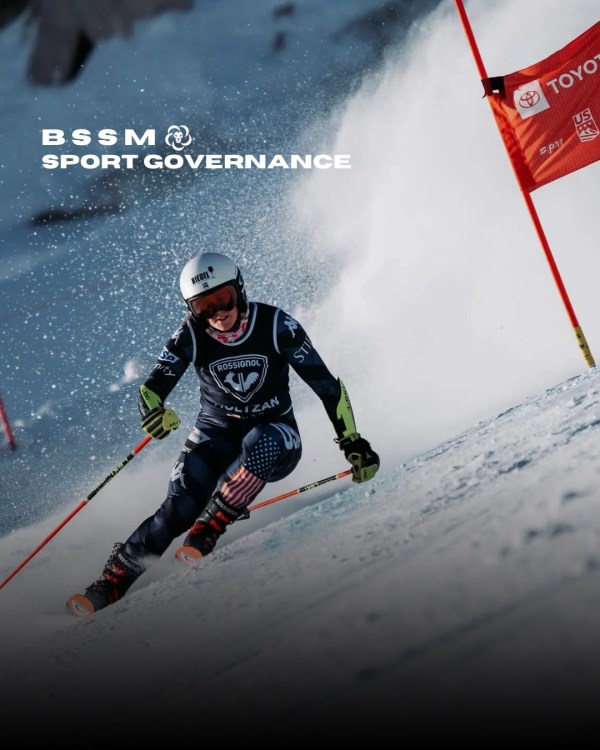
Climate change is no longer a distant concern but an immediate challenge that is significantly altering winter sports, particularly ski racing. This issue is becoming increasingly visible through changes in snowfall patterns, shorter ski seasons, and a growing reliance on artificial snow. These factors not only impact the sport itself but also on the economic stability of ski tourism.

The Effect of Rising Temperatures on Ski Seasons

In recent years, Europe has experienced unusually warm winters. For example, in January 2023, Switzerland recorded its highest-ever January temperature north of the Alps at 20.2°C in Delemont. This was part of what climatologists described as an extreme weather event. During this time, ski resorts saw spring-like conditions, with snow limited to narrow, artificial strips surrounded by green landscapes. Experts predict that such conditions, including “green Christmases” in the Alps, will become more frequent.

The Growing Reliance on Artificial Snow

Artificial snow has become essential for ski racing, as it creates a surface that meets the requirements of competitions. However, producing artificial snow is expensive. The costs for ski resorts range from $500,000 to over $3.5 million per season. The process depends heavily on energy-intensive equipment, such as water pumps and air compressors, which also require substantial water resources.

While artificial snow has enabled events like the Winter Olympics in Beijing 2022 to proceed, the environmental costs are considerable. For example, creating enough snow for the event required an estimated 185 million litres of water. As temperatures rise, even artificial snowmaking becomes challenging in warmer conditions, making it less reliable.

Economic Challenges for Ski Resorts

Climate change has serious financial implications for ski resorts. Shorter seasons mean reduced income from tourism, while significant investments in snowmaking equipment are necessary to maintain operations. Resorts that are unable to sustain snow coverage may lose opportunities to host major events such as World Cup races, leading to further economic losses. This creates a cycle where resorts struggle to stay profitable while simultaneously facing increasing costs.

Research indicates that by 2040, only ten countries will still have the ability to host snow sports, compared to many more today. Even in optimistic scenarios, the water consumption required for artificial snowmaking could double in some areas. These challenges threaten the future of ski tourism, particularly in regions like Austria and Switzerland, where it plays a vital economic role.

Industry Adaptation and Alternative Approaches

To address these issues, ski resorts and governing bodies are seeking ways to adapt. For instance, the International Ski and Snowboard Federation (FIS) has partnered with the United Nations’ World Meteorological Organization (WMO) to address the impacts of climate change on winter sports. This collaboration will focus on using scientific data to improve snow management and raise awareness of the challenges facing ski tourism.

Some resorts are also exploring ways to diversify their offerings. For example, Werfenweng in Austria provides activities such as alpaca hikes, horse-drawn carriage rides, and tobogganing to attract visitors during winters with less snow. Additionally, efforts are being made to develop more sustainable snowmaking technologies, such as methods that require fewer resources and can operate at higher temperatures.

The Future of Ski Racing

The future of ski racing depends on innovation and adaptation. Artificial snow will remain an essential component of the sport, but its production must become more efficient and environmentally sustainable. At the same time, resorts must find ways to adapt their business models to changing conditions by offering alternatives to traditional winter tourism.

The impacts of climate change are unavoidable, but with collaboration between researchers, sports organizations, and policymakers, it is possible to safeguard the future of ski racing and maintain the cultural and economic importance of winter tourism.

By Alexandra Taub

PARIS 2024 OLYMPICS: A COMPLEX GOVERNANCE SHARED BETWEEN MANY STAKEHOLDERS

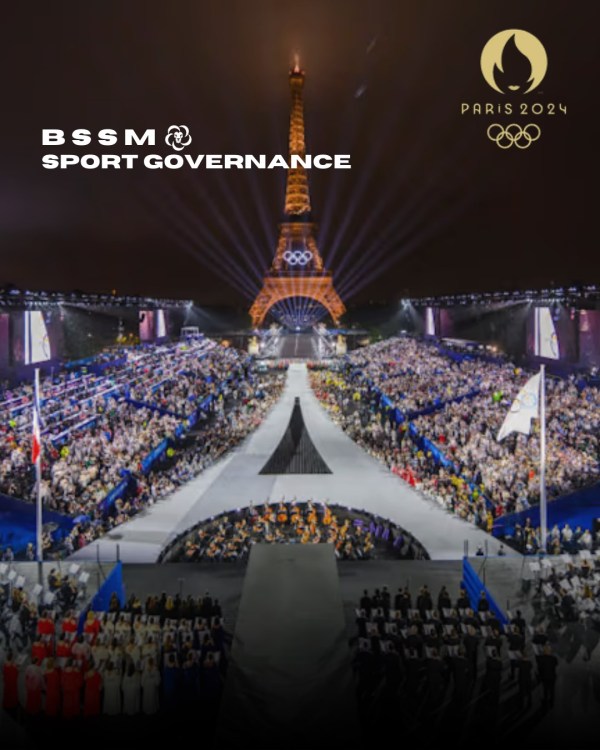
The Paris 2024 Olympic Games were one of the most anticipated international sporting events of the decade. More than a century after hosting the Games in 1900 and 1924, the French capital welcomed athletes from 204 nations, from July 26th to August 11th, 2024. They competed in 48 sporting disciplines over 329 events. These Games were an opportunity to celebrate not only athletic performance but also the values of inclusion, sustainability, and innovation that Paris aimed to highlight in this edition.

The stakes of these Games were going far beyond the sporting competitions. Interests on the economic, social and environmental as well as technical levels were definitely part of the occasion. Organizing an event of this magnitude required robust governance and coordination among several key bodies. The management of the 2024 Paris Olympic Games relied on a complex structure, involving a wide range of stakeholders, from international to local organisations and from public to private entities. This article delves into the governance of the Paris 2024 Olympic Games, exploring the roles and missions of the various governing bodies.

International Olympic Committee (IOC):

The International Olympic Committee was the international non-governmental organisation responsible for overseeing the Olympic Movement. It held significant power over the governance and execution of the Games, playing a supervisory role as well as providing guidance for the other governing bodies. It monitored that the provisions of the Host City Contract and international guidelines were respected, and that specific milestones were reached.

One of its main missions was to ensure that the Paris 2024 Olympic Games complied with Olympic Charter. This included promoting peace through sport, fair play, integrity and sustainability. The International Testing Agency, a subsidiary of the IOC, ran rigorous anti-doping controls before and during the Games.

The IOC was also in charge of ensuring that the Games met sustainability goals, reducing their carbon footprint and leaving a legacy that would benefit the local community. They promoted diversity and inclusion values as well, putting Human Rights and open mindedness at the centre of the Games.

In addition, the IOC controlled the sales of the media and broadcasting rights for the Games and managed the overall marketing of the Olympic brand. As a part of the TOP (The Olympic Partner) program, the IOC was also responsible for securing sponsorship from global companies.

Paris 2024 Organising Committee for the Olympic Games (OCOG):

The Paris 2024 Organising Committee was the main body responsible for planning, organising, financing, and delivering the Olympic Games, with a broad range of missions.

It managed all operational aspects of the Games, including sports event planning, ticketing, and volunteer coordination. It also supervised venue preparations, ensuring they were meeting the required standards for receiving the competitions and spectators.

Furthermore, the OCOG played a central role in handling the collaborations with the French government, local municipalities, and security forces. The goal was to make sure that public services such as transport, security, and healthcare were well integrated during the Games.

Besides, the Paris 2024 OCOG was in charge of promoting the Games domestically and internationally. It created and implemented marketing campaigns around the official Paris 2024 brand, including the logo and the iconic Phryges (mascots). The committee also oversaw ticket sales and fan engagement. Regarding sponsorship, the OCOG secured national partnerships with French companies.

A key objective for the OCOG was also to host the first “climate-positive” Olympic Games. In this way, they focused on renewable energy, sustainable venue design, and minimizing waste. The OCOG collaborated with the IOC and Solideo to meet these targets.

Solideo (Olympic Delivery Authority):

Solideo was the public sector organisation tasked with financing, supervising and delivering the Olympic facilities. This included the development and redevelopment work required to host the Paris 2024 Olympic. Beyond the immediate delivery of venues and facilities, its main goal was to settle long-term urban development impacts.

Solideo managed the construction and renovation of sports venues, the athletes’ village, and transportation links. This covered ensuring all venues were ready for the Games and met the standards set by the IOC.

On the one hand, Solideo worked in close collaboration with the Paris City Council, the Greater Paris Region, and the French government to align its projects with broader urban planning initiatives. This includes environmental commitments, with a focus on green spaces and sustainable construction practices. On the other hand, Solideo partnered with private companies to deliver key infrastructure. These collaborations were essential because it allowed the projects to be financially viable and completed within budget and timelines.

Paris City Council:

The Paris City Council’s role was to ensure that the capital was ready to host a sporting event of this magnitude. It oversaw key urban projects, such as the redevelopment of public spaces and improvements of the city’s transportation network. For example, metro lines were extended, and public facilities were adapted to accommodate the influx of visitors.

The City Council also coordinated public services during the Games, including waste management, public safety, and health services. It worked on improving accessibility for disabled people with disabilities, making the Games more inclusive.

In addition to the operational aspects, the Paris City Council focused on promoting Paris as a global tourist destination. Through cultural events and city branding, it aimed to maximize the Games’ economic impact on tourism.

Greater Paris Region:

The Greater Paris Region (called Île-de-France) surrounded a wider geographical area. Its role was to guarantee that the benefits of the Games go further than the city of Paris.

The region was heavily involved in the expansion and improvement of transportation networks. The objective was to make sure that athletes, officials, and spectators can move easily between venues, hotels, and public spaces across the region. This includes large-scale projects such as new tramways and metro line extensions outside Paris.

Moreover, the Greater Paris Region aimed to leverage the economic benefits of the Games by using the event as a catalyst for long-term development. In collaboration with the French government, Solideo, and Paris City Council, the region ensured a coordinated approach to infrastructure development and policy, putting together regional planning with the Games’ demands.

French Government:

The French government was involved in both funding and providing regulatory and logistical support for the Games. It took part in allocating national resources to meet the demands of hosting the Games.

To ensure the safety of athletes, officials, and spectators, the French government put security as a top priority, working closely with local police forces, the military, and intelligence agencies. It also oversaw cyber-security measures to protect critical infrastructure.

Moreover, the government provided financial backing for infrastructure projects through public-private partnerships. It collaborated with Solideo to ensure that projects were completed without too much overspending.

French National and Olympic Sports Committee (CNOSF):

The French National and Olympic Sports Committee acted as the representative of the French sporting world. Its role consisted in supporting athletes and sports federations. It also provided guidance on the sports program for the Games, ensuring it was reflecting both the ambitions of the host nation and the requirements set by the IOC.

Furthermore, the CNOSF was also responsible for promoting Olympic values such as respect, friendship, and excellence. It worked in collaboration with the OCOG on educational programs and initiatives to engage the public, particularly youth.

Partners (Sponsors and Private Sector):

Corporate partners played a crucial role in supporting the Games, both financially and operationally. Their involvement ranged from direct sponsorship to the provision of services and products. Sponsors provided essential funding, which helped cover the operational costs of the Games. We can quote major sponsors like EDF (Électricité de France) from the energy sector, Orange from telecommunications, Carrefour and Decathlon from retail, Samsung, LVMH, and Coca-Cola.

The contributions of sponsors and their collaborations with the OCOG and Solideo not only supported the financial structure but also improved the overall experience for spectators, athletes, and staff by bringing their products and services into the event. For example, EDF supplied renewable energy to power the venues, and Orange contributed to telecommunications infrastructure, ensuring robust digital connectivity for spectators, participants, and media.

Companies such as Veolia and Renault were also heavily involved in sustainability initiatives for Paris 2024. Veolia provided waste management and recycling solutions to help minimize the environmental footprint of the Games. Renault supported eco-friendly transportation by offering electric vehicles for event logistics and mobility services. Overall, these partnerships resulted in enhancing the Games’ sustainability and technological innovation.

The importance of collaborations among stakeholders:

The success of the Paris 2024 Olympic Games relied on a highly collaborative governance structure. Each stakeholder played a distinct but also very interconnected role. The OCOG, acting as the central coordinating entity and supervised by the IOC, worked closely with all stakeholders, including local governments and corporate partners. Solideo ensured that infrastructure was delivered on time, while the City of Paris and the Greater Paris Region collaborated to maximize the Games’ positive impact on the local population and economy. The French government provided support in terms of security, funding, and international relations, ensuring that the event runs smoothly.

This governance structure helped balance the operational demands of the Games with long-term legacy goals, making Paris 2024 Olympic Games a decisive event for both the city and the Olympic Movement.

By Benjamine Daniau-Fricotteau

Sources : https://olympics.com

THE BUDGET CAP ISSUE

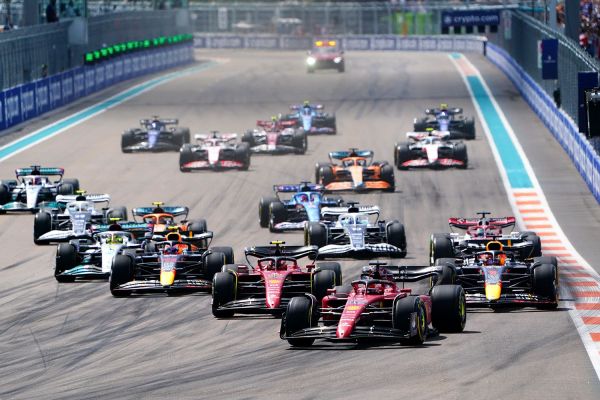
On October 11, 2022, an FIA statement significantly stirred emotions regarding the Budget Cap issue in Formula 1. The matter, which had already been known in previous weeks, took a sudden turn following Max Verstappen’s championship win, achieved with his first-place finish at the Japanese Grand Prix in Suzuka. Verstappen’s team, Oracle Red Bull Racing, alongside Aston Martin, was found guilty by the Fédération Internationale de l’Automobile (FIA) of violating financial regulations. However, there is a distinction between the two cases: while Aston Martin’s infraction was merely procedural (failing to include a budgetary item that should have been accounted for), resulting in a simple fine, Red Bull breached the cost cap, albeit to a lesser extent. 

The term “minor breach,” as stated in the FIA’s official communication, caused some confusion among Italian media, but the FIA’s interpretation refers to a violation below 5% of the $145 million Budget Cap, equating to $7.25 million. In the days leading up to the verdict, Red Bull worked with the FIA to argue that certain items should not be included in the Budget Cap, though the FIA disagreed. This effort allowed them to avoid falling into the category of a “material breach,” which would have resulted in more severe consequences. However, the situation remains significant. 

The aspect raising the most doubts is the fact that this regulatory infraction pertains to the 2020-2021 season. This season was notably won by Red Bull driver Max Verstappen in the final race against Lewis Hamilton. Initially, economic reports suggested that Red Bull made illegal modifications to the rear wing to generate greater downforce. However, more recent reports indicate the team exceeded the Budget Cap due to personnel vacation costs and post-race catering expenses. Nonetheless, these claims, which Red Bull has not denied, should not be automatically accepted as true, given that penalties also depend on which budget items were involved. Consequently, it could be in Red Bull’s interest to promote such narratives. 

A post on Red Bull’s social media channels does not indicate any intention from the team to admit guilt or back down, suggesting that this matter could persist for some time. Meanwhile, the FIA has reserved the right to decide in the coming days. Potential penalties, which can be combined, include: 

– Public reprimand; 

– Fine; 

– Exclusion from sessions, except the race; 

– Limitations on wind tunnel usage for future developments; 

– Budget Cap reductions for future seasons. 

These are the most probable sanctions, though there is concern that this dangerous historical precedent might lead other teams to exceed the Budget Cap deliberately to win a championship, accepting minor penalties in the following season—or, as in this case, two years later. For this reason, two additional sanctions could be more appropriate: 

– Deduction of points in the 2020-2021 Constructors’ Championship (won by Mercedes); 

– Deduction of points in the Drivers’ Championship, leading to the 2020-2021 title being awarded to Lewis Hamilton. 

Further developments are sure to follow, as the 2020-2021 World Championship is once again under scrutiny. For the FIA, this will be a historic decision, which could take more time to finalize. Regardless of the outcome, one thing is certain: from this moment on, Formula 1 will never be the same. 

By Spampinato Antonio

STORM OVER BARCELONA: THE CLUB ACCUSED OF CORRUPTION FACES CHAMPIONS LEAGUE RISK

The Blaugrana club is in crisis over the Negreira case: serious penalties are being considered, including exclusion from European competitions and the dissolution of the club.

September 28, 2023 – Barcelona is facing a serious situation due to the “Negreira case.” The police conducted searches at the Spanish Football Federation and the headquarters of the referees’ body. The Catalan club has been accused of making substantial payments, totaling around 7.5 million euros, between 2001 and 2018, to former referee and vice-president of the Spanish refereeing body, José María Enriquez Negreira.

Currently, Joaquín Aguirre, the investigating judge at Court Number 1 in Barcelona, is leading the investigation. He has issued an order against the club and former presidents Sandro Rosell and Josep María Bartomeu, stating that the payments made “served the interests of the club,” producing “the desired refereeing effects for Barcelona, with a disparity of treatment compared to other teams.”

According to Aguirre, the offense is not only a sports-related matter but also a criminal one. The judge has recently modified the charge from “corruption of individuals” to “corruption of authorities or public officials” since, at the time of the events, the Spanish Football Federation, from which the Technical Refereeing Committee was dependent and of which Negreira was vice-president, “carried out public functions,” thereby aggravating the potential penalties.

According to the Spanish newspaper El Mundo, the Catalan club could face bankruptcy if convicted, as “as a legal entity, it should be punished with a fine ranging between three to five times the profit obtained, which should be calculated based on the profits made from titles won in the 18 years of allegedly manipulated competitions.” The judge, according to El Mundo, could also order “the closure of premises, the stadium, suspension of activities, ban from competitions, and even dissolution” of the club.

As for sports competitions, UEFA, in its official statement, has decided to admit Barcelona provisionally to the upcoming Champions League edition, while for La Liga, the case has expired since the last Discalia report dates back to 2018, and according to Article 112, “more serious infractions are prescribed after three years.”

By Chiara Arsieni

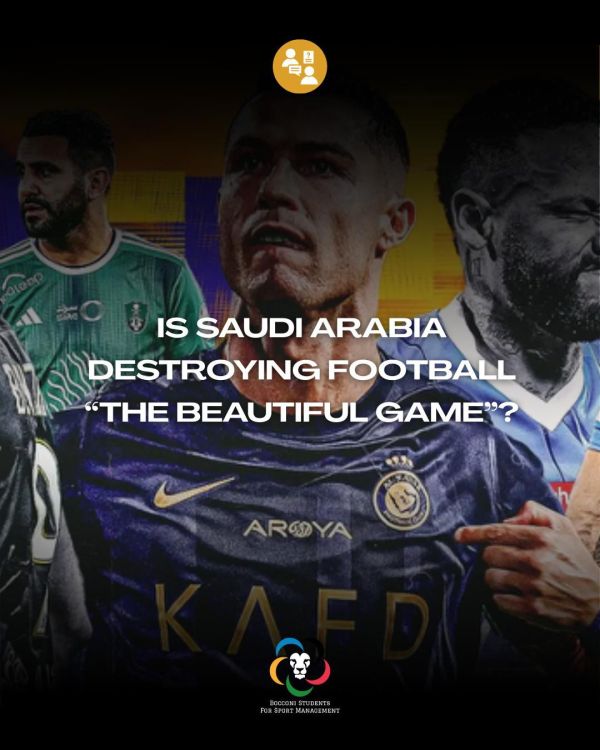
2030 WORLD CUP IN MOROCCO, PORTUGAL, AND SPAIN… A SETUP FOR RIYADH?

One year away from the official announcement, the names of the countries that will host the 2030 World Cup are already circulating, but Saudi Arabia can be considered the real winner.

Although it will still be a year before the official vote by the FIFA Congress, it is essentially decided: Morocco, Portugal, and Spain will organize the 2030 World Cup.

This will be the first time Morocco and Portugal host the tournament, and the second time for Spain, after the 1982 edition, a World Cup fondly remembered in Italy. The three-country formula will be repeated, following its debut in 2026 with Canada, Mexico, and the United States. Moreover, it will be the first World Cup held across three continents. To “best celebrate the Centennial World Cup,” FIFA has announced that three opening matches will be played in Argentina, Paraguay, and Uruguay. This unprecedented decision has sparked considerable debate.

The anger and astonishment of many, including “Football Supporters Europe,” the only fan group officially recognized by UEFA, which has called the 2030 and 2034 editions “the end of the World Cup as we know it,” stem not only from the environmental and logistical challenges for players and fans but also from the implications for the allocation of the 2034 edition. According to FIFA regulations, countries from confederations that have already hosted a previous World Cup are banned from submitting bids for the next edition. Effectively, only Asia and Oceania will be able to host the 2034 World Cup.

The response from the Saudis was quick. An hour after FIFA’s announcement, the Saudi press agency issued a statement in which Prince Mohammed bin Salman expressed his country’s interest in hosting the World Cup. With the backing of the president of the Asian Football Confederation, which includes Australia, Saudi Arabia is nearly certain to win the bid, following a joint bid attempt (which was later withdrawn) with Greece and Egypt for the 2030 World Cup.

The only obstacle to Saudi Arabia’s triumphant bid could be the uncertain Australian candidacy. However, it faces an almost impossible deadline of October 31, 2023, to confirm its interest in an unusually short process that will conclude with the final decision in 2024. Beyond the deadline, the Socceroos will need to partner with countries from New Zealand and Southeast Asia. They are also likely to be penalized due to hosting the recent Women’s World Cup.

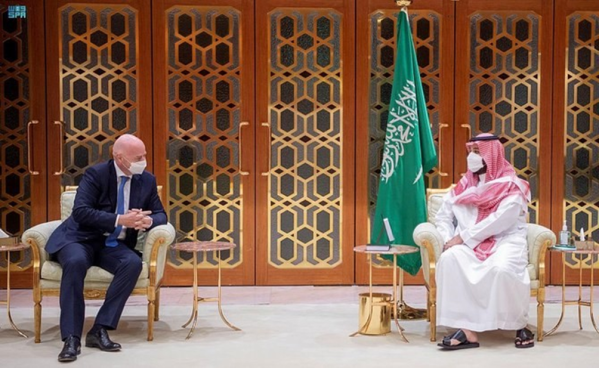
If that’s not enough, the last World Cup in Qatar offers another clue: at the 2022 Qatar World Cup opening ceremony, Prince Mohammed bin Salman was seated next to Gianni Infantino… A goal with an open net?

By Federico Petrella

Sito web creato con WordPress.com.

Su ↑