FOOTBALL OR SOCCER: WHICH IS BIGGER?

On February 12, the National Football League (NFL) championship final was held in the United States between the Philadelphia Eagles, NFC champions, and the Kansas City Chiefs, AFC champions, who claimed victory, securing their third Super Bowl title ever.

As every year, the anticipation was enormous, not least because the Super Bowl is not merely a sporting event but rather a mix of various kinds of entertainment. This explains the immense media attention it garners annually and its popularity outside the United States, even in countries like ours, where the number of American football fans is certainly smaller. This often leads many, both insiders and others, to claim that American football is a bigger business than European (and global) soccer.

The question is undoubtedly complex; thus, the aim of this article is not to provide a definitive answer but rather to offer a reflection on the topic based on solid data.

To do this, let us start with an initial comparison between the 2023 Super Bowl and the World Cup final held in Qatar last December 18. Before presenting the data, it is worth emphasizing one key difference between the two events: while the Super Bowl occurs annually, a World Cup final takes place every four years. Nevertheless, there is no comparison in terms of viewership. According to FIFA data, 1.5 billion viewers watched the Qatar World Cup final on TV—a number that shattered all previous records—while this year’s Super Bowl recorded a still respectable figure of about 113 million viewers.

Shifting to a broader perspective, considering the entire NFL season instead of a single event, we see the other side of the coin: revenue generation and TV rights, where the American competition reigns supreme. It is estimated that FIFA generated $7.5 billion in revenue from the 2022 World Cup, whereas the NFL produces approximately $17 billion every single season. TV rights contribute significantly to this figure. As reported by Il Sole 24 Ore, the NFL signed new TV rights agreements with CBS, NBC, Fox, ESPN, and Amazon worth a total of $110 billion, nearly doubling previous contracts. These agreements will come into effect in 2023.

The comparison with the numbers from global, European, and Italian soccer is stark. Regarding the last World Cup, RAI in Italy reportedly secured the TV rights for an amount between €150 million and €160 million (according to Calcio e Finanza). Staying within the Italian market, Serie A is worth €840 million per season, totaling €2.5 billion for exclusive coverage of seven matches per week on all DAZN platforms. Meanwhile, the Champions League, spanning five markets (France, the United Kingdom, Germany, Spain, and Italy), brought UEFA €1.5 billion in revenue during the 2018-2021 triennium.

European figures also pale in comparison to another global sports business giant, the NBA, which, according to Il Sole 24 Ore, earns $8 billion annually from TV rights.

In addition to TV rights revenue, NFL franchises benefit from significant income streams from ticket sales (with an average of over 60,000 spectators per game), merchandising, and sponsorships. The latter are steadily growing, focusing more on partnerships with the league and championship as a whole rather than individual clubs.

Comparing total revenues generated, the top five European leagues—Premier League, La Liga, Bundesliga, Serie A, and Ligue 1—collectively generate less income annually than the NFL alone, despite their significantly larger fan base and audience. This striking contrast between fan numbers and total revenue may help explain why one of the driving forces behind the Super League project was rooted in this disparity.

By Rodolfo Bianchini
SERIE A TV RIGHTS CONUNDRUM: WHAT’S HAPPENING?

With 158 votes in favor, 3 against, and 3 abstentions, on Wednesday, February 15, the Senate approved a government amendment abolishing the possibility of extending sports broadcasting licenses to five years. Let’s take stock of the situation surrounding Serie A, DAZN, Sky, and the potential entry of Prime Video into Italy’s top sports scene.

On February 14, Serie A issued a statement after the club assembly, supporting an amendment proposed by Senator Claudio Lotito, Lazio’s president. The statement highlighted that “the possibility of a maximum two-year extension of existing contracts with DAZN and Sky for the 2021-2024 audiovisual rights represents a very useful option, which, while neither automatic nor binding, strategically aids the League and its Associates in ensuring the best and most efficient valorization of Serie A in the coming years.”

However, the proposal for an extension, stemming from the majority coalition that Senator Lotito is part of, was struck down by the amendment, sparking surprise from Serie A president Lorenzo Casini. He clarified that the extension aimed not to favor any particular party but to ensure “better procedures and negotiations.” The official note emphasized that the extension would impose no burden on public finances, as the League hoped to “pursue all possible actions to best enhance the football industry, whose revenue and tax contributions sustain all Italian sports.”

DAZN and Sky, currently paying €840 million and €87.5 million respectively (Sky for three co-exclusive matches) for a total of €927.5 million per season until 2023/24, have yet to comment. However, their support for extensions seems inevitable. Serie A aims to buy more time, as, unlike the lucrative Premier League, the Italian product struggles to fetch around €1 billion due to declining appeal, outdated facilities, and recent judicial issues involving Italy’s top team internationally.

Meanwhile, Antitrust calls for lower prices and broader distribution of football content. Could Sky reclaim exclusive rights to Italian football? And would they outbid London-based DAZN?

As reported by Milano Finanza, speculation about Amazon’s Prime Video entering the mix is gaining momentum. After securing rights to 16 exclusive UEFA Champions League matches and given its vast financial resources, could Prime Video be a plausible contender for Serie A rights?

The future of Italian football’s TV rights is shrouded in uncertainty and unpredictable scenarios. Yet one thing is certain: the Premier League remains far ahead of all other European leagues. Much work lies ahead for Italian sports structures to regain international appeal and attempt to compete with their English counterparts, who currently seem uncatchable.

By Luca D’Addario

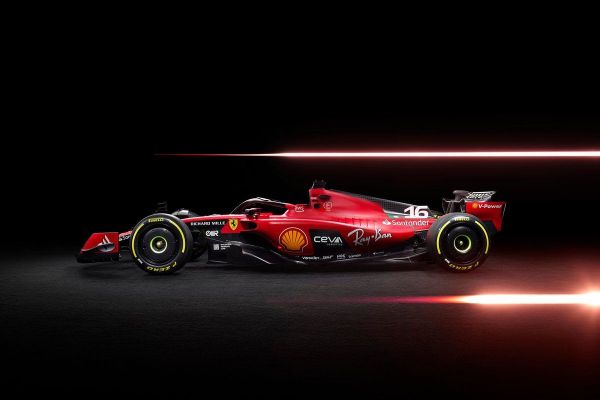
FERRARI: THE NEW SF-23 UNVEILED

On February 14, Ferrari unveiled the new SF-23, the single-seater from the Maranello stable set to hit the track for the 2023 F1 championship, now just around the corner. The news of its presentation, followed by the subsequent show, created a stir among fans of the Prancing Horse, but also brought pressure.

And rightly so, as last season was more positive for Ferrari compared to previous years: the team returned to victory. However, what began with high hopes ended in disappointment, leaving the realization that perhaps the pit wall lacked the experience and prestige of rivals such as Red Bull and Mercedes.

The two drivers expressed high praise for the new car, whose design takes inspiration from last year’s model but incorporates numerous innovations. Why be optimistic? Because it stems from a strong foundation (the F1-75) and is not merely an evolution. It marks the culmination of a process, with targeted interventions primarily in two areas.

One of last year’s car’s weak points—reliability—should now be resolved. The engine, which in 2022 never operated at full power and was later downgraded to conservative mappings following failures in Barcelona and Baku with Leclerc, and in Austria with Sainz, is expected to deliver an increase of at least 20 horsepower without breaking.

The other major flaw was the performance drop-off during race pace compared to qualifying, particularly evident in the latter half of the season: the rear tires tended to wear quickly in slow corners due to lateral sliding caused by a lack of aerodynamic load. To address this issue, extensive research on the underbody was required to better utilize airflow and improve grip at low speeds, without compromising performance at high speeds. This process involved gradual steps, utilizing simulators and wind tunnel tests, with a series of aerodynamic tweaks invisible to the naked eye.

For the unveiling, Ferrari made no secret of its ambitions, conducting laps at Fiorano with both drivers. While these were not proper tests and no conclusions can be drawn, Leclerc’s radio message to Sainz, saying, “I’m not letting you take it,” referring to a driver switch during the laps, offers hope for a strong season.

A reflection is necessary, though: it’s true that the atmosphere at Ferrari is different. Binotto is gone, replaced by a daring Vasseur, who appears very optimistic and enthusiastic about this season. However, Vasseur’s contribution to the development of the SF-23 has been minimal, as most of the work was done during the previous season under the direction of former TP Mattia Binotto. This doesn’t imply inefficiency—in fact, quite the opposite—but it does mean that Vasseur cannot be blamed for potential shortcomings in the car’s development.

Another consideration is that Mercedes appears to be in form this year, judging by the end of last season. Lewis Hamilton, coming off the first winless season of his career, will be highly motivated, and early rumors suggest the German team could be the true surprise of the season. It is unlikely they will falter for two consecutive years, presenting Ferrari with another serious competitor for the title. Under a Ferrari presentation post, Mercedes even teased the team. Yet the stakes remain open, and only time will tell.

Finally, presenting the car on Valentine’s Day may not be a coincidence—perhaps it’s a sign that fans will fall madly in love with the SF-23.

By Antonio Spampinato

JUVENTUS RISKS MORE THAN EXPECTED

On January 19, 2023, shocking news shook Italian football and could potentially have repercussions across Europe.
The Federal Court of Appeal of the FIGC accepted the prosecutor’s request to reopen the “capital gains case,” thereby revoking the initial verdict and reopening the sports proceeding against the club. Juventus was penalized with a 15-point deduction in the standings, and sanctions were imposed on 11 of its executives. Among the sanctions, Paratici received a 30-month ban, Agnelli and Arrivabene 24 months each, Cherubini 16 months, and Nedved, Garimberti, Vellano, Venier, Hughes, Marilungo, and Roncaglio 8 months each. The court confirmed the acquittal of the other eight clubs involved (Sampdoria, Pro Vercelli, Genoa, Parma, Pisa, Empoli, Novara, and Pescara) along with their administrators and executives.

The case had initially been closed in previous months due to a lack of evidence proving the club’s guilt. However, the provision for case reopening under “revocation” allows a trial to be reopened if new facts emerge, or if existing facts that were previously unavailable are brought to light. If these facts had been known during the initial trial, they might have led to a different outcome. In such cases, the principle of ne bis in idem is overridden to uncover a new truth.

Although the reasons for the ruling have not yet been released, preliminary reports suggest that the penalties do not target individual transactions but rather the “system” allegedly implemented solely by Juventus. It seems the court deemed that Juventus’ modus operandi violated the principle of fairness (Article 4 of the sports justice code), as player valuations were not based on technical considerations but rather on “accounting cosmetics.” The court appears to have judged the situation with substantial severity. While the General Prosecutor of Turin had recommended a 9-point penalty, 15 points were ultimately imposed, likely reflecting the gravity of the evidence presented.

What is surprising is that the initial statements from Juventus executives, echoed within the club’s ecosystem, oscillated between conspiracy theories (suggesting political retaliation for the creation of the Super League) and victimhood (claiming “others did it too, yet only we are punished”).

However, the reality is more nuanced. It is clear that many sports clubs are currently grappling with significant economic difficulties, rendering the management of football clubs increasingly unprofitable due to rising player salaries, high operating costs, and revenue shortfalls exacerbated by the COVID-19 crisis. It is likely that several clubs adopted similar practices to balance their accounts. Yet, Juventus, as a publicly listed company, was subject to specific accounting obligations and principles that do not apply to other clubs, potentially leading to charges of false accounting.

Juventus has announced its intention to appeal. Within 30 days of receiving the full reasoning for the ruling, the club can file an appeal with the Sports Guarantee Board at CONI, which can only address procedural legitimacy rather than the merits of the case. The board may annul the ruling, uphold it, or remand the case to the court for a retrial. Subsequently, Juventus could appeal to the Lazio Regional Administrative Court (TAR) and then to the Council of State.

As of now, the points deduction has dropped Juventus to 10th place in the standings, tied at 22 points (now 23 after a draw with Atalanta) with Empoli and Bologna. With 15 points deducted, qualifying for the Champions League is now a challenging objective, and the club’s stock value has fallen by 8%, dipping below 30 cents.

Furthermore, UEFA is closely monitoring developments. On December 1, it launched its own investigation, based on the Prisma inquiry and the Consob probe, into possible violations of financial fair play. These violations may relate to the salary maneuver during the COVID-19 crisis. In September, Juventus had agreed to return within fair play parameters within three years, paying a €3.5 million fine, which could rise to €23 million if the commitments are not met. However, if Juventus is found guilty of falsifying financial statements under investigation—statements on which the settlement agreement was based—UEFA could impose heavy sanctions, including exclusion from European competitions.

Additionally, March will bring a ruling from the European Court regarding the Super League dispute.

On the salary issue, the so-called “Ronaldo Letter,” recently published by Corriere della Sera, has also come to light. Dubbed “the document that wasn’t supposed to exist,” it is now in the hands of the Guardia di Finanza and investigators examining the Juventus case. This “side letter” stems from the salary maneuver during the 2020–2021 season, involving fictitious waivers of monthly payments by some players. The document states that Juventus was to pay Cristiano Ronaldo €19.5 million as part of a Supplementary Bonus Agreement by July 31, 2021. However, this document was never filed with the Italian Football League. While Ronaldo himself is not at risk, and may choose to join the legal proceedings as a civil party, Juventus faces significant repercussions on this front as well.

This situation likely explains the decision by Agnelli and the entire board to resign months ago, an attempt to distance themselves from a scandal that has now erupted and shows no signs of dissipating. Meanwhile, the players, deeply affected by the situation, must demonstrate unity and resilience to overcome off-field challenges, especially for the true victims of all this: the honest and unsuspecting fans, who certainly do not deserve a football world once again tarnished, much like on that infamous December 14, 2009, when Calciopoli shook Italian sports.

By Antonio Spampinato

“BREAK POINT,” “DRIVE TO SURVIVE,” “ALL OR NOTHING”: TV SERIES AS A VEHICLE FOR SPORTS PROMOTION

The promotion of sports also passes through its representation on the small screen: now, the phenomenon of TV series has reached the world of sports, with the recent release of Break Point on Netflix. This series narrates the stories of some of the most talented tennis players in the world as they navigate the sports season, aiming to bring home the trophies up for grabs. Among them is the Italian Matteo Berrettini, who finds himself in the spotlight of the show.

Presenting sports in a way that is accessible to series enthusiasts has already been an idea brewing in the minds of producers for some time. Among the most successful examples is Drive to Survive, produced by BoxToBox Production, which also created Break Point. It recounts the ups and downs of a Formula 1 season, offering an inside look at the emotions, stories, and conversations within the teams, from both drivers and team principals. The production company also has plans for future releases, including a series on golf titled Full Swings, another on the Tour de France, and one on the recent Qatar World Cup, set to be released later.

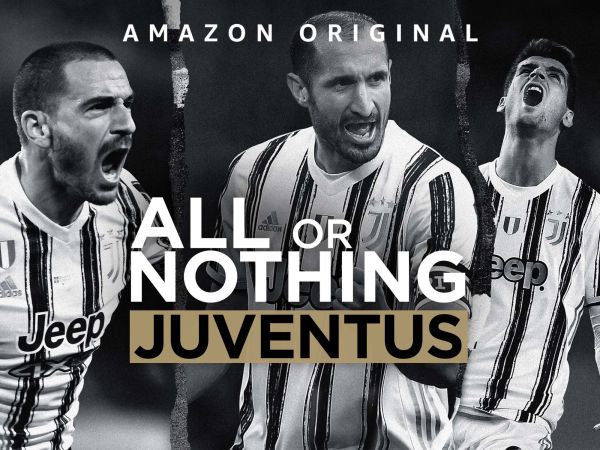
Moreover, how can we not mention the now-famous series All or Nothing? It began with American football, moved to rugby, and later entered the world of soccer, where it gained maximum visibility. This series also delves into the internal workings of a team as it approaches a sports season, exploring in depth the management of an entire sports organization as well as the team itself.

These productions have allowed countless fans to discover the less visible side of athlete preparation for sporting events. Athletes lay themselves bare before the camera, sharing emotions, thoughts, and even explanations of certain events, such as injuries, transfers, accidents, triumphant victories, and painful defeats. In short, these series offer a 360-degree view of what characterizes the life of a professional athlete.

Indirectly, this has also expanded the visibility opportunities for both athletes and teams, and therefore for organizations, which have realized the economic potential of such content. Showcasing the behind-the-scenes of the sports world inevitably attracts more fans to follow the sporting events these organizations are part of. From an economic perspective, this represents a potential advantage, although, as always, everything depends on the performances delivered on the field or on the track.

In conclusion, sports too have opened their doors to global broadcasting, striving to create increasingly captivating products for the general public. These efforts are also aimed at gaining competitive advantages over other organizations in terms of revenue and visibility, particularly in countries where these sports are still developing, but also in places where they are already well established, with the goal of strengthening fan and supporter loyalty.

By Marco Munari

EXPLORING JAPANESE SOCCER: FROM SCHOOL CHAMPIONSHIPS TO QATAR 2022

A Saikeirei bow. With this gesture, the coach Hajime Moriyasu bids farewell to Japan’s World Cup journey in front of Japanese fans after their penalty shootout defeat to Croatia. A special, heartfelt bow, the most significant and profound one in Japanese tradition. A simple, yet meaningful gesture after he had hugged and consoled each of the 26 “samurai” who took part in the Qatar 2022 campaign at the end of the match.

Thus, the team from the Land of the Rising Sun leaves Doha, but this World Cup will hardly erase the indelible mark it has left. And no, we’re not only talking about the incredible comebacks against Spain and Germany, or even the remarkable first-place finish in the group. We’re speaking of a much greater lesson, a lesson of education, civility, and pure sportsmanship that best embodies the spirit on which Japanese football tradition is founded.

It was 1921 when the first historic Japanese championship was held by the Japan Football Association. Even back then, the true core of the entire system was the world of schools. In fact, football would remain a sport limited to academic circles for many years, a minor sport compared to the hugely popular baseball. Above all, the country’s organisational structure dictated that the relationship between sport and education was inseparable: the students had to follow strict discipline and achieve excellent grades in their studies. Talent alone wasn’t enough to be a player; every single boy had to be prepared to compete, particularly with the high standards of the working world, and be trained as well as possible to ensure the best professional contribution within companies. But the jolt—or rather the true turning point in Japanese football—came in response to the horrific events that marked an era: the atomic bombs on Hiroshima and Nagasaki in August 1945. Indeed, the 1964 Tokyo Olympics, after they were cancelled during the Second World War, marked a chance for redemption for an entire population, and Japan in particular didn’t want to be unprepared as the host nation. In 1960, with the surprising victory of a team founded by an electric company, the academic academies’ dominance was broken, finally making room for investments from large companies. In the meantime, Japan began to showcase its incredible achievements at the Olympics, beating formidable Argentina 1-0, and proving that this sport was on the rise.

Toyota, Mitsubishi, and Toyo (now known as “Mazda”) were among the most influential names that began shifting their capital towards the burgeoning football world. This created a true domino effect for Japan in the coming decades: the emergence of major sponsorship deals with corporate giants like Toshiba, the memorable bronze at the 1968 Olympics, the introduction of a second division in 1972, and the establishment of the definitive J-League in 1992, which is still Japan’s top league.

Excitement and enthusiasm grew exponentially, fuelled by the parallel growth of football in neighbouring South Korea. Sports marketing continued to expand, with the entry of sector leaders such as Mizuno and Sony. Japanese football was on a complete upswing, and on November 8, 1992, Japan won its first trophy: the national team of the Land of the Rising Sun lifted its first Asian Cup after the final victory over Saudi Arabia.

In total, Japan has lifted the Asian Cup four times (1992, 2000, 2004, and 2011). And it was with an Italian coach, Alberto Zaccheroni, that they brought home the last one to date in 2011.

An exciting football movement that grew in schools and rose to dominate the Asian scene, thanks also to investments from Japanese corporate giants. A perfect combination of sporting values and academic education, which makes Japan’s national team one of the most respected and loved, and still today includes as many as 13 national players out of 26 recruited from high school leagues. The locker rooms left perfectly tidy before leaving the stadium after the match and fans cleaning the stands after the final whistle are just the latest examples of the noble Japanese spirit: “wakon yosai.”

In short, yet another lesson in civility reaches us from the Far East, a ray of light and hope from the Land of the Rising Sun that brightens the darkness of scandals and controversies surrounding global football today.

Thank you, Japan.

By Luca D’Addario

THE MOROCCO FAIRYTALE: LUCK OR STRATEGY?

In a World Cup that has so far not delivered any major surprises, as almost all the big national teams expected have reached the quarter-finals, one of these teams seems to be the “black sheep.”

The Moroccan national team, in fact, despite unfavourable predictions from the group stage onwards, has managed to capture headlines with great astonishment from all.

In World Cup history, Morocco has participated six times.

In a group with Croatia, Belgium, and Canada, Morocco was expected to finish third, perhaps at best competing briefly with Croatia for the second position, but with Croatia ultimately prevailing. Reality overturned these predictions: Morocco first, Croatia second, Belgium out in the group stage.

Furthermore, in the round of 16, the African team faced Spain, ironically the founder of the Spanish Protectorate of Morocco—the portion of Morocco administered by Spain under a protectorate regime from 1912 to 1956, the year of the revolution that led to Morocco’s independence, with Tetuan as the capital. During those years, specifically in 1926, the Spanish Civil War began from Morocco: the Alzamiento of General Francisco Franco on July 17, 1936, took place right in Tetuan. The protectorate ended, also thanks to the intervention of the French protectorate, which was in favour of independence.

Many players on that national team have dual nationality: Bounou, Dari, Sabiri, Boufal, Harit, El-Nesyri, and Hakimi.

This match must have meant something extra to them. And in fact, three of them were crucial to the victory in the penalty shootout against Spain, against the colonial past, for themselves and for their nation. Bounou, a vigilant game over the 120 minutes, faced few risks, also thanks to Spanish mistakes in front of goal, and excelled in the penalty shootout, with two saves, a well-timed dive when Sarabia hit the post, and shutting down any attempt at entry.

Boufal, a player with impressive technique, who, if more consistent, would have had a top-player career, shone at the World Cup: 1-on-1, systematically beating Laporte, then delivering refined crosses from the wing, creating havoc in the opposing defence.

And finally, Hakimi, the top player: perfect defensively, and offensively beyond words. Then came the responsibility of the penalty, a defining moment for the game and Moroccan football history, which he confidently converted with a panenka. Man of the match.

But Morocco’s first-ever arrival in the World Cup quarter-finals is not luck. A team that, although never having exceeded 40% possession in their games so far, has proven dangerous with their two full-backs, counter-attacking with vertical passes, showing technique, and, above all, being solidly covered in all areas of the pitch. In last year’s Africa Cup of Nations, where they were eliminated in the round of 16 by Egypt, Morocco played a patient game, with high possession, numerous tight exchanges, but it seemed a sterile style of play—much like Spain’s at this World Cup.

The victory was the result of careful study by coach Hoalid Regragui of his best players’ strengths, opponents’ weaknesses, and the best strategy, even to the point of challenging himself by playing a style of football he had never favoured before.

But there’s more: a national team that had never been this strong is the result of an organised youth development effort, with many young players sent abroad to learn tactics later, but first being the same young players you see on the streets in any Moroccan city—something sorely lacking in the Italian system, which is too focused on tactics and perhaps, in the early years, should let young talents express themselves freely. Finally, this match also highlights a decline for Spain, a game no longer surprising, almost predictable, lacking finishers, with a desperate focus on possession without enough verticality, but the most critical aspect of the result may be the lack of personality: like in the European Championship, they exited on penalties, without scoring even one. The last of these, missed by Busquets—perhaps the least charismatic captain in Spain’s history—extinguished their hopes. And who knows if Sergio Ramos, the former captain deliberately left out, could have changed the fate of the Spanish national team.

By Antonio Spampinato

BINOTTO RESIGNS FROM FERRARI: WHO WILL BE HIS SUCCESSOR?

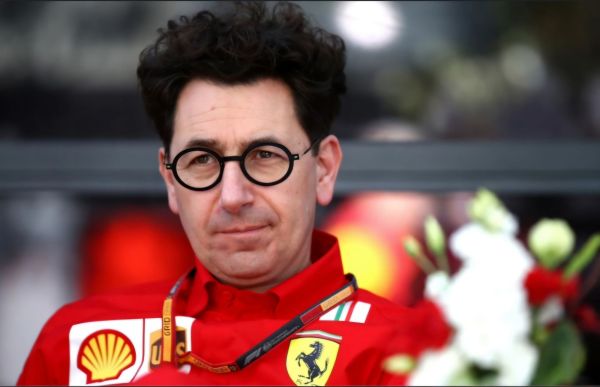
After four seasons as team principal, plus years as technical director and an iconic engineer within the most famous team in the world, Mattia Binotto will end his tenure at Ferrari on December 31, following his resignation on November 29. This marks the end of a 28-year working relationship with the Prancing Horse. Binotto will still play a role in constructing the new 2023 car at Fiorano Modenese.

The split between the Lausanne-born engineer and Ferrari had been anticipated for some time. Factors include the car’s lack of reliability—think of the Monaco, Silverstone, and Hungary GPs—the strained relationship with Leclerc, a modest record of only seven wins in 82 Grands Prix under his leadership, and his decision to take on a centralised role without delegating to a technical director or political coordinator. This approach ultimately led to an overwhelming concentration of responsibilities on him and the decision to part ways with the Modenese team.

Within Ferrari, several names are circulating as possible successors. The governance, particularly John Elkann, is leaning towards restoring a “triumvirate” model to distribute responsibilities and foster a more organised environment. Benedetto Vigna, Ferrari’s current CEO, appears to be the frontrunner for the political role, while Simone Resta may return as technical director after his experience with Haas.

For the team principal role, many candidates have been mentioned. However, some, like Christian Horner, Andreas Seidl, and Ross Brawn, have either declined or ruled themselves out. Currently, two leading names are Frédéric Vasseur, Alfa Romeo Racing’s team principal, who has previously worked with Leclerc but does not entirely convince Elkann, and Jonathan Giacobazzi, former executive race manager for Ferrari.

At the FIA General Assembly on Wednesday, December 7, held in Bologna, Laurent Mekies, Ferrari’s racing director, represented the team. Mekies has worked alongside Binotto at the pit wall and his involvement has boosted his standing as a potential replacement. However, this may be an interim solution until a final decision is made.

Ferrari is still narrowing down the field for the right candidate, with fans hoping for a return to peak competitiveness. It has been 15 years since Raikkonen’s last drivers’ championship in 2007 and since Ferrari’s last constructors’ title in 2008. For Ferrari’s loyal supporters, this wait for a world champion driver and a leading constructor title has been far too long.

By Marco Munari

THE EXTRAORDINARY 2022 OF ITALY’S VOLLEYBALL TEAM!

2022 is a year that all Italians, and especially volleyball fans, will remember for a lifetime: filled with emotions, achievements, and, above all, hard work and sacrifice!

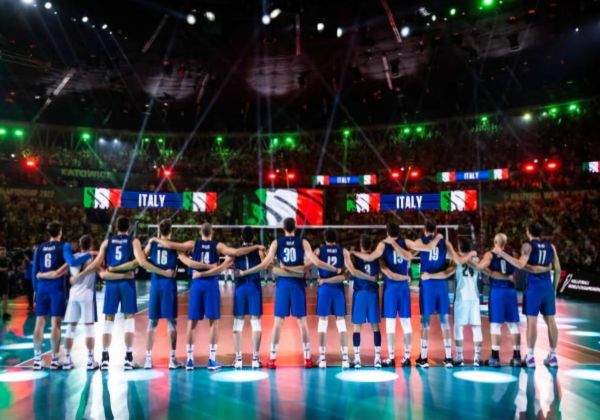
In the senior category alone, Italy captured a gold medal in the Men’s World Championship, took first place in the Women’s VNL, and won bronze in the Women’s World Championship. To this, we can add six incredible European Championship victories in all youth categories, along with gold for the women’s team and bronze for the men’s team at the Mediterranean Games. In global rankings, both the men’s and women’s national teams are among the world’s best: both are in second place, with the women’s team just two points behind the world champions, Serbia.

Beyond indoor volleyball, the achievements in beach volleyball and sitting volleyball are equally commendable. In beach volleyball, the pairing of Nicolai-Cottafava triumphed in the Beach Pro Tour – Elite 16 and is currently ranked seventh in the World Rankings. On the sitting volleyball front, Italy’s women’s national team clinched gold in the Golden Nations League. As European runners-up, they are now competing in the World Championship in Sarajevo!

These results didn’t happen by chance; they are the outcome of tireless training, dedication from both players and staff, and the federation’s foresight in investing in youth.

There is immense pride and satisfaction in the achievements of all the teams this season—a success that will forever stand as a milestone in the storied history of Italian volleyball. These results elevate Italian volleyball even further, enhancing its stature on the national, European, and especially the global stage.

This has been a remarkable sports season, one that may be challenging to replicate in the coming years. However, one should never limit their potential. We believe that the invaluable experiences of summer 2022 will be treasured by these athletes and will serve them well in the future.

By Hu ZhuoHao

THE BLACK BOOK OF FP: MORE TROUBLES FOR JUVE

At the start of this season, Juventus’s problems seem far from over. Despite their recent victory in the Derby d’Italia and an improvement in performances both as a team and individually, these efforts have not erased the disappointment from a lacklustre start to the league and an early exit from the main European competition. This exit came after a disastrous group stage, ending with only three points. According to many, these results are due to a packed infirmary that never seems to empty, instead continually filling up, causing constant headaches for the club’s managers, coaches, and fans.

Adding to on-field issues are investigations involving the club’s president and executives regarding the Plusvalenze (capital gains) case, which have only increased the tension in Juventus’s headquarters. While news of investigations into the club’s accounts is not new, it was just a few weeks ago that prosecutors requested house arrest for Juventus president Andrea Agnelli, a request later denied by the preliminary investigating judge. In addition, the famous “Ronaldo Letter” has resurfaced, a document that prosecutors allege Juventus executives attempted to erase.

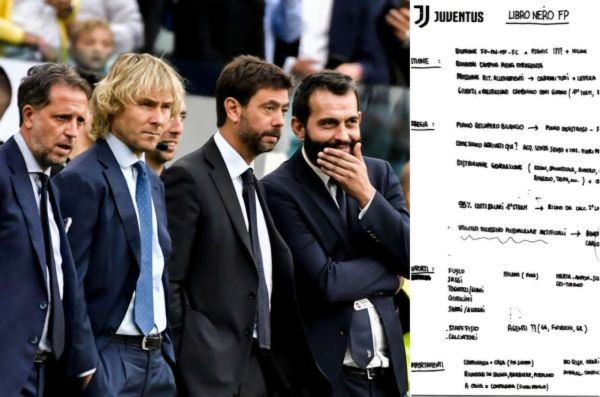
Though the club insists it has always acted within the law, its troubles appear never-ending. On the morning of 8 November, La Repubblica and other specialist sites reported a fresh twist that further fuels the fire: during a search, investigators reportedly discovered a notebook belonging to Federico Cherubini, Juventus’s current sporting director, titled the “FP Black Book.” FP is thought to refer to Fabio Paratici, Cherubini’s predecessor and now at Tottenham. In this notebook, Cherubini allegedly criticises Paratici’s management. The most striking critiques, cited in various articles, include: “He doesn’t keep time, constantly cancels meetings, holds meetings in saunas, at the barber, or at the podiatrist.” There are also references to “senseless purchases, unsustainable investments,” and “the destruction of a generation: Kean, Spinazzola, Audero…” But perhaps most notably (quoting from La Repubblica), he mentions “excessive use of artificial capital gains,” which provide “immediate benefits” but result in an “amortisation burden” in the years that follow.

This unsettling picture undoubtedly does nothing to ease tensions at Juventus, instead adding further complications for the president, the management, and the fans. Time will tell how the club will respond to these allegations: will they address them directly or remain silent? The situation appears increasingly complex, and after an underwhelming start to the season, Juventus’s problems seem far from over.

By Rodolfo Bianchini

Sito web creato con WordPress.com.

Su ↑