
In the world of sports, the concept of governance plays a crucial role in determining the long-term success of an organization. In the corporate sphere, governance refers to the set of rules, processes, practices, and structures through which a company is directed and controlled. It defines the relationships between key stakeholders and establishes decision-making and accountability mechanisms, ensuring the achievement of corporate objectives efficiently, transparently, and sustainably.
Applying these principles to sports, it becomes evident that solid management and competent leadership are often determining factors for success both on and off the field. Governance, in fact, is not limited to administrative management but directly impacts a club’s competitiveness, influencing market strategies, infrastructure investments, and talent development.
A concrete example is represented by the three most decorated football clubs in Italy: Juventus, Inter, and Milan. Although managerial continuity has been different for the two Milanese clubs compared to Juventus, it is undeniable that the Agnelli, Moratti, and Berlusconi families have played a decisive role in ensuring economic stability and sporting success. Through targeted investments and a clear strategic vision, these ownerships have been able to build winning teams and strengthen their brand internationally.
The most exemplary case of successful sports governance is that of Juventus, which has been led by the Agnelli family for nearly a century. The bond between the club and the Turin-based industrial dynasty is one of the longest-standing in the global football landscape and has been a decisive factor in the team’s growth and stability. Under the Agnelli leadership, Juventus has gone through eras of great success, becoming Italy’s most decorated club and one of the most respected football institutions on an international level.
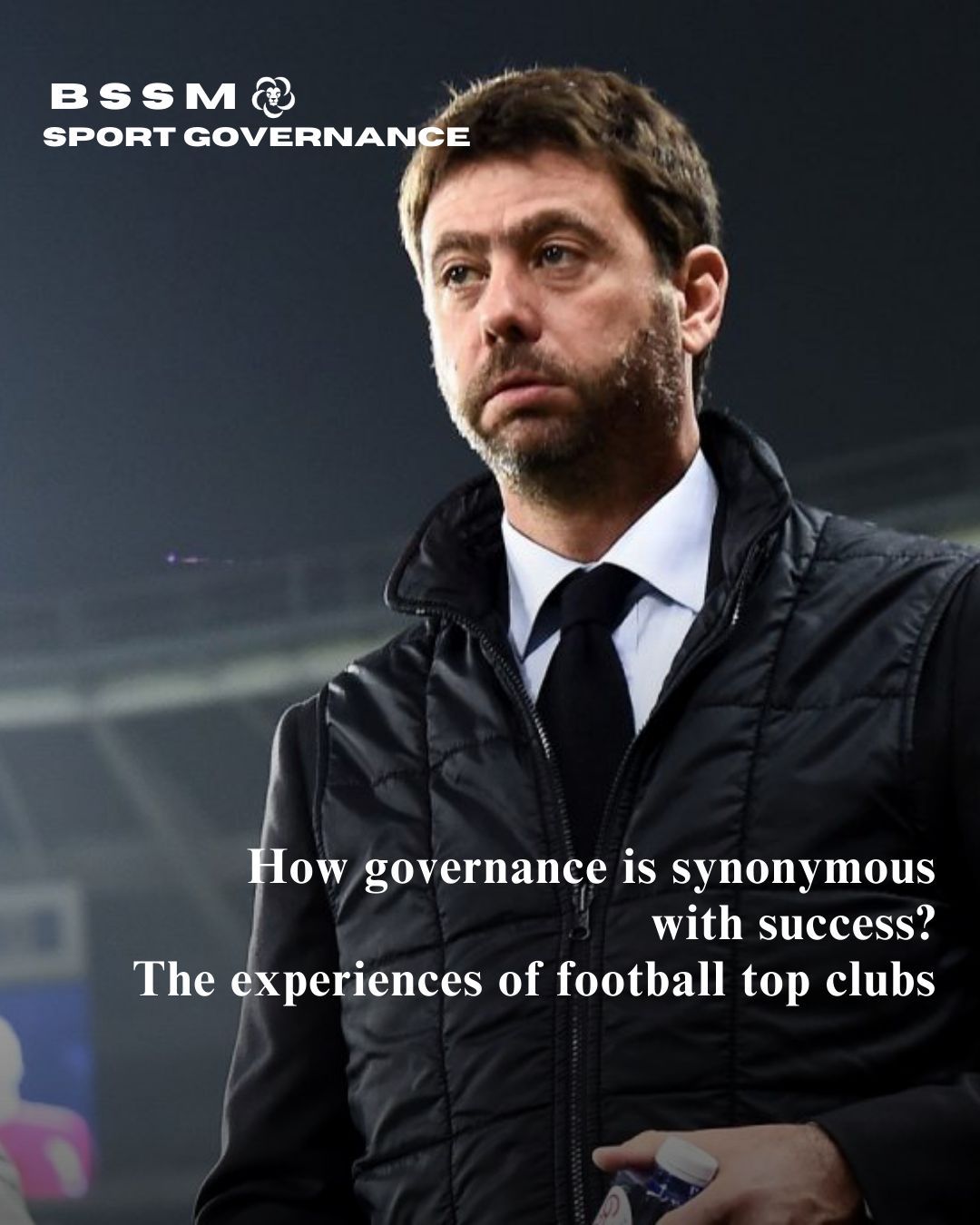
In particular, in recent years, Andrea Agnelli implemented a governance model that led the club to dominate Serie A, securing nine consecutive league titles from 2011 to 2020. Agnelli’s management stood out for the construction of modern infrastructure, such as the Juventus Stadium, a strategy of brand internationalization, and financial management that combined ambitious investments with economic sustainability. However, Juventus has faced a financial crisis in recent years due to a combination of factors, including the economic impact of the pandemic, risky market operations, and difficulties in maintaining a sustainable balance sheet. These issues led to the end of the Agnelli era and a change in presidency, with Gianluca Ferrero taking over to restore the club’s financial health and bring back stability. This transition highlights how delicate the role of governance is in balancing sporting ambitions with economic sustainability.
Looking beyond Italy’s borders, Real Madrid perhaps represents the most emblematic example of successful governance. Under the presidency of Florentino Pérez, the club has adopted a management model that combines financial solidity with sporting ambition, focusing on a global expansion strategy, careful resource management, and brand enhancement. This approach has enabled the club to consolidate its leadership in world football, both in terms of trophies won and economic value.
Beyond Real Madrid, another international example of effective governance is Bayern Munich. The German club has distinguished itself for impeccable financial management and an organizational model based on sustainability and the active involvement of former players in management. Through a prudent spending policy, targeted investments, and a strong corporate identity, Bayern has maintained consistent competitiveness, winning numerous national and international titles without ever compromising economic stability. Bayern’s model demonstrates that solid governance does not only mean sporting success but also the ability to withstand global economic crises and ensure long-term growth.
The experiences of these clubs show that success is never a matter of chance but the result of effective governance, capable of combining financial sustainability with sporting competitiveness. At a time when football and sports in general are facing increasingly complex economic challenges, the role of solid and forward-thinking management becomes even more crucial. The balance between smart investments, cost control, and a clear strategy is the key to ensuring not only victories on the field but also lasting growth over time.
By Alessandro Caldera
 BOCCONI STUDENTS FOR SPORT MANAGEMENT
Lascia un commento