
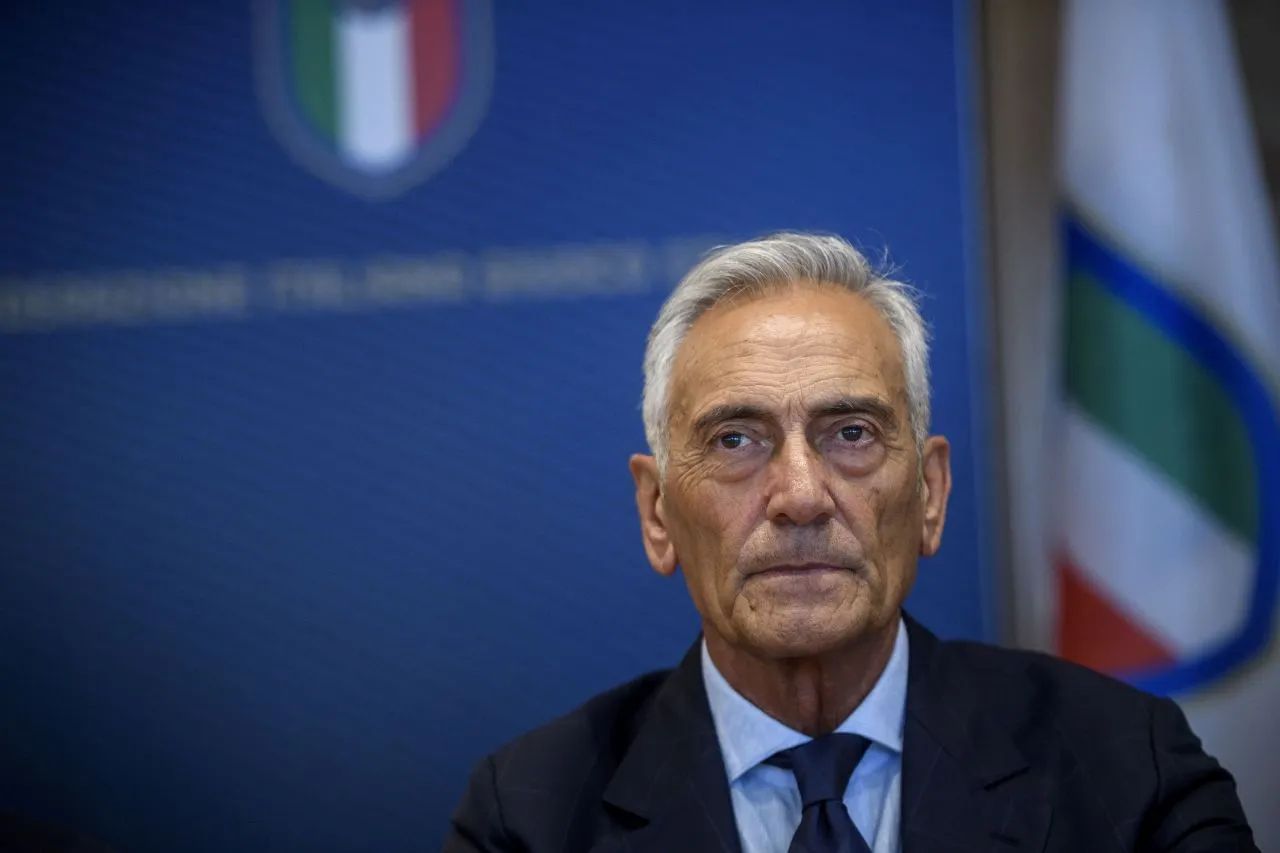
A few weeks ago, the news broke of Gabriele Gravina, president of the Italian Football Federation (FIGC), being appointed as vice-president of UEFA. On April 5, he took the opportunity to thank UEFA President Aleksander Čeferin and his colleagues from the confederation, emphasizing how the appointment was a sign of personal trust and confidence in the Italian Federation, the result of the complex and continuous collaborative work carried out in recent years between the two bodies. Staying in line with this tireless work, President Gravina wasted no time: according to La Repubblica, UEFA has set up a working group, of which Gravina is the coordinator, with the aim of “improving the long-term sustainability of European football.” This new working group includes 11 representatives from national federations, the ECA (European Club Association), the European Leagues Association, FIPRO Europe (the players’ union), and Football Supporters Europe (an association representing football fans). The commission already met in Nyon, the city where UEFA’s headquarters are located, and the topics discussed are particularly current: they range from capital gains to the firm belief that “financial sustainability is crucial for the future of European football.” Although the term “capital gains” was not explicitly mentioned, it is evident that the focus and main concern for UEFA is the transfer market and its distortions. In order to eliminate these, particularly to prevent abuses and ensure equal treatment, the commission has proposed “amendments to the regulations governing the accounting of transfer transactions.”
The long-term perspective, however, is broader: it is clear that the goal is to implement some form of salary cap. La Repubblica reports that a specialized working group has been established to “analyze the impact of national taxes and social charges in various jurisdictions, to develop effective and fair cost control mechanisms. It will also examine the feasibility of specific measures to complement the current squad cost rule.” This would thus lead to a form of salary cap. This term is usually associated with the NBA in the sports world, and it is widely believed to be one of the factors that makes the North American basketball league so attractive. The salary cap, along with the draft mechanism, is a fundamental tool for maintaining balance between teams in the league and preventing the best players from concentrating in a few wealthier teams. The salary cap is essentially a financial ceiling: it represents the total amount of money each team can spend on player salaries. This figure changes slightly from team to team and ensures there is no significant imbalance between franchises; in this way, at least in theory, the more prestigious teams are not advantaged over the smaller teams.
The desire to import this mechanism from the United States has been frequently expressed in the past by many industry professionals and others. Certainly, the need for rules to control costs is more urgent than ever, in a time of general financial crisis in European football, which paradoxically also sees continuous increases in player salaries. According to Calcio e Finanza, President Gravina was already considering possible solutions in 2021. At the margin of an event that year, he had stated, “My proposal is to start putting the cost policy under control. Since we cannot really emulate a proper salary cap because it could clash with European rules or regulations governing free market economies, the idea is to set a limit by not exceeding the costs of the 2020/21 season for the 2021/22 season as a first step. You can exceed it if you want by providing real guarantees or by putting in real financial resources.” In a previous interview, when asked how to save Italian football from its crisis, he had replied that this would only be possible “by respecting the principles of market economy and increasing controls. Sustainability must be our mantra. Certain player salaries are no longer feasible. A salary cap would penalize our clubs too much, and they would no longer be competitive in international cups. I’ve envisioned a kind of luxury tax like in the NBA (a heavy fine imposed when teams exceed the salary cap for three consecutive seasons).” In light of these statements and comparing them with what was reported by La Repubblica, one could conclude that the president may have changed his mind about the possibility of implementing a salary cap, perhaps due to the opportunity presented by now being at the top of UEFA, which allows him to coordinate interventions with EU policies and all European federations. Gravina, however, has always maintained clear positions and ideas on the need to contain the costs of the football system. We can only hope that he now dedicates himself to this mission, in order to save the system from a collapse that seems inevitable with the current pace.
By Rodolfo Bianchini
 BOCCONI STUDENTS FOR SPORT MANAGEMENT
Lascia un commento